
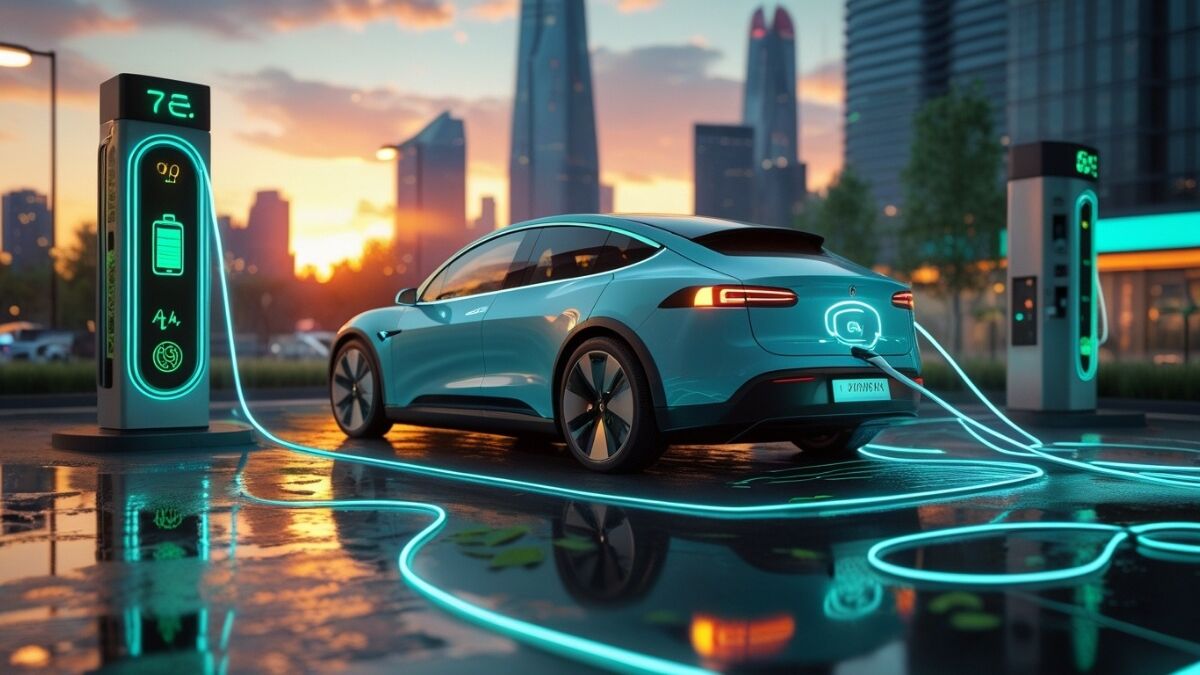
The ongoing Middle East conflict is accelerating global interest in electric vehicles, as rising fuel prices and supply disruptions push consumers to reconsider traditional transportation choices.
According to CNBC, drivers are anticipated to switch from their conventional internal combustion engine (ICE) vehicles to electric vehicles (EVs) as a result of the Middle East conflict, which is currently in its second month.
Middle East Conflict Driving EV Adoption Trends
The report, which cited analysts, stated that the change would occur gradually rather than all at once. This follows the announcement by Iran’s Islamic Revolutionary Guard Corps (IRGC) that the Strait of Hormuz, a vital waterway that passes through over one-fifth of the world’s supplies of LNG and oil, will close.
The action came after days of fighting in which the US and Israel targeted Iran’s naval and military resources, allegedly murdering a number of key officials, including former Supreme Leader Ayatollah Ali Khamenei.
Global Oil Supply Disruptions and Impact
Following the closure of the Strait of Hormuz, nations are now in a precarious situation and at Tehran’s mercy; some have even had to declare a state of emergency. It has caused significant disruptions to oil exports, driving up prices to all-time highs. It has also highlighted how much the globe depends on trade routes for fossil fuels.
The research claims that since the conflict started in late February, there has been an increase in customer interest in EVs on a number of US and European car-selling platforms. This occurs at a time when ICE vehicles are becoming more popular in the traditional auto sector.
⚡ Rising Interest in Electric Vehicles
- EV Searches: +15% (used), +28% (new)
- Leasing Queries: +36%
- Trigger: Oil supply disruptions
- Benefit: Lower running cost vs petrol
- Trend: Gradual shift to EVs
- Regions: US & Europe demand rising
Automakers Rethinking EV Strategies
On March 26, Autotrader, an online car marketplace, reported a 15% increase in inquiries about purchasing a used EV and a 28% increase in inquiries about purchasing a new one. Octopus Electric Vehicles, an EV specialist, reported on March 25 that since the war began, EV leasing queries had increased by 36%.
Major US automakers, such as Ford, General Motors, and Stellantis (the parent company of Jeep), have all withdrawn from their prior EV plans despite a rise in inquiries.
Challenges in EV Adoption
Tens of billions of dollars in losses and restructuring expenses have resulted from their having to alter their strategy due to slower-than-anticipated customer demand and shifting political circumstances. Although the scenario is still developing, an analyst pointed out that it is already evident that the consequences of the US-Iran war may have an impact on the market for EVs.
Given that conventional gasoline automobiles have grown more costly due to a rapid increase in oil costs, he said, owning a battery electric vehicle (BEV) is now more appealing for drivers who travel long distances. Additionally, homes may become even more energy independent if they possess an EV.
📊 EV Adoption Drivers & Benefits
- Main Driver: Rising fuel prices
- Key Benefit: Lower operating costs
- Advantage: Energy independence
- Adoption Speed: Gradual transition
- Barrier: Infrastructure & cost
- Outlook: Long-term growth trend
Fuel Prices and Consumer Behavior
Erin Keating, senior director of economic and industry analytics at Cox Automotive, says that if petrol costs keep rising, people will probably think about buying all-electric cars. However, switching from conventional cars to EVs can take some time. The company anticipates that petrol costs will stay high for at least another six months in order to see any significant growth, which might then force customers to buy EVs.
As gasoline prices climb and EV prices decline, Beijing’s EV manufacturers stand to gain from the protracted conflict, according to a CNN article from March. The action may help the Chinese EV industry grow internationally, especially in the Asian nations most impacted by gasoline shortages.
Global Shift Towards Clean Energy
Similar to Russia’s invasion of Ukraine in 2022, which ultimately led to a surge in renewable energy investments in Europe, the paper, citing analysts, also predicted that the oil crisis may serve as a turning point for the clean energy industries of Asian nations.
Frequently Asked Questions
1) Why is interest in EVs increasing due to the conflict in the Middle East?
Fuel prices have increased globally as a result of the conflict’s disruption of oil supplies across the Strait of Hormuz. Because of their lower operating costs and less reliance on fossil fuels, electric vehicles become more appealing.
2) Will people convert to EVs right away?
No, the change will happen gradually. Despite rising fuel prices, widespread EV adoption will take time due to high upfront costs, restrictions on charging infrastructure, and consumer behavior.
3) Do automakers currently have a complete commitment to electric vehicles?
Not totally. Due to poor demand and expensive investment costs, companies such as Ford, General Motors, and Stellantis have delayed the spread of electric vehicles.
4) What impact do high fuel prices have on purchasing decisions?
Owning an ICE car becomes more expensive due to rising gas prices, which eventually makes EVs more affordable, particularly for high-mileage owners looking for long-term savings and energy independence.
5) Which nations or areas gain the most from this change?
China will benefit greatly from its EV industry’s potential to grow internationally, particularly in Asia, where rising oil costs and fuel shortages are driving demand for reasonably priced electric mobility options.
Conclusion
The ongoing battle draws attention to the weaknesses in the world’s reliance on oil. Even while EV adoption will not happen right away, persistently high fuel prices could hasten the global shift to greener, more energy-efficient transportation systems.
Disclaimer: This content is for informational purposes only and does not constitute financial or investment advice.
