
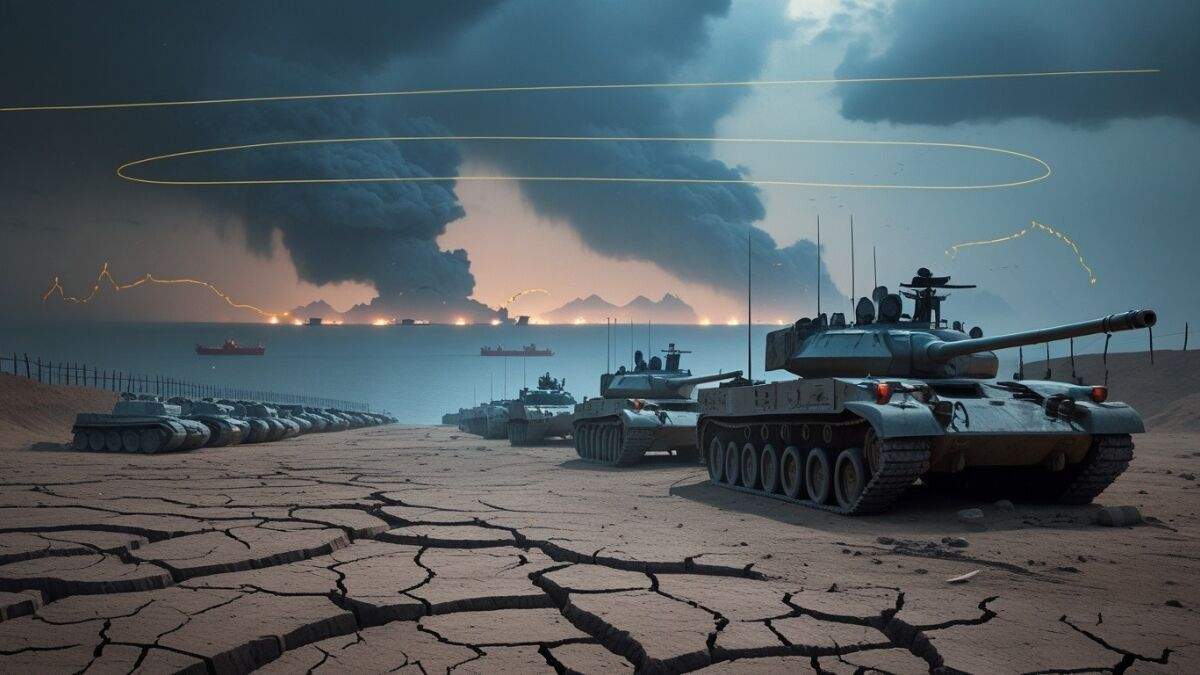
Global geopolitical tensions are creating unexpected ripple effects, with the Strait of Hormuz blockade potentially influencing peace dynamics far beyond the Middle East, including Africa.
A tenuous peace in Africa may have resulted from fuel shortages caused by Iran’s blockade of the Strait of Hormuz.
Fuel Crisis May Have Prevented Conflict in Africa
Over the past month, the Middle East conflict has shaken international markets and added a layer of uncertainty to geopolitics. Although all wars are painful, this one might have unanticipated repercussions. Perhaps it would have prevented violence on another continent.
There is strong evidence that a shaky peace in Africa may have resulted from gasoline shortages caused by the effective closing of the Strait of Hormuz. Global security experts have been considering the possibility of a significant land conflict in the Horn of Africa prior to the United States and Israel’s assaults on Iran on February 28.
⛽ Fuel Crisis Impact
- Main Cause: Strait of Hormuz blockade
- Effect: Fuel shortages in Africa
- Key Country: Ethiopia
- Impact: Reduced military mobility
- Result: Temporary peace
- Risk: Conflict may resume
Ethiopia’s Strategic Challenges
Ethiopia, a landlocked nation with one of Africa’s largest economies and a population of almost 130 million, has been fighting for sea access. Ethiopia already has an agreement to utilize a port in Somaliland, a breakaway state of Somalia, but the Addis Ababa administration, which has full sovereignty and a claim to the Red Sea, may find this insufficient.
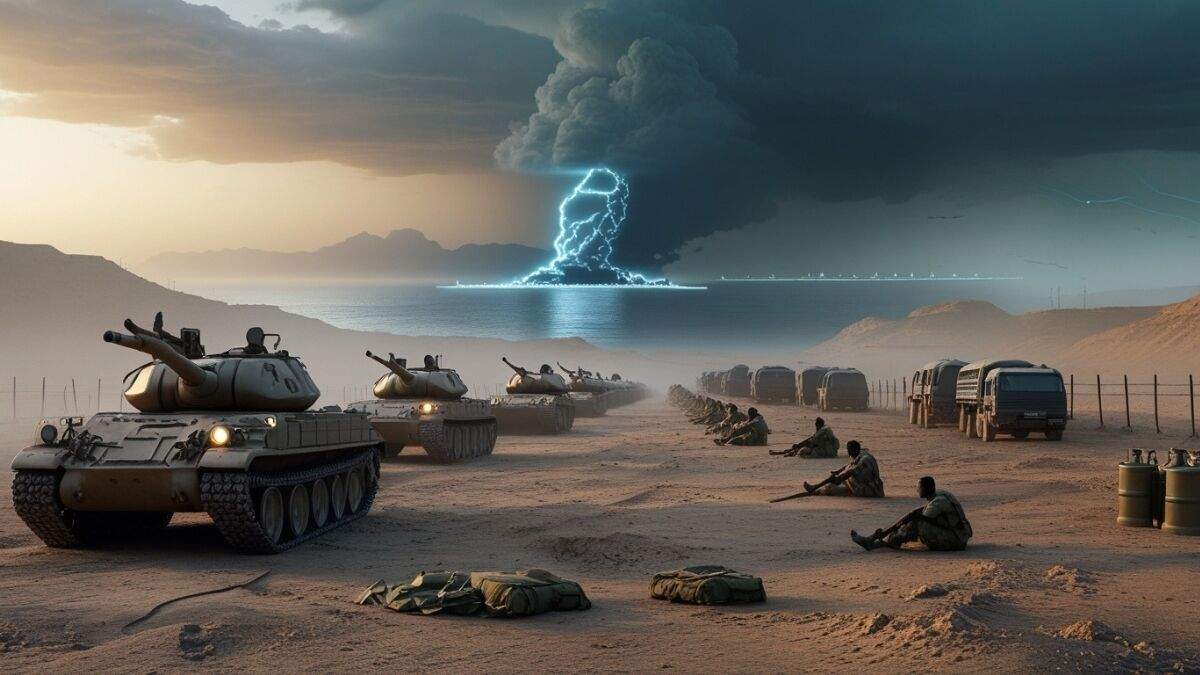
Eritrea, a tiny pariah state to the east with a comparatively extensive Red Sea coastline, is Addis’s neighbor and intermittent adversary. Eritrea’s obligatory conscription and lack of civil society have earned it the moniker “Africa’s North Korea.”
Historical Conflicts and Tensions
Before becoming its own country in the early 1990s, Eritrea, which had previously been a part of Ethiopia, waged a three-decade war of independence. Soon after, there was a brutal two-year border conflict with its former parent, which ended largely in 2000 but resulted in a protracted standoff that ended with a peace agreement in 2018.
Later, Ethiopia and Eritrea fought alongside each other in the Tigray War (2020–2022) against separatists in a northern Ethiopian province that borders Eritrea, known as the Tigray People’s Liberation Front (TPLF). With a death toll of up to 800,000 and extensive atrocities, this mostly forgotten war was possibly the worst of the twenty-first century.
⚠️ Regional Conflict Risk
- Region: Horn of Africa
- Key Players: Ethiopia & Eritrea
- Military Size: ~800,000 troops
- Trigger: Sea access dispute
- Recent Tension: Troop movements
- Risk Level: High
Rising Tensions in 2026
Tensions sharply increased at the beginning of 2026 due to Eritrea’s recent amity with the TPLF and Ethiopia’s expansionist goal under its leader, Abiy Ahmed, which included access to the sea. Tens of thousands of Ethiopian troops were reportedly moved northward in February, possibly headed for Eritrea, following clashes between Ethiopian forces and the TPLF in January.
Senior Africa analyst Matt Ward of Oxford Analytica stated in February that the fighting “threatened to break the ‘no-war-no-peace’ equilibrium” that has persisted since the conclusion of the Tigray war. Barron’s parent company, Dow Jones, owns Oxford Analytica, a geopolitical risk analysis and consultancy firm.
Fuel Shortages Limiting Military Action
Many commentators stated that the question was not if extensive warfare would resume in Tigray or over the border into Eritrea, but rather when it would. Given that both nations have one of Africa’s largest standing armies—possibly 800,000 combatants overall—the likelihood of a ground war between them is extremely high.
Ethiopia, which imports nearly all of its gasoline from the Gulf, is among the nations most impacted by the closure of the Strait of Hormuz, according to the United Nations. In response to a worsening transportation crisis, the government implemented fuel rationing in March, encouraging people to walk. Later, it placed non-essential state employees on leave to keep them at home.
Impact on Logistics and Economy
Ethiopia’s daily supply of diesel, which is required to power trucks and armored vehicles, has been cut in half due to rations, with the government giving priority to who gets fuel. Due to pressure on the government to maintain supplies for Ethiopian Airlines, the country’s leading airline and economic engine, jet fuel for air forces has also become a limited supply.
The administration has been vocal about the difficulties in coordinating the fuel supply, pointing out that pervasive corruption makes getting fuel to its destination much more difficult. With local media reporting in late March that a cargo of more than 180,000 metric tons of fuel had failed to arrive, raising supply concerns, the issue appears to have only gotten worse.
Strategic Delay in Conflict
Ethiopia’s Institute of Foreign Affairs, a government-affiliated think tank, had expressed the opinion that Ethiopia would use the war in Iran to invade Eritrea and gain access to the sea.
Ethiopia’s inaction raises the possibility that it lacks the ability, not the will, to wage war in Tigray or Eritrea. If such is the case, maintaining peace—for the time being—may be due to the disruption of petroleum supplies caused by the Iran war.
Frequently Asked Questions
1. What impact did the blockade of the Strait of Hormuz have on Africa?
Disruptions to the fuel supply decreased supply in countries that rely on imports, such as Ethiopia, which limited military logistics and indirectly decreased the likelihood of an immediate large-scale battle in the Horn of Africa.
2. What piques Ethiopia’s curiosity about Eritrea?
Eritrea’s coastline and ports make it strategically significant, and Ethiopia wants direct access to the Red Sea for trade and strategic autonomy.
3. What part did the fighting in Tigray play?
In addition to causing instability in northern Ethiopia and strained relations with Eritrea, the Tigray War left unresolved tensions that could rekindle wider regional conflict in the precarious post-war environment.
4. In what ways can fuel shortages restrict warfare?
Diesel and jet fuel are essential for modern forces. A country’s capacity to successfully maintain protracted or extensive military offensives is diminished by shortages, which limit army mobility, supply lines, and air operations.
5. Is the region’s peace stable?
No, the peace that exists now is brittle. It is largely dependent on outside factors, such as gasoline shortages, rather than long-term political accords, so whenever logistical and economic pressures considerably lessen, violence may resume.
Conclusion
It is possible that fuel shortages caused by disturbances in the Strait of Hormuz postponed fighting in Ethiopia and Eritrea, resulting in a precarious peace. Unresolved conflicts, however, mean that stability is just ephemeral and depends on outside factors.
Disclaimer: This article is for informational purposes only and reflects evolving geopolitical developments and regional dynamics.
