
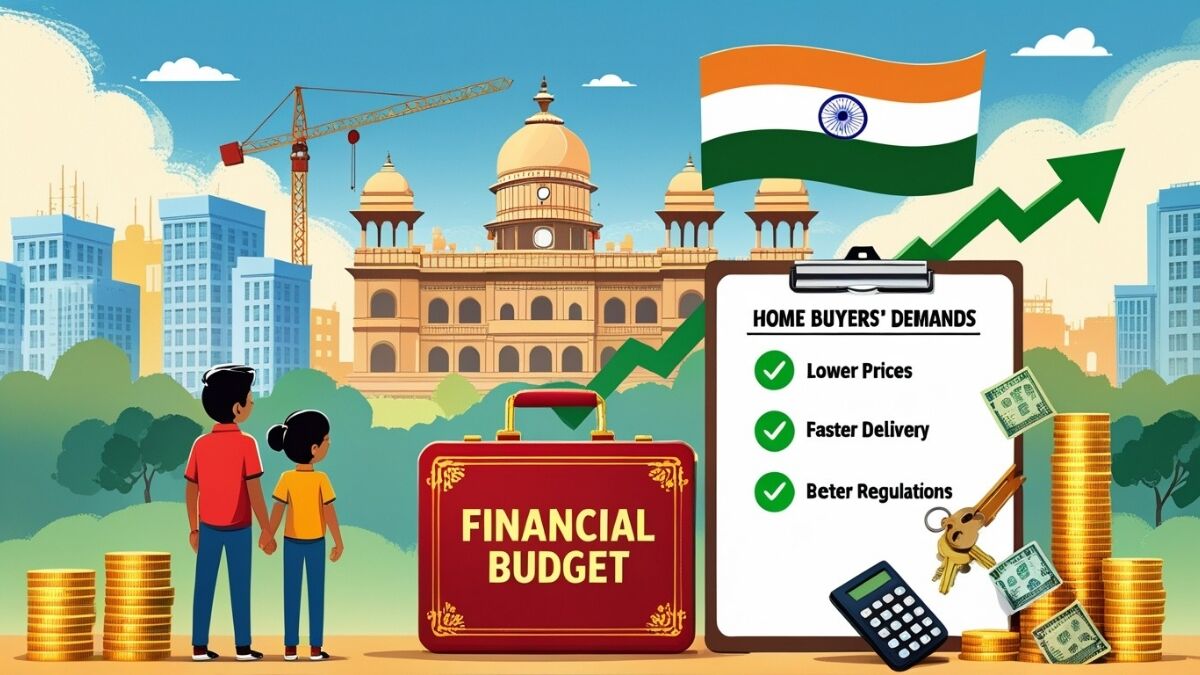
On Sunday, February 1, 2026, P. Ravichandran, president of Danfoss India and deputy head of the Confederation of Indian Industry (CII)-Southern Region, said that “growth” would be the best way to sum up the Union Budget for 2026–2027, which Finance Minister Nirmala Sitharaman delivered.
Union Budget 2026–27 Focus and Industry Reactions
He said at a press conference hosted by the CII-Southern Region in Chennai that the Budget has outlined strategies for accelerating development. Industry responses to the Union Budget 2026 LIVE: The CEO of Mahindra Group claims that the budget makes significant progress toward Aatmanirbharta.
The last three to four years have seen a focus on infrastructure, and several of the announcements made in the Union Budget, such the canals, freight corridor, and high-speed railway corridor, among others, will improve connectivity, he added. “Infrastructure will also aid in creating growth and jobs,” he said.
Industrial Development & Strategic Sectors
He said that the Union Budget has a strategic emphasis on seven areas related to industrial development. “Aiming to manufacture diverse components for consumer electronics and defense electronics, they [the Union government] have established a Semiconductor Mission 2.0.”
According to C.K. Ranganathan, chairman and managing director of CavinKare Pvt. Ltd. and former chairman of CII-Southern Region, the Union Budget has placed a strong emphasis on the textile sector. “The value-added textile sector has received special attention,” he said, adding that it will benefit states like Tamil Nadu and others that have textile industries.
🏗️ Union Budget 2026–27 Infrastructure & Industry Boost
- Focus: Infrastructure, high-speed rail, freight corridor, waterways
- Industrial Growth: Semiconductor Mission 2.0, value-added textiles, container manufacturing
- Employment: Infrastructure projects to generate jobs
- Long-term Impact: Foundational growth for Tier-II & Tier-III cities
- Social Empowerment: Girls’ hostels in every district
Additionally, Mr. Ranganathan applauded the news that suggested a plan for high-speed rail lines and container production, among other things. He said that the Union Budget will support a resurgence of industry.
Long-Term Perspective and Tamil Nadu Benefits
The Union Budget for 2026–2027 is “foundational and long-term-oriented,” according to A.R. Unnikrishnan, head of the CII-Tamil Nadu State Council and managing director of Glass & Glass Solutions, Saint-Gobain India Pvt. Ltd. “With persistent work and continuous commitment, we can make a tremendous impact over time,” he said. Although we may not see benefits right away in the current fiscal year, we could eventually see positive outcomes.
Mr. Unnikrishnan said that some of the announcements, including those pertaining to infrastructure, might be advantageous to Tamil Nadu. “Tier-II and III cities are going to be the future of India’s development,” he said, adding that Tamil Nadu had several of them that will profit from the push in that direction.
Empowering Women & Education Focus
Mr. Unnikrishnan remembered the Tamil Nadu government’s Thozhi dormitories, which he said had empowered women and girls, and expressed his happiness that there will be a ladies’ hostel in every district. He claimed that Tamil Nadu has led the way in design education.
🎓 Social Empowerment & Budget Highlights
- Girls’ Hostels: Every district to have a hostel for women
- Design Education: Tamil Nadu leading initiatives
- Focus on Tier-II & III Cities: Driving economic growth outside metros
- Industrial Revival: Textiles, semiconductors, container manufacturing
- Employment Growth: Infrastructure projects and industry expansion
Frequently Asked Questions
1. What is the Union Budget 2026–2027 like according to the CII-Southern Region?
The budget is “growth-oriented,” according to P. Ravichandran, deputy chairman of CII-Southern Region. He underlined that the budget’s main goal is to boost economic development by implementing strategic measures in employment, industry, and infrastructure. Keywords used: budget 2026 key points, new tax slab 2026, income tax slab for a y 2026 27
2. In this budget, which industries are getting particular attention?
Seven key industries, including semiconductors, consumer electronics, and defense electronics, are the focus of the Union Budget 2026–2027. Programs like Semiconductor Mission 2.0 aim to increase production capacity in these crucial areas. Keywords: budget 2026 highlights income tax, new tax regime slabs
3. In what ways does the budget aid in the development of infrastructure?
High-speed rail lines, freight corridors, and inland waterways are important infrastructure initiatives that will enhance connectivity, create jobs, and promote general economic growth. Keywords: budget 2026 for salaried, infrastructure budget highlights 2026
4. How does the budget affect the textile business in Tamil Nadu?
States with substantial textile industry, like Tamil Nadu, benefit from the budget’s increased emphasis on value-added textiles. Plans for high-speed rail lines and container manufacturing would revitalize the local economy. Keywords: key highlights of budget 2026, budget highlights 2026 India
5. Does the budget provide immediate advantages or long-term effects?
A.R. Unnikrishnan claims that the budget is fundamental and long-term focused. Consistent investment and persistent efforts over time are anticipated to provide significant economic advantages, particularly in Tier-II and Tier-III cities, even if immediate results may not be apparent. Social empowerment is another goal of programs like hostels for females in every region. Keywords: new budget, finance budget 2026
Conclusion
Leaders in the CII-Southern Region generally see the Union Budget 2026–2027 as a forward-thinking, growth-oriented budget. It seeks to promote long-term sustainable economic growth, benefitting both large metropolitan centers and developing Tier-II and Tier-III cities, with a focus on infrastructure, industrial rebirth, and social empowerment.
Disclaimer: This content is for informational purposes only and reflects opinions of industry representatives. It does not constitute financial or investment advice.
