
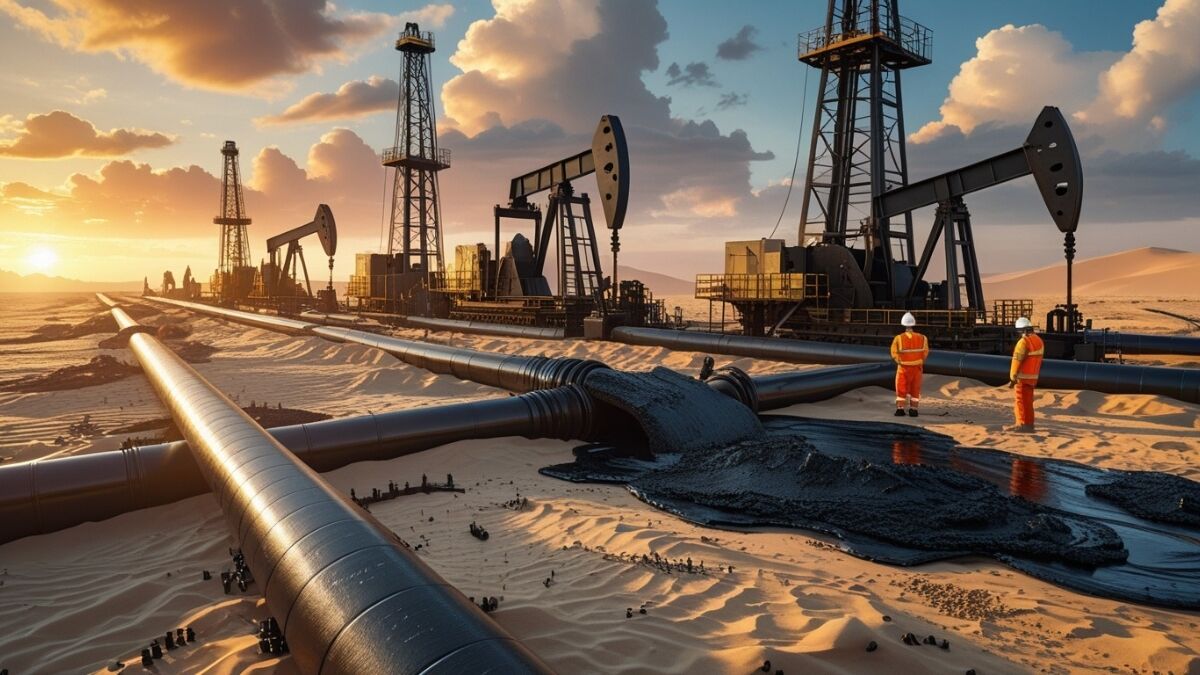
The article below explains the International Energy Agency’s plan to release strategic oil reserves to stabilize global energy markets during a geopolitical crisis. It also explores why this massive oil release may still struggle to offset supply disruptions from the Strait of Hormuz.
The goal of the IEA’s largest-ever coordinated oil delivery is to soothe the energy markets affected by the conflict. However, the amount of extra oil that comes out of these strategic reserves every day would be minuscule compared to the amount that used to leave the Gulf prior to Iran’s blockade of Hormuz.
IEA’s Historic Oil Release and the Global Energy Crisis
In an effort to lower market prices, the 32 nations that make up the International Energy Agency (IEA) are anticipated to release 400 million barrels of oil from their strategic reserves.
It has claimed that this is the biggest oil discharge in its history. It is over a third of its members’ entire stock, four times the world’s daily consumption, and more than twice the 182 million barrels the IEA released in 2022 following the start of the conflict in Ukraine.
🛢️ IEA Emergency Oil Release Plan
- Total Oil Release: 400 million barrels
- Countries Involved: 32 IEA member nations
- Purpose: Stabilize global oil prices
- Historical Record: Largest coordinated release ever
- Comparison: More than double the 182 million barrels released in 2022
- Market Goal: Reduce supply shock caused by geopolitical conflict
Comparing Strategic Oil Reserves With Daily Supply
Will it have an impact? The flow of oil, not its stock, is what we need to consider. Approximately 14 million barrels of crude oil and 5 million barrels of oil products left the Gulf per day on average in 2025 via Hormuz. According to one estimate, the maximum daily flow rate of IEA inventories is 3 million barrels, and even then, it will take some time. The world would still have a shortage even if Hormuz-bypass pipelines and other sources increased market supply.
Furthermore, shortages have a “buffering” impact with time lags, meaning that the price shock from the war can persist even after Iran’s chokehold loosens. Unfortunately, this potential does not seem very promising at the moment, which serves as a warning of the dangers of going to war. It is amazing how frequently the cost of war is underestimated in a world where people are cost-conscious.
⚠️ Why the Oil Shock May Continue
- Hormuz Oil Flow: ~19 million barrels per day in 2025
- IEA Supply Capacity: Around 3 million barrels per day
- Supply Gap: Strategic reserves cannot fully replace Gulf exports
- Time Lag Effect: Price shocks persist after supply improves
- Market Reaction: Energy prices may remain volatile
- Global Risk: Geopolitical conflicts disrupt energy stability
Frequently Asked Questions
1. What is the oil release plan of the IEA?
In order to stabilize world oil prices during the crisis brought on by the conflict and the blockade affecting the Strait of Hormuz, the International Energy Agency (IEA) intends to release 400 million barrels of oil from the strategic reserves of its 32 member nations.
2. What makes the Strait of Hormuz crucial to the world’s oil supply?
One of the most important energy shipping routes in the world, the Strait of Hormuz typically handles 14 million barrels of crude oil and 5 million barrels of oil products every day.
3. In comparison to previous releases, is the 400 million-barrel release significant?
Indeed. More than double the 182 million barrels released in 2022 during the disruption of oil markets caused by the Russian invasion of Ukraine, this is the greatest coordinated release ever.
4. Why might the oil shock not be completely resolved by this oil release?
Because daily supply flow, rather than just total reserves, is what drives oil markets. The amount that often flows through Hormuz is much greater than the 3 million barrels per day that the IEA’s reserves could provide.
5. What other elements could make the shock to oil prices last longer?
Time lags caused by supply interruptions, sluggish logistical adjustments, and market reactions mean that prices may remain high even if the blockade loosens or additional oil becomes available.
Conclusion
The vast daily oil flow that typically travels through the Strait of Hormuz cannot be completely replaced by the IEA’s release of 400 million barrels, although it may assist temporarily calm market fear.
Because of this, the world oil market may continue to experience shortages and persistent price volatility, underscoring how geopolitical conflicts may seriously affect energy supplies and how challenging it is to promptly counteract such disruptions.
Disclaimer: This article is for informational and educational purposes only. It does not constitute financial, geopolitical, or investment advice. Readers should verify information and conduct their own research before making decisions based on energy market developments.
