
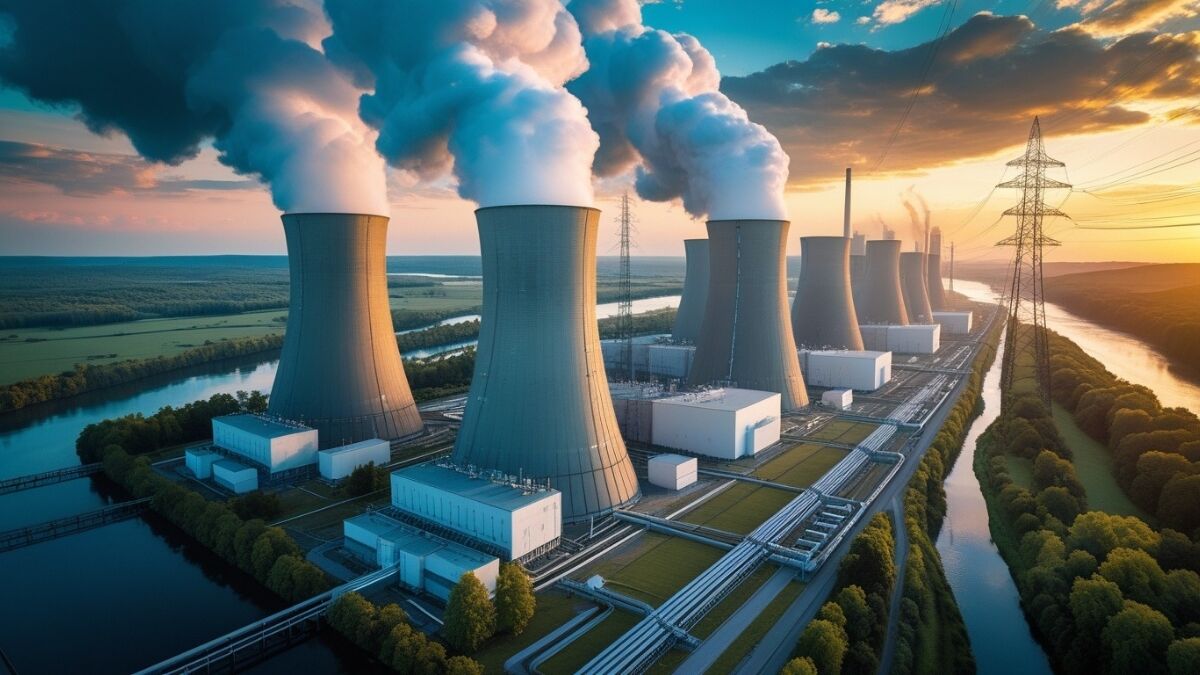
India and Canada are close to signing a $3 billion uranium deal, boosting India’s nuclear energy plans and strengthening bilateral ties.
India-Canada Uranium Deal Details
According to Forbes, which cited sources from both countries at the recently concluded India Energy Week, which took place in Goa, India, last week, Canada and India are close to signing a 10-year uranium supply agreement worth about $3 billion. The deal is expected to be signed during a planned meeting between Prime Minister Narendra Modi and his Canadian counterpart Mark Carney in March.
According to the article, negotiations have progressed and more specifics are being worked out before a heads-of-state meeting in New Delhi. The possible long-term contract would be worth “in the range of $3 billion,” an official from India’s Department of Atomic Energy told Forbes.
Key Companies Involved
The largest publicly traded uranium firm in the world, Cameco Corporation, is situated in Saskatchewan and is at the center of the planned arrangement, according to the article. Considered the highest-grade uranium mine in the world, Cigar Lake is located in northern Saskatchewan and has been in operation since 2014. Cameco owns the majority of the mine.
Cameco has owned 54.547 percent of Cigar Lake since May 2022, with Orano Canada owning 40.453 percent and TEPCO Resources controlling the remaining 5 percent.
India and Canada’s Energy Strategies
According to figures from the International Energy Agency, Canada is the second-largest producer of uranium in the world, contributing between 13 and 15 percent of global production. As part of its long-term energy security policy, India, the third-largest energy consumer in the world, plans to greatly increase its nuclear power footprint.
By 2047, the centennial of India’s independence, New Delhi has set the lofty goal of doubling nuclear generation capacity to 100 gigawatts, making secure uranium supply a top strategic concern.
Diplomatic Context and Strategic Importance
Tim Hodgson, Canada’s Minister of Energy and Natural Resources, stated that Prime Minister Carney would visit Prime Minister Modi in March to pursue trade talks, including uranium, during a fireside chat during India Energy Week.
“I can attest that it is taking place. On the finer points, both parties are working. Of all the countries in the world, Canada has the highest concentration of uranium that is pure and of the finest quality. India has historically received uranium from us, according to Hodgson.
He emphasized that Canada only provides uranium for peaceful uses and said there is “a fantastic possibility” to boost exports.
This provides India with another source of high-quality, reasonably priced uranium. We now have one additional buyer. India becomes more resilient and secure as a result. We become more resilient and safe as a result. That is a win-win, in my opinion,” he continued.
Diplomatic Reset Between India and Canada
The proposed agreement had diplomatic significance as well, signifying what Canadian authorities called a “reset” in relations after a severe decline in ties in 2023–2024.
After the Canadian government, then headed by former Prime Minister Justin Trudeau, claimed that people connected to Indian intelligence were responsible for the murder of a Sikh separatist in British Columbia, bilateral relations had worsened. Trade talks stopped as a result of the incident, which also led to tit-for-tat diplomatic expulsions.
Carney started reaching out to New Delhi in November in an effort to mend fences. Many people consider the uranium agreement to be among the first concrete results of that reconciliation.
Bilateral Trade and Strategic Gains
The current value of bilateral commerce between Canada and India is approximately $30 billion. According to Canadian authorities, both governments want to treble that amount by the end of the decade, including industries like hydrocarbons, uranium, and vital minerals.
The possible uranium purchase would strengthen India’s aspirations to switch to sustainable energy and diversify its supplier base. Canada would be able to ensure a long-term, high-growth market in Asia at a time when efforts to reduce carbon emissions are renewing the need for nuclear fuel globally.
💥 Key Highlights: India-Canada Uranium Deal
- Deal Value: $3 billion over 10 years
- Companies: Cameco, Orano Canada, TEPCO Resources
- Strategic Goal: Boost India’s nuclear energy capacity
- Diplomatic Impact: Reset India-Canada relations
- Timing: Expected signing March 2026
⚡ Strategic Uranium Supply & Energy Security
- India’s Target: 100 GW nuclear capacity by 2047
- Supplier Diversity: Strengthens India’s uranium supply chain
- Canada’s Gain: Long-term high-growth Asian market
- Global Context: Nuclear demand rising amid decarbonization
Frequently Asked Questions
1. What is the potential uranium deal between Canada and India about?
A $3 billion, ten-year uranium supply deal between Canada and India is almost complete. Securing premium uranium for India’s growing nuclear energy program is the goal of the agreement.
2. Which businesses are part of the transaction?
The largest publicly traded uranium firm in the world, Cameco Corporation, is the main participant. Cameco holds a majority interest in one of the highest-grade uranium mines in the world, Cigar Lake, located in Saskatchewan. TEPCO Resources and Orano Canada are other stakeholders.
3. Why is this deal of relevance to India?
By 2047, India intends to grow its nuclear power capacity tenfold to 100 gigawatts. Achieving its renewable energy and decarbonization objectives and maintaining energy security depend on securing consistent uranium supply.
4. What does this mean for Canada?
Asia will be a long-term, rapidly expanding market for Canada. In addition, the agreement strengthens Canada’s standing as a significant provider of superior uranium for peaceful uses and represents a diplomatic “reset” following tense relations in 2023–2024.
5. How and when will the transaction be completed?
In March 2026, Prime Ministers Narendra Modi and Mark Carney of Canada are scheduled to meet and sign the agreement. Final details are being worked out in the advanced stages of negotiations.
Conclusion
The uranium agreement between Canada and India is an example of a strategic alliance in both diplomacy and energy. It guarantees India a steady supply of high-grade uranium to meet its aspirational nuclear growth and clean energy objectives.
It indicates a reset in bilateral relations, opens a long-term Asian market, and fortifies economic connections for Canada. Both countries stand to gain economically, energy-wise, and geopolitically from the agreement.
Disclaimer
This content is for informational purposes only and does not constitute financial, investment, or legal advice. Verify facts independently before making decisions.
