
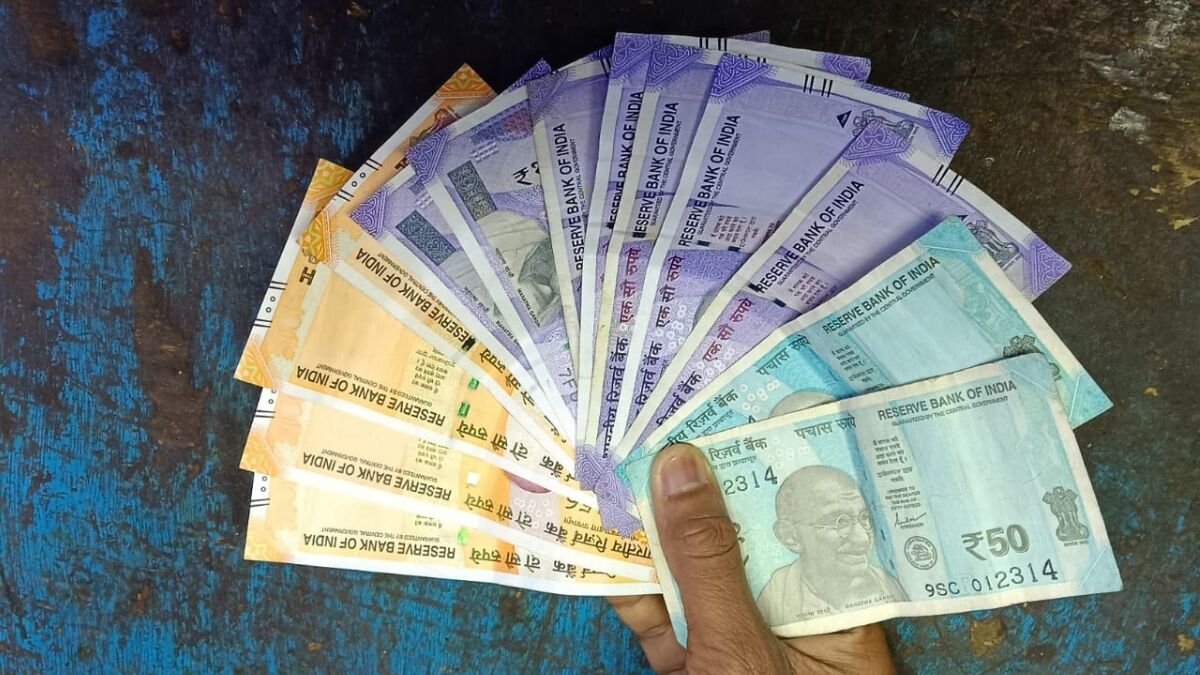
India’s capital expenditure landscape has slowed due to global uncertainty, especially the West Asia war, affecting both public and private investments.
After governmental and private capital expenditure announcements fell by more than 50% year over year in the most recent quarter as confidence soured due to the West Asia war, new project announcements fell 13% to ₹44 trillion.
Decline in New Project Announcements
The recently concluded fiscal year saw a decline in new project announcements as the investment environment deteriorated, especially near the end of the year, following the upheaval in West Asia.
📉 India Capex Slowdown
- Decline: 13% drop to ₹44 trillion
- Government Capex: -58%
- Private Capex: -0.9%
- Reason: War & global uncertainty
- Impact: Investment slowdown
According to data from the Centre for Monitoring Indian Economy (CMIE), new project announcements fell 13% to ₹44 trillion in the fiscal year 2025–2026 (FY26). It nearly eliminated the 16% rise from the prior fiscal year.
A 58% decline in government-led capital expenditure announcements, which had increased by 54% the year before, was the main cause of the slowdown. Private investment intentions, on the other hand, decreased by 0.9% after rising by 4.3% and 1.2% in the preceding two years. In the midst of increased global unrest, this reversal occurred.
Factors Behind the Slowdown
“Companies postponed new capital expenditure announcements due to tariff uncertainties during the first half and a war-related rise in the latter quarter,” stated Madan Sabnavis, chief economist of Bank of Baroda. According to Sabnavis, there is also a normalization effect at work because the increase in FY25 investments has caused both a statistical decline and a natural pause in growth.
The performance for the entire year was ruined by the last quarter, especially March. Public and corporate capital expenditure announcements fell by more than 50% year over year throughout this time.
The year’s downturn was mostly concentrated in the last several months, with the exception of a minor softening between July and September. According to CMIE data, this is really the second time in the post-pandemic era that a final quarter has had a year-over-year contraction.
Impact on Different Sectors
According to Debopam Chaudhuri, chief economist of Piramal Finance, the start of the West Asia war in March has clouded the picture and delayed any widespread investment resurgence, even if the private capital expenditure cycle was starting to show early signs of a turnaround.
It was evident in all areas that capital expenditures were sluggish. The worst-hit industry was the electrical sector, which had a 47% loss that eliminated the 35% gains from the prior year. The construction and real estate sector had a 33% decline after this.
⚠️ Sector-wise Investment Impact
- Electrical Sector: -47%
- Construction & Real Estate: -33%
- Industrial Sector: -8.8%
- Services Sector: +41.4%
- Trend: Mixed sector performance
The industrial sector, on the other hand, demonstrated relative resilience with a more restrained decline: 2023–2024 saw the announcement of projects worth ₹16.5 trillion, a decrease of 8.8%. Experts believe that after a surge of significant investments in industries like automobiles and renewable energy, capital expenditures are now taking a break.
But according to the CMIE data, services (aside from financial) were the only bright spot, defying the trend with an astounding 41.4% increase in new investments over the course of the year.
Future Outlook for Investment
According to Sabnavis, “the composition of capital expenditures is changing toward asset-light, domestic demand-driven industries, but momentum remains fragile; even consumer-facing categories that enjoyed a post-GST bump in September lost traction by January-February.”
Given the state of the economy, a wider recovery might take longer. “On the private side, the anticipated broad-based capex resurgence is likely to see its waiting period lengthened, especially in manufacturing and industry,” stated QuantEco economist Vivek Kumar.
According to Kumar, industries like export-oriented consulting, business, and financial services—especially those that gain from a weaker currency or have little reliance on energy—should be mostly unaffected. However, compared to manufacturing, services require less capital expenditure to move the aggregate needle of the economy.
According to Chaudhuri of Piramal Finance, “a services-led capex cycle alone would not provide the size of employment and productivity increases India needs to properly exploit its demographic dividend.” “The ability of services to absorb significant numbers of semi-skilled labor remains restricted, despite the fact that they continue to fuel production growth.”
Sabnavis warned of a poorer near-term capital expenditure outlook, with private companies in a wait-and-watch mode and the government constrained by fewer revenues as a result of lower petrol and diesel excise duties combined with increased subsidy expenditures. He stated, “Q1FY27 could be frigid for new announcements.”
Frequently Asked Questions
1. What caused the decrease in new project announcements in FY26?
Due to a large base effect, tariff concerns, and the geopolitical unpredictability of the West Asia war, new investments declined, causing businesses and governments to postpone or reduce plans for capital expenditures.
2. To what extent did capital expenditure (capex) decline?
The total number of project announcements decreased by 13% to ₹44 trillion, while private investment remained almost unchanged and government capital expenditures declined by 58%, indicating a lack of enthusiasm for expansion.
3. Which industries were most impacted by the slowdown?
Manufacturing shown reasonable resilience, but the construction and electricity industries suffered sharp drops. Despite a general decline in investment activity, services emerged as a bright spot, expanding rapidly.
4. Is there a long-term deterioration of the private capital expenditure cycle?
Not always. Due to worldwide uncertainties, Bank of Baroda economists advise a brief halt, but a widespread recovery might now take longer than anticipated.
5. Can investments driven by services propel economic expansion?
Growth in services contributes to output but is not as large as that of manufacturing, which limits its capacity to completely meet India’s demographic and employment demands.
Conclusion
India’s slowdown in capital expenditures is a reflection of both internal and international concern. Services are resilient, but poor public spending and postponed private investments point to a slower, more uneven recovery in economic development.
Disclaimer: This article is for informational purposes only. Investment trends and economic data may change based on global and domestic conditions.
