
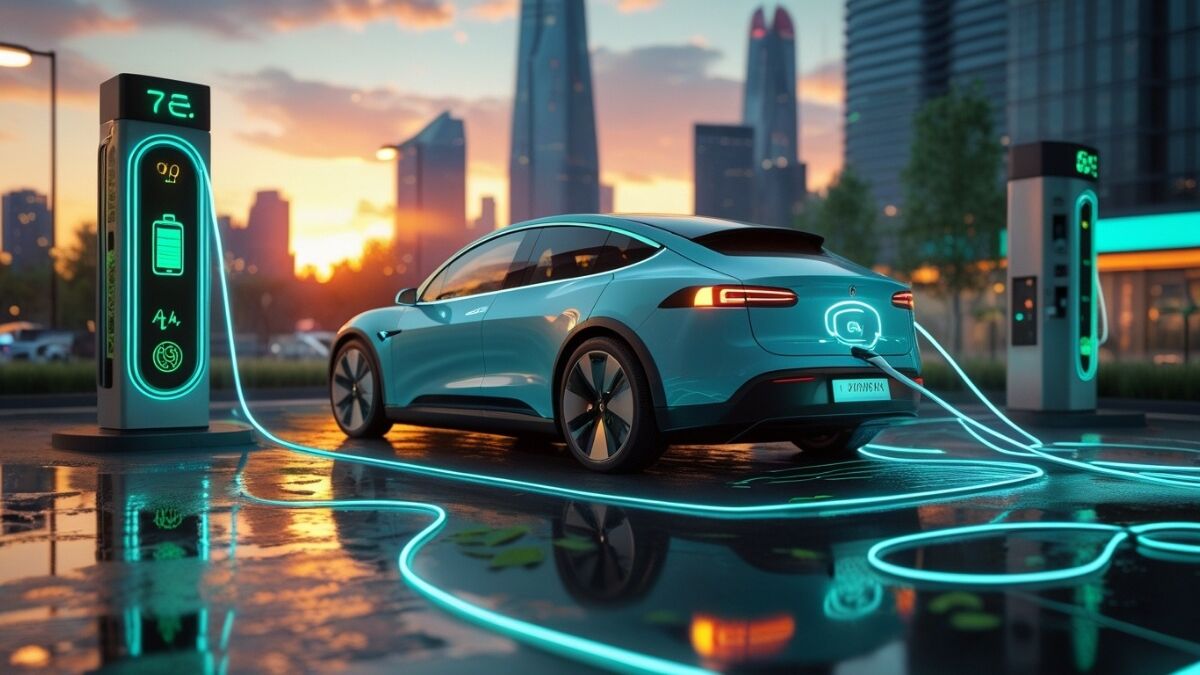
If India is able to finalize a long-awaited trade deal with the European Union (EU), likely as early as next week, its efforts to draw in international manufacturers of electric vehicles could pick up steam.
India-EU Trade Deal and Electric Vehicle Manufacturing
According to industry experts, the proposed free trade agreement (FTA) will determine whether international automakers commit to production up front or enter the Indian market through imports.
Ursula von der Leyen, chairperson of the European Commission, stated that India and the EU were “on the edge of a historic trade agreement” during her speech at the World Economic Forum in Davos on January 20.
“Mother of All Deals” and Global Economic Impact
She referred to the agreement as the “mother of all deals,” stating that it might generate a market with almost two billion consumers and contribute almost 25% of the world’s GDP.
Germany-based automakers dominate the global premium and mid-segment EV market and closely monitor India as a long-term growth opportunity. The EU is home to some of the biggest automobile exporters and premium EV manufacturers in the world.
🚗 EU EV Giants Eye India Market
- EU Car Exports (2024): $180 billion
- EU EV Exports to India: ~$330 million
- Key Players: German premium & mid-segment EV brands
- Barrier: Import duties up to 100%+
- Trigger: India EU EV trade deal tariff outcome
High Import Duties Limit European EV Presence
Cars are a significant export sector for the 27-nation union, with $180 billion worth of cars exported in 2024, according to trade data from the European Commission and Eurostat.
Due to high import taxes that can reach 100% or more on fully constructed cars, the estimated $330 million in EU vehicle exports to India reflects the limited presence of European brands.
Government EV Manufacturing Scheme Under Review
The government’s Scheme to Promote Manufacturing of Electric Passenger Cars in India (SPMEPCI), which was introduced to attract international EV manufacturers by offering lower import duties in exchange for investment and localization commitments, will also depend on the outcome of the trade negotiations between India and the EU.
If automakers agreed to establish production facilities in India and fulfilled staged localization goals, they might import a restricted quantity of electric vehicles for a lower 15% customs duty. The administration decided not to prolong the application window, which was available until October but received no applications.
⚖️ Import vs Manufacture: The EV Dilemma
- SPMEPCI Offer: 15% import duty with manufacturing commitment
- No Applicants: Scheme closed without extensions
- Industry View: Awaiting India EU EV trade deal clarity
- Risk: Import-led entry without localisation
- Impact: India’s EV manufacturing ambition at stake
Why Automakers Are Waiting
According to industry insiders, automakers waited for clarification on the tariff regime under the India-EU trade agreement, which would provide comparable duty savings without imposing binding manufacturing constraints.
“Any duty decrease under the India-EU trade agreement might significantly alter how European EV manufacturers deal with India.” Companies may choose an import-led entry rather than commit early to manufacturing if the trade agreement offers import duties closer to the 15 percent level that were offered under the government’s scheme, making the EU talks more significant for the EV sector than India’s other trade negotiations, an industry executive stated on condition of anonymity.
Government Signals Possible Policy Revisions
Officials from the heavy industries ministry stated that once the trade agreement is clear, the government may review the EV manufacturing plan.
According to a government official, “the scheme was developed with India’s industrial interests in mind, but its design will have to match with India’s trade commitments.” “Any changes would be contingent upon the ultimate structure of auto tariffs under the trade agreement with the EU.”
FTA Signing and Diplomatic Significance
António Costa, president of the European Council, and Ursula von der Leyen, president of the EU Commission, will be the main guests at the Republic Day parade in Delhi on January 26. The India-EU Free Trade Agreement is scheduled to be signed on January 27.
Frequently asked questions
1. Why is the trade agreement between the EU and India significant for the EV industry?
Global EV manufacturers may decide to invest in local manufacturing or import automobiles into India as a result of the trade agreement’s potential reduction of import taxes on EVs.
2. How high are India’s current import taxes on electric vehicles?
Currently, fully constructed electric vehicles are subject to import tariffs of up to 100% or more in India, which raises the cost of imported EVs and reduces the visibility of European brands.
3. Describe the SPMEPCI program and explain its failure.
Due to the uncertainties surrounding the India-EU free trade agreement, the Scheme to Promote Manufacturing of Electric Passenger Cars in India, which provided lower import taxes (15%) in exchange for manufacturing commitments, did not get any applications.
4. How may the EU trade agreement impact India’s domestic manufacturing?
Automakers might choose to import cars rather than establish manufacturing facilities in India if the FTA permits reduced import taxes without requiring localization.
5. What is the anticipated signing date of the India-EU FTA?
Top EU officials are scheduled to attend India’s Republic Day celebrations on January 27, the day the agreement is anticipated to be inked.
Conclusion
India’s electric vehicle ecosystem may undergo a sea change as a result of the proposed free trade deal between the EU and India. Lower import taxes raise questions about long-term manufacturing commitments even though they might hasten the entry of international EV brands.
In order to balance India’s aspiration to become a hub for EV manufacturing with its objective of swiftly drawing in international manufacturers, the ultimate tariff structure would be essential. The conclusion of the agreement will probably influence EV competition, localization, and investments in India for years to come.
Disclaimer
This article is for informational purposes only and is based on publicly available information and industry sources. It does not constitute financial, legal, or investment advice. Readers are advised to verify details from official sources.
