
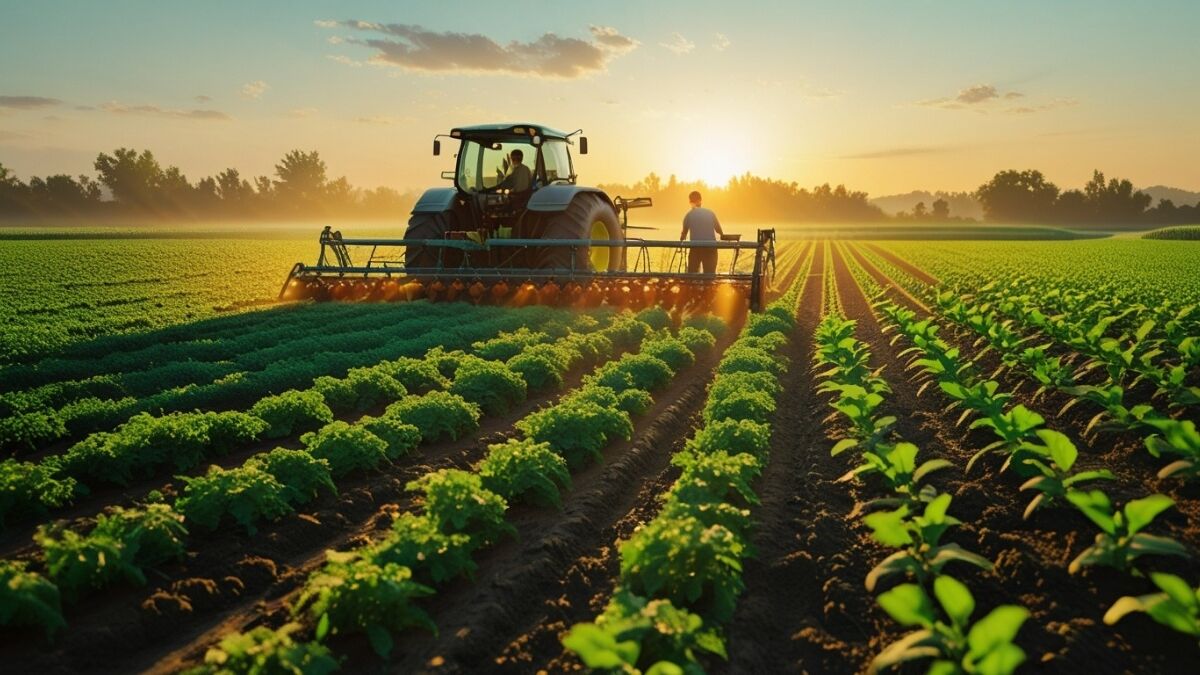
Even while the nation is still mostly reliant on imports of edible oils and pulses, India’s food grain procurement system, which was initially focused on rice and wheat, has grown far beyond its original food-security objective, producing an expensive excess.
India’s Food Grain Procurement and Challenges
To maintain price stability, boost farmer incomes, and guarantee dependable supplies for the public distribution system (PDS), successive administrations have depended on public procurement. However, in recent years, large-scale procurement—particularly of wheat and rice—has exceeded fundamental requirements for food security, leading to persistently huge buffer inventories and growing carrying costs.
India is still fundamentally reliant on imports of some feedstocks, grains, and edible oils.
Policy Shift Toward Crop Diversification
Crop diversification was highlighted as a policy priority in the Economic Survey 2025–26, which was presented to Parliament on Thursday. It argues that India’s production pattern needs to change from an excessive concentration in rice and wheat to pulses, oilseeds, and other crops that are more in line with consumption demands, resource sustainability, and import reduction.
Mint outlines why changing the MSP (minimum support price) or weakening procurement is no longer preferable over a voluntary approach supported by targeted incentives and funded by efficiency benefits within the current system.
Environmental and Economic Pressures
Pressures on the economy, ecology, and finances have resulted from the wheat-paddy cycle’s prolonged dominance. Particularly in northwest India, paddy agriculture uses a lot of water and contributes to soil erosion, groundwater depletion, and increased energy use. At the same time, restricted crop options subject farmers to economic stagnation.
Additionally, procurement has grown significantly. According to government statistics, an estimated 30.03 million tons of wheat were purchased during the Rabi selling season 2025–2026.
🌾 Wheat & Rice Procurement Data
- Wheat Purchased: 30.03 million tons (Rabi 2025–2026)
- Paddy Purchased: 83.2 million tons (2024–2025 Kharif)
- Current Season Paddy: 66.7 million tons up to Jan 29, 2026
- Food Grain Stock (FCI): 58.4 million tons as of Jan 1, 2026
- Increase: 10.9 million tons more than previous year
In terms of paddy, 83.2 million tonnes were purchased during the 2024–2025 kharif marketing season, while 66.7 million tonnes were purchased up to January 29, 2026, during the current 2025–2026 season.
According to the Food Corp. of India (FCI), total food grain stock (wheat and rice) in the central pool was at 58.4 million tonnes as of 1 January 2026, almost 10.9 million tonnes more than the same time previous year.
Fiscal Burden of Excess Inventory
Fiscal constraints have increased as a result of surplus inventory and growing storage expenses brought on by large-scale manufacturing and procurement. Experts claim that excess procurement results in enormous goods that are kept in storage for extended periods of time, which raises warehouse rents, interest on carrying charges, handling and transportation costs, and losses from deterioration and waste. When combined, these increased expenses for finance, storage, and upkeep greatly increase the financial load on the government.
“Excess inventories put a pressure on public resources by raising storage, handling, and financing expenses. The yearly cost of carrying food grain inventories for the FCI is around ₹2,400 per tonne, or nearly ₹200 per tonne per month, if the stock is kept for a year. Thus, in the end, it burdens the exchequer,” said agricultural economist G. Chandrashekhar, who has participated in the National Agricultural Innovation Project, a joint World Bank-Government of India (ICAR) initiative.
Import Dependence and Opportunities
India is still fundamentally reliant on imports of some feedstocks, grains, and edible oils. According to government statistics, India produced 25.6 million tonnes of pulses in FY25 and imports between 5-7 million tons a year to fulfill local demand.
There are now 25–26 million tons of edible oil used and 11 million tonnes produced domestically. Imports account for the remaining 60%.
Major Import Sources
The nation imports sunflower oil from Russia and Ukraine, soybean oil from Argentina and Brazil, and edible palm oil from Indonesia and Malaysia.
With almost 60% of edible oils and large quantities of pulses imported in 2024–2025 (16.4 million tonnes of edible oil and 7.3 million tonnes of pulses), this indicates that India is heavily dependent on imports for both edible oils and pulses.
Strategy for Crop Diversification
These gaps provide a chance to completely maintain the food security architecture while coordinating agricultural assistance with evolving consumption patterns, environmental sustainability, and national self-reliance.
The first stage might concentrate on the eastern and central areas, where pulses, oilseeds, and maize are economically and agronomically feasible due to rainfall patterns, soil characteristics, and market access.
According to the Economic Survey 2025–2026, “once the strategy has been tried and developed, regions that are strategically vital for national food security may be added in subsequent stages.”
Benefits of Diversified Crops
Pulses, oilseeds, and maize work very well with the current agricultural techniques across a lot of eastern India. Oilseeds like soybeans and gram are well adapted to the soil and rainfall conditions in central areas.
These crops directly assist national priorities: maize and oilseeds help the growth of ethanol, livestock, and bioenergy value chains, while pulses and edible oils lessen reliance on imports.
💡 Crop Diversification Initiatives
- Punjab & Haryana: Considering crop diversification to improve farm incomes & address groundwater depletion
- Strategy: Voluntary, agronomy-led diversification
- Incentives: Per-acre or per-quintal incentives, input subsidy adjustments, transitional finance
- Focus Areas: Eastern & central India initially, then strategic northern regions
- Infrastructure: Investment in post-harvest, processing, and value-chain development
Because agricultural incomes are susceptible to weather shocks, market volatility, and growing input prices, price and income support measures continue to be crucial. Small and marginal farmers are less resilient and have less negotiating leverage.
According to Economic Survey 2025-26, rather than modifying MSP or weakening procurement, a calibrated plan may leverage savings from better stock management to enable voluntary crop diversification.
For a portion of their rice and wheat land, farmers may be presented with financially appealing alternatives, especially in areas where procurement quantities are large but farm profitability is still low and agro-ecological factors favor other crops.
Implementation and Incentives
Center-state collaborations would be created to carry out state-level diversification initiatives. States would finance their portion via complementary advantages like decreased input subsidies and current incentive systems for sustainable agriculture, while the Center would contribute through procurement, storage, and interest savings.
According to the poll, interim finance might be offered as necessary, provided that acreage changes and subsidy savings are confirmed.
Per-quintal or per-acre incentives may balance production variations and transitional costs, according to the study, ensuring that diversification does not expose farmers to income risk.
When paired with reduced input costs for water, fertilizer, and energy, modest incentives might make alternative crops more financially appealing than continuing to monocrop rice or wheat.
By lowering the buildup of surplus inventory and related carrying costs, these incentives may be funded, making the strategy both fiscally neutral and farmer-centric.
Using public-private partnerships and the Agri-Infrastructure Fund, a portion of the savings should also be put in post-harvest and value-chain infrastructure, such as oilseed processing, pulse milling, maize drying, and ethanol connections.
By offering region-specific seed and agronomic packages as part of an integrated diversification framework, research organizations and agricultural colleges may facilitate the shift.
A workable method to increase farmer incomes, reduce financial strain, and improve long-term food and nutritional security is to fund voluntary, agronomy-led diversification by leveraging the efficiency of the current procurement system.
Frequently Asked Questions
1. Why can not India just lower its MSP or purchase of wheat and rice to promote diversification?
Changing MSP or procurement might jeopardize food security and reduce farmer earnings. Rather, farmers may safely diversify while maintaining stable pricing and the public distribution system via voluntary incentives and financial assistance.
2. Which crops are being encouraged to diversify?
Pulses, oilseeds, maize, and crops connected to ethanol are the main emphasis. Based on rainfall, soil, and market availability, these crops are appropriate for eastern and central India, increase farm profitability, and lessen reliance on imports.
3. How will farmers be motivated to change their crops?
Reduced transporting and storage expenses for extra wheat and rice supplies will go toward: Per-acre or per-quintal incentives for alternative crops, modifications to subsidies for inputs such as energy, fertilizer, and water, and transitional funding for areas with changing agricultural practices.
4. Which areas are the primary focus of diversification efforts?
The first stage focuses on eastern and central India, where the agro-ecological conditions are ideal for maize, oilseeds, and pulses. In order to solve challenges of sustainability and groundwater depletion, Punjab, Haryana, and other northwestern areas may eventually join.
5. How will the government guarantee the sustainability and budgetary neutrality of this approach?
A portion of the savings are reinvested in post-harvest infrastructure, processing, and value-chain development via public-private partnerships, while incentives are financed by efficiency benefits from lower buffer stocks.
Conclusion
The goal of India’s crop diversification movement is to strike a balance between national food security, environmental sustainability, and farmer earnings. via the use of voluntary incentives made possible by savings in the current procurement structure.
Without affecting MSP or undermining procurement, the government aims to relieve budgetary constraints, lessen import dependency on pulses and edible oils, and decrease over-reliance on rice and wheat. The approach ensures a robust and independent agriculture industry by combining economic wisdom with sustainability.
Disclaimer: This content is for informational purposes only and does not constitute financial, agricultural, or investment advice. Readers should verify facts and consult relevant experts before making decisions.
