
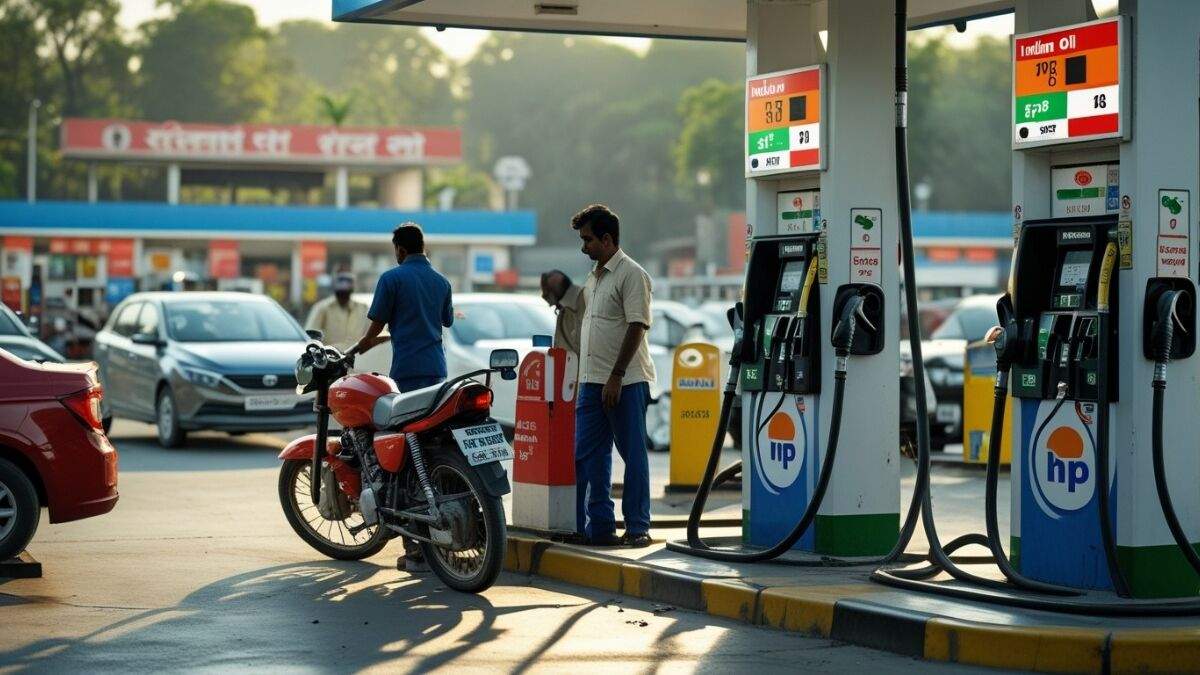
Rising global crude oil prices driven by geopolitical tensions in West Asia are beginning to impact fuel costs in India, particularly premium petrol variants.
fuel Price Increase in India: Due to increasing global crude prices brought on by mounting tensions in West Asia, oil marketing firms on Friday raised the price of premium fuel by around Rs 2 per litre starting on March 20.
Premium Fuel Prices Rise in India Amid Global Oil Surge
Hindustan Petroleum Corporation Limited and Indian Oil Corporation Limited, two state-owned oil marketing corporations, have increased the cost of their premium fuel versions by around Rs 2.09 to Rs 2.35 per litre.
⛽ Premium Fuel Price Hike
- Increase: ₹2.09 – ₹2.35 per litre
- New Price: ₹113.77/litre approx
- Old Price: ₹111.68/litre approx
- Affected Fuels: Power petrol, XP95
- Effective Date: March 20
Impact on Consumers and Fuel Variants
The cost of branded fuels like Power petrol and XP95 has gone up from around Rs 111.68 per litre to over Rs 113.77 per litre as a result of this modification. The general population is somewhat relieved despite growing fuel worries, however, since standard gasoline and diesel prices have not changed.
The increase in premium gas prices coincides with severe volatility in the world’s crude oil markets as a result of geopolitical unrest in West Asia. Following assaults on the region’s vital energy infrastructure, oil prices increased by more than 4% on March 19.
Global Oil Price Surge and Market Reaction
West Texas Intermediate (WTI), the US benchmark, increased to over $99.57 per barrel, while Brent oil futures increased to around $111.78 per barrel. The increase came after Iran allegedly retaliated against Qatar’s Ras Laffan industrial city, a significant worldwide gas center, and Israel attacked Iran’s South Pars gas field, the biggest in the world.
🌍 Global Oil Market Impact
- WTI Price: ~$99.57/barrel
- Brent Price: ~$111.78/barrel
- Trigger: West Asia conflict escalation
- Key Events: Attacks on Ras Laffan & South Pars
- Impact: Supply concerns & price volatility
India’s Dependency on Crude Oil Imports
Experts warn that interruptions in the Gulf area might affect oil supply systems globally, raising worries about the security of the world’s energy supply. Such trends directly affect gasoline prices for India, which imports about 90% of its crude oil requirements.
Although ordinary gasoline prices have not risen as of yet, the pressure from increasing global crude costs is reflected in the rise in premium fuels. According to industry analysts, domestic gasoline prices may see more changes in the next weeks if tensions persist and oil prices stay high.
Recent Price Movements and Market Volatility
As Iran attacks Gulf energy installations, oil prices on Friday reversed previous gains due to the escalating Iran conflict, returning to around USD 108 per barrel. Meanwhile, Asian stocks were mostly down after losses on Wall Street.
Thursday was a wild day for oil prices, with the worldwide benchmark Brent crude momentarily rising to almost USD 119 per barrel as Iran intensified its strikes on gas and oil infrastructure in the Gulf after Israel’s attack on Iran’s vital natural gas facility.
Following Israeli Prime Minister Benjamin Netanyahu’s comments that he will postpone more strikes on Iran’s gas field at the request of US President Donald Trump, Brent oil dropped 0.4% to USD 108.19 per barrel in early Friday trade. At USD 94.40 a barrel, benchmark US crude was down 1.2%.
Frequently Asked Questions
1) Why has the price of premium gasoline increased in India?
Due to rising global crude oil prices, which were mostly caused by geopolitical conflicts in West Asia that affected supply and raised the cost of fuel procurement overall, premium petrol prices went up.
2) What fuels is this price increase affecting?
Regular petrol and diesel prices have not risen, providing the general population with short-term respite. Only premium fuel variations, such as Power petrol and XP95, suffered price rises.
3) How much has the cost gone up?
Rates went from almost Rs 111.68 to almost Rs 113.77 per litre as oil firms increased premium fuel prices by about Rs 2.09 to Rs 2.35 per litre.
4) Will normal gas prices rise in the near future?
Depending on market circumstances and governmental rules, oil firms may adjust normal petrol and diesel prices in the next weeks if global crude prices stay high owing to continued tensions.
5) How do international conflicts affect gasoline costs in India?
Since India imports the majority of its crude oil, local fuel prices are directly impacted by interruptions in international supply chains or wars in oil-producing countries, which puts further financial strain on consumers.
Conclusion
The increase in premium gas prices is a reflection of the worldwide volatility in oil prices brought on by geopolitical concerns. Although normal gasoline prices are currently steady, more volatility might result in more significant price hikes that would affect consumers throughout the country.
Disclaimer: This content is for informational purposes only. Fuel prices are subject to change based on global market conditions and government policies.
