
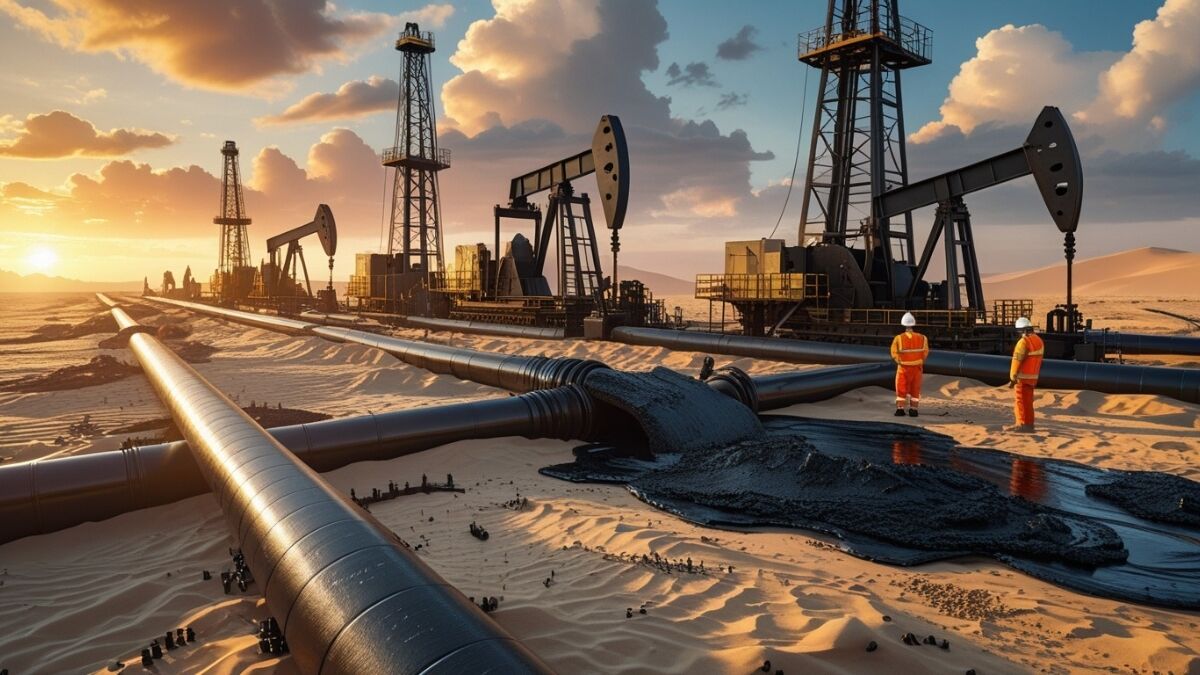
Geopolitical tensions in West Asia are once again highlighting India’s vulnerability in the global energy supply chain. With the ongoing conflict affecting critical maritime routes and LNG shipments, India’s heavy reliance on natural gas imports—especially from Qatar—has become a major concern for policymakers and industries.
India is heavily reliant on gas imports, especially from Qatar. A protracted conflict might exacerbate the nation’s already dire supply interruptions.
India Faces Gas Supply Disruptions Amid West Asia Conflict
Due to supply disruptions caused by the conflict in West Asia, India is currently experiencing a scarcity of LPG. The ongoing conflict between Iran and Israel prevented Petronet LNG Ltd.’s liquefied natural gas (LNG) tankers from reaching Ras Laffan, a loading port in Qatar, so last week the company, which essentially funnels about one-third of India’s gas supplies, invoked a force majeure clause with its largest supplier.
The LNG supplier, QatarEnergy, declared its own force majeure to Petronet LNG two days later. The Strait of Hormuz, a vital route for the transportation of gas and oil to numerous nations, including India, has seen a stop in maritime activity due to the ongoing conflict. The deadlock has brought attention to India’s reliance on gas imports, especially from Qatar, and how this affects many different industries.
🛢 India’s Natural Gas Import Dependence
- Total Gas Import Share: Around 50% of India’s gas consumption
- Major Supplier: Qatar provides 40–50% of imports
- Main Import Form: Liquefied Natural Gas (LNG)
- Key Shipping Route: Strait of Hormuz
- Major Import Companies: Petronet LNG and GAIL
- Risk Factor: Geopolitical conflict affecting supply routes
Natural Gas Role in India’s Energy Mix
Natural gas has gradually increased its share of India’s energy mix over time, supporting coal in the power sector and crude oil in the transportation sector. After coal (60%) and crude oil (29%), natural gas made up roughly 7% of India’s total energy consumption in 2023–2024, according to government statistics.
India has established a goal to raise its share of natural gas to 15% by 2030 because of its lower carbon emissions, which make it a cleaner fuel. It is now far less likely than it was previously.
Rising Gas Imports and Falling Domestic Production
Approximately one-third of India’s energy basket is currently experiencing supply and pricing issues as a result of the disruption in West Asia. From roughly 28% in 2011–12 to 50% in 2024–2025, the proportion of imports in India’s gas basket has grown. India’s gas production decreased by almost 23% between 2011–12 and 2024–2025, which contributes to this increase. In the meantime, imports doubled over that time to satisfy India’s rising gas demand.
LNG is India’s main source of natural gas imports. This is natural gas that has been liquefied to reduce its volume tenfold, enabling long-distance ship transportation more cost-effective and efficient than pipelines. The demand for LNG in India has increased by 50% over the past ten years, but the rise has been uneven. This indicates that although demand is increasing structurally, it is still price-sensitive.
⚡ Major Natural Gas Consumption Sectors in India
- Top Consumers: Fertilizer industry and City Gas Distribution (CGD)
- CGD Usage: Piped gas for homes and CNG for vehicles
- Household Connections: 16.2 million piped gas users (Dec 2025)
- CNG Stations: Around 8,600 across India
- Major States: Delhi, Uttar Pradesh, Gujarat, Maharashtra
- Share: These four states hold about 73% of piped gas connections
Domestic Gas Production Challenges
As of December 2025, India had 16.2 million home piped gas connections and about 8,600 CNG stations. Four states account for almost 73% of these connections: Delhi, Uttar Pradesh, Gujarat, and Maharashtra. Eighty percent of commercial connections and sixty percent of industrial connections are located in these four states.
One of India’s structural issues with energy self-sufficiency has been its incapacity to increase domestic natural gas output. Domestic production fell 40% between 2011–12 and 2020–21. Although production has increased since then, it is still roughly one-fourth of what it was at its highest point in 2011–12.
KG-D6 Block Decline and Policy Efforts
The collapse of output from KG-D6, an offshore block along the Andhra Pradesh coast owned by British Petroleum and Reliance Industries, was the primary cause of the decline in domestic production. Along with government-owned ONGC’s efforts in the same region, it was resurrected after 2021, but output has not recovered the high of 2011–12.
The government implemented the Open Acreage Licensing Policy (OALP) in 2017 to continuously distribute blocks to interested businesses in order to accommodate new participants and capacity. This program, which was based on a revenue-sharing concept and lower royalty rates, allowed businesses more latitude in selecting oil and gas blocks. Blocks have been allocated, but production and discovery will take time.
India’s Heavy Dependence on Qatar
India has little alternative but to heavily rely on imports due to the lack of sufficient local gas output or even signs of a rise. India has an excessive reliance on one nation, Qatar, even when it comes to imports.
Over the past eight years, Qatar has supplied 40–50% of India’s natural gas across the Strait of Hormuz. Petronet LNG and GAIL (India), the two leading gas trading and distribution firms in India, have long-term agreements to purchase substantial amounts of LNG from Qatar.
LPG Imports and Energy Vulnerability
After the United States, Russia, Iran, China, and Canada, Qatar was the sixth-largest producer of natural gas in 2023, according to the International Energy Agency. India’s output was only a fifth that of Qatar, placing it 22nd. India is suffering greatly from its reliance on Qatar. The Indian government is attempting to reroute current supplies to car gas outlets and piped gas connections since stockpiles are running short.
By 2030, India hopes to have 120 million piped gas connections, a seven-fold increase from the current number. India’s economy will be vulnerable to supply and price risk if domestic production is not revived, making the country more and more dependent on imports. LPG is an alternative to piped gas and is more prevalent in Indian homes than piped gas.
Natural gas fields provide LNG, whereas oil refining extracts LPG. However, India’s reliance on LPG imports is comparable to that of LNG in terms of supply. Imports from West Asia account for more than half of the consumption. About 32% of India’s LPG supply came from imports in 2010–11.
In 2024–2025, this has almost risen to 62%. India will suffer from a protracted disruption in LNG and LPG imports. The reopening of the Strait of Hormuz depends on the supply from India’s long-term gas commitments. Additionally, purchases made on the spot market will be somewhat costly.
Frequently Asked Questions
1. Why is there currently a gas scarcity in India?
The Iran-Israel conflict has hindered trade via the Strait of Hormuz, resulting in a gas scarcity in India. This has affected India’s gas supplies by preventing LNG shipments from Qatar, particularly from Ras Laffan.
2. To what extent does India rely on natural gas imports?
India imports 50% of its natural gas, with Qatar accounting for 40–50% of these imports, indicating a significant reliance on foreign supplies.
3. In India, which industries use the most natural gas?
About half of India’s natural gas is used by the fertilizer industry and City Gas Distribution (CGD), which comprises piped gas for houses and CNG for cars.
4. Why has not India produced more gas domestically?
After output fell in the Reliance Industries and BP-operated Krishna-Godavari Basin KG-D6 block, domestic production fell and has not yet reached previous peak levels.
5. What impact might an extended conflict have on India?
A protracted battle could result in lower supplies, higher prices for LNG and LPG, and higher expenses for homes, cars, and businesses.
Conclusion
India’s energy security is susceptible to geopolitical tensions in West Asia due to its strong reliance on gas supplies, particularly from Qatar. Stability depends on expanding domestic manufacturing and diversifying sources.
Disclaimer: This article is for informational purposes only. Energy supply situations and geopolitical developments may change rapidly, and readers should rely on official government updates for policy decisions.
