
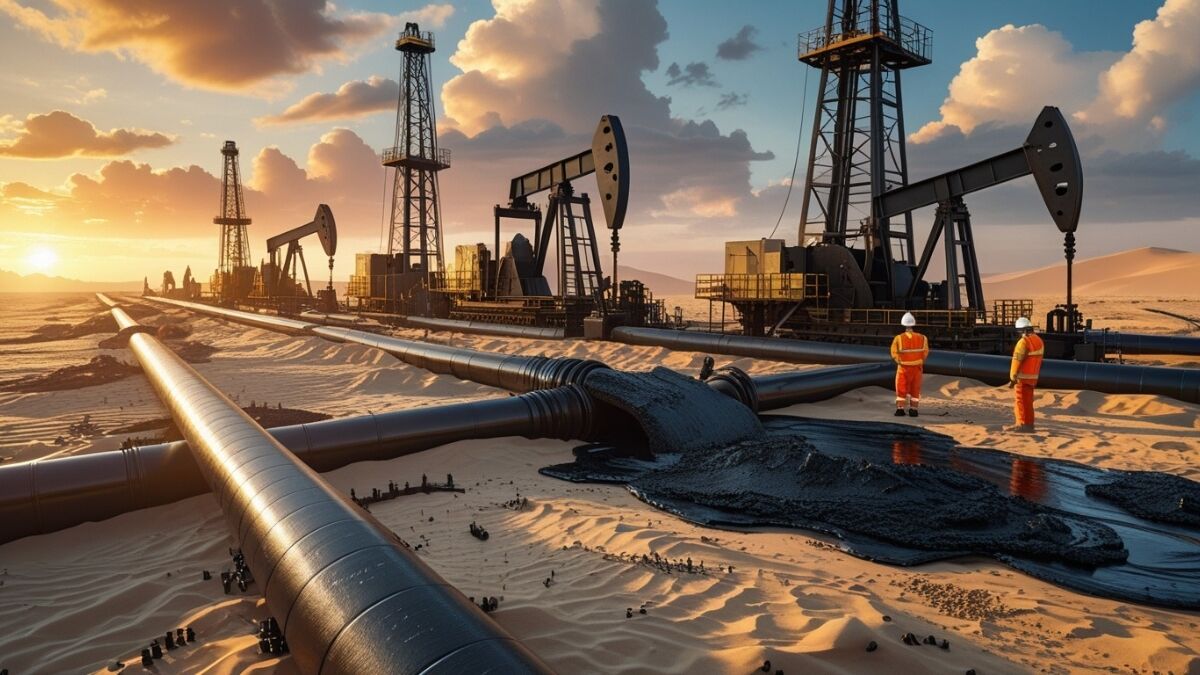
Rising tensions in the Middle East and the Iran conflict have shaken global energy markets. China, the world’s largest oil importer, has spent years preparing for such disruptions by strengthening its energy security strategy and building large oil reserves.
China has been planning for this kind of emergency situation for a long time. The Middle East conflict is causing unrest in the global energy market.
China’s Long-Term Strategy to Handle Global Energy Crises
Beijing has been spending extravagantly to reduce the amount of oil it needs to import, building up significant stockpiles and diversifying its energy sources out of concern that the conflict in the region could severely harm its economy by cutting off the supply.
Many of those concerns have come to pass as a result of the Iran war, which is the largest test to date of China’s attempt to strengthen its economy against what it perceives as the U.S.’s reckless actions. Iran has attempted to effectively cut off energy shipments through the Strait of Hormuz, a vital waterway connecting producers like Saudi Arabia to oil-importing countries in Asia and beyond.
Impact of the Strait of Hormuz Tensions
China is less reliant on the Strait of Hormuz for energy than other economies like Japan and South Korea, while being the world’s largest importer of oil in terms of total barrels.
Leader Xi Jinping has made protecting China from energy shocks a top concern. Increasing the usage of electric vehicles to replace gas-guzzlers while concurrently pumping more petroleum from within China’s borders is a key component of its goal. Meanwhile, Beijing’s dependence on the Middle East has decreased thanks to a growing energy alliance with Russia.
China Builds Massive Oil Reserves
At the same time, China has amassed enormous oil reserves, probably exceeding 1.2 billion barrels, sufficient to cover its imports for at least 100 days.
China’s petroleum imports increased by about 16% in the first two months of 2026 compared to a year earlier, according to customs statistics released on Tuesday, indicating Beijing’s continuous hoarding in the run-up to the Iran conflict.
⛽ China’s Strategic Oil Reserve Plan
- Reserve Size: Over 1.2 billion barrels
- Coverage: Enough for roughly 100 days of imports
- Import Growth: Oil imports rose about 16% in early 2026
- Goal: Protect economy from global supply shocks
- Strategy: Stockpiling, diversification, and domestic production
According to Michal Meidan, who studies China’s energy systems at the Oxford Institute for Energy Studies, “their policy has truly provided them a large buffer.”
Beijing is not pleased with the supply disruptions, despite this. For a nation whose economy is already in trouble, the expenses increase with the duration of the conflict and the disruption of supplies over the Strait of Hormuz. Liquefied natural gas shortages may put pressure on chemical and industrial firms in the near future.
Oil Price Volatility and Global Concerns
The Strait of Hormuz situation is still unstable. Before declining to about $90 per barrel as of Tuesday, Brent crude prices first surged to almost $120 per barrel. On Monday, representatives from the Group of Seven industrialized economies—which consists of the United States, Canada, and France—met to talk about the potential to deplete some reserves.
Producing as much of what it needs from domestic resources is a fundamental component of China’s energy security strategy. China has prioritized using electricity whenever possible, such as by switching to electric cars from gasoline-powered ones, because its oil and gas reserves are scarce and costly to obtain.
Shift Toward Renewable Energy and Electricity
China has a large supply chain for producing solar panels and wind turbines, as well as an abundance of indigenous coal deposits to provide electricity. China uses the biggest power grid in the world to connect its electrical network.
One part of a larger effort to become as independent as feasible in order to prevent escalating global instability is China’s energy-security plan. Even when items can be obtained more affordably through international trade, party leaders are increasingly choosing to create what they need in order to protect themselves from threats to global security, from sophisticated robots to agriculture.
⚡ China’s Energy Independence Strategy
- Electric Vehicles: Reduce gasoline dependence
- Renewables: Massive solar and wind production capacity
- Coal Reserves: Large domestic electricity supply
- Power Grid: World’s largest electricity network
- Goal: Reduce exposure to global energy instability
According to the International Energy Agency, China’s oil consumption is more likely to plateau than decline at least through the end of the decade, even if its demand is predicted to peak in the coming years. This implies that it will remain exposed to the Middle East for some time to come.
Strengthening Energy Ties with Russia
China will need to strengthen its relationship with the new Tehrani leadership, a crucial regional ally that it has been courting for decades. Although China’s foreign minister has called for a cease-fire and denounced the latest attacks on Iran, the Chinese government has shown little sign of providing Tehran with anything more than verbal assistance.
A spokesman for the Chinese Foreign Ministry stated on Monday that China will take steps to protect its energy security, but he did not specify if the country would transfer any of its oil stockpiles to aid with market stabilization. When asked for comment, China’s National Energy Administration did not immediately reply.
Potential Expansion of Russia–China Energy Projects
Beyond the Middle East, the conflict with Iran may increase Russia’s energy supply to China by, for example, advancing the construction of a new natural gas pipeline that would connect the two nations. The much-discussed project, known as the Power of Siberia 2, puts Beijing at risk of becoming unduly dependent on Russian energy. However, analysts warn that if the Middle East continues to be unstable, China may prioritize securing all the gas it requires.
More importantly, according to Neil Beveridge, who monitors China’s energy industry at Bernstein Research, the attack on Iran will further strengthen China’s quest for energy independence.
Frequently Asked Questions
1. Why has China been getting ready for an oil crisis involving Iran?
Being the world’s biggest oil importer, China was concerned that Middle East wars, particularly those near the Strait of Hormuz, could interrupt oil supply and harm its economy.
2. How has China lessened its reliance on oil from the Middle East?
China expanded the use of renewable energy and electric vehicles, increased imports from Russia, and increased domestic production to diversify its energy sources.
3. What part do China’s oil reserves play in its strategy?
China has amassed strategic reserves of over 1.2 billion barrels, which are sufficient to sustain imports for roughly 100 days and act as a safety net in the event of supply problems.
4. How does China’s energy security benefit from the use of electric vehicles?
Encouraging EVs lessens reliance on imported crude oil and the need for gasoline.
5. Despite these precautions, what risks does China still face?
Long-term interruptions could still impact businesses, increase reliance on suppliers like Russia, and drive up energy costs.
Conclusion
Through stockpiling, diversification, and the growth of clean energy, China has spent years bolstering its energy security. Long-term instability in the Middle East may still have an effect on China’s economy and energy supply, even though these steps offer a robust buffer against disruptions from the Iran conflict.
Disclaimer: This article is for informational and news reporting purposes only and is based on publicly available information and analysis.
