
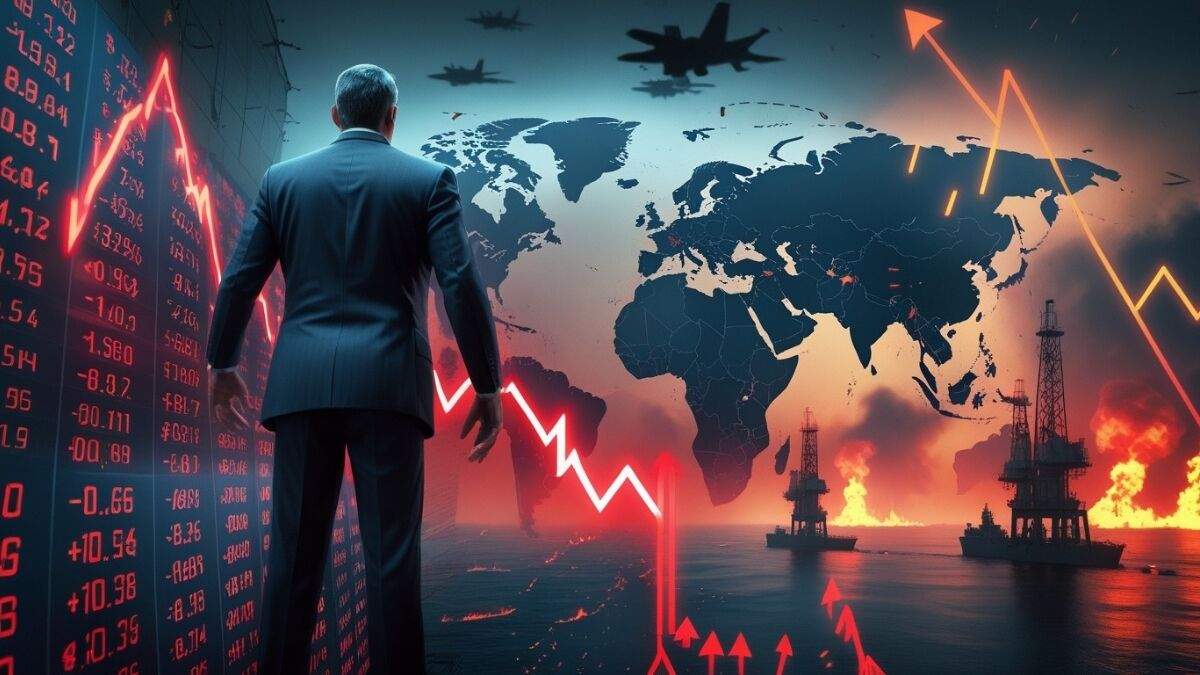
JPMorgan CEO Jamie Dimon has raised concerns over rising geopolitical tensions and their potential impact on global markets, highlighting risks tied to inflation, interest rates, and financial stability.
The CEO of JPMorgan Chase stated that while economic dangers from a protracted battle persist, the threat posed by Iran must be addressed.
Jamie Dimon Warns of Global Economic Risks
Jamie Dimon, CEO of JPMorgan Chase, said that if interest rates begin to rise, the war in Iran may increase inflation and severely depress financial markets.
Dimon warned in his yearly letter to shareholders that more shocks to the price of commodities and oil could occur in the coming months, which could result in extended inflation and eventually higher interest rates.
⚠️ Key Economic Warning
- Main Concern: Iran war impact
- Risk: Rising inflation
- Outcome: Higher interest rates
- Market Impact: Asset price decline
- Timeframe: Possible in 2026
- Driver: Oil & commodity shocks
Inflation and Interest Rate Concerns
“Inflation gradually rising would be the skunk at the party—and it could happen in 2026,” Dimon wrote. “This alone could lead to a decrease in asset prices and an increase in interest rates.”
The 70-year-old CEO also pointed out that, although the United States is now less susceptible to such shocks, sharp rises in oil prices contributed to significant recessions in the 1970s and 1980s. Dimon said that the results of wars between the world’s major countries, such as those in Iran and Ukraine, are more significant than any potential financial or economic repercussions.
Geopolitical Risks and Security Concerns
“We should not ignore the part the current Iranian government has played in encouraging terrorism and killing thousands of people over many years, including Americans and many of its own countrymen,” Dimon stated. “We need to deal with that threat appropriately.”
Since taking over as CEO in the 2000s, Dimon’s yearly letter to shareholders has become customary. He has shifted over time from concentrating on JPMorgan’s performance to offering more general geopolitical and socioeconomic analysis, frequently alerting people to what he believes to be overlooked threats to the global economy.
📉 Financial Market Risks
- High Risk: Private credit market
- Concern: Weak underwriting standards
- Threat: Losses during downturn
- Need: Transparency & regulation
- Market Signal: Possible bear market
- Global Impact: Economic slowdown
Broader Economic and Policy Views
He made recommendations for reforming the European Union, suggested ways to enhance the public education system in the United States, and asserted that an exodus of people from places like New York was a result of rising taxation. He stated that although JPMorgan’s headquarters are still located in the city, the bank has reduced its workforce there and cautioned that no city has a “divine claim to success.”
This year’s letter also included a lot of information regarding Wall Street. Since many lenders’ underwriting standards have declined, Dimon anticipated that most forms of high-risk credit will suffer a greater-than-expected hit in a downturn. JPMorgan is in the midst of the ongoing reckoning in private credit.
Private Credit Market Concerns
Additionally, he contended that “higher standards” and “better openness” were necessary in light of private credit funds’ desire to offer assets to individual customers.
According to Dimon, “not everyone who gives credit is necessarily good at it.” “It should be expected that certain credit issuers would perform far worse than others, and there are many players who are late to this game.” In previous letters to his shareholders, he also made fun of the private equity sector, which has come under fire.
Market Outlook and Political Context
“It is a little surprising that private equity firms, which hold close to 13,000 companies, have not taken better advantage of robust markets to take their companies public, given that stock markets have just reached all-time highs,” he stated. “If and when we have a prolonged bear market, it is difficult to predict what would happen.”
This year’s letter did not address President Trump’s recent lawsuit against JPMorgan and Dimon for shutting down his bank accounts following the riot at the U.S. Capitol on January 6, 2021.
Support for Policy and Economic Strategy
DimOn stated that he backed Trump’s deregulatory efforts since taking office and that JPMorgan intended to assist the White House in achieving its more general policy objectives by assisting businesses vital to the nation’s economic and military security. Dimon stated, “JPMorganChase is well-positioned to do its part.”
Frequently Asked Questions
1. What did Jamie Dimon warn about, and who is he?
The CEO of JPMorgan Chase, Jamie Dimon, cautioned that the Iranian crisis could have a detrimental effect on international financial markets and economic stability in addition to raising inflation and interest rates.
2. How can the situation in Iran impact inflation?
Dimon emphasized that sustained inflation might result from rising oil and commodity prices brought on by geopolitical tensions, raising the cost of products and services and compelling central banks to raise interest rates.
3. Why do markets worry about rising interest rates?
Higher interest rates can lead to financial market downturns and hinder global economic growth since they raise borrowing costs, discourage investment, and generally depress asset prices like stocks and bonds.
4. Regarding private credit markets, what dangers did Dimon mention?
Dimon cautioned that inexperienced players in private credit markets and laxer lending criteria could result in greater-than-anticipated losses during recessions, necessitating greater transparency and more stringent regulation.
5. What more general geopolitical issues did Dimon bring up?
He underlined that foreign conflicts, such as those involving Iran and Ukraine, have ramifications that go beyond economics and impact long-term global power dynamics, international stability, and security.
Conclusion
Dimon highlights growing geopolitical tensions, inflation threats, and vulnerable credit markets, cautioning that poor financial discipline and international disputes could lead to rising interest rates, declining assets, and more widespread economic turmoil.
Disclaimer: This article is for informational purposes only and reflects evolving global economic and geopolitical conditions.
