
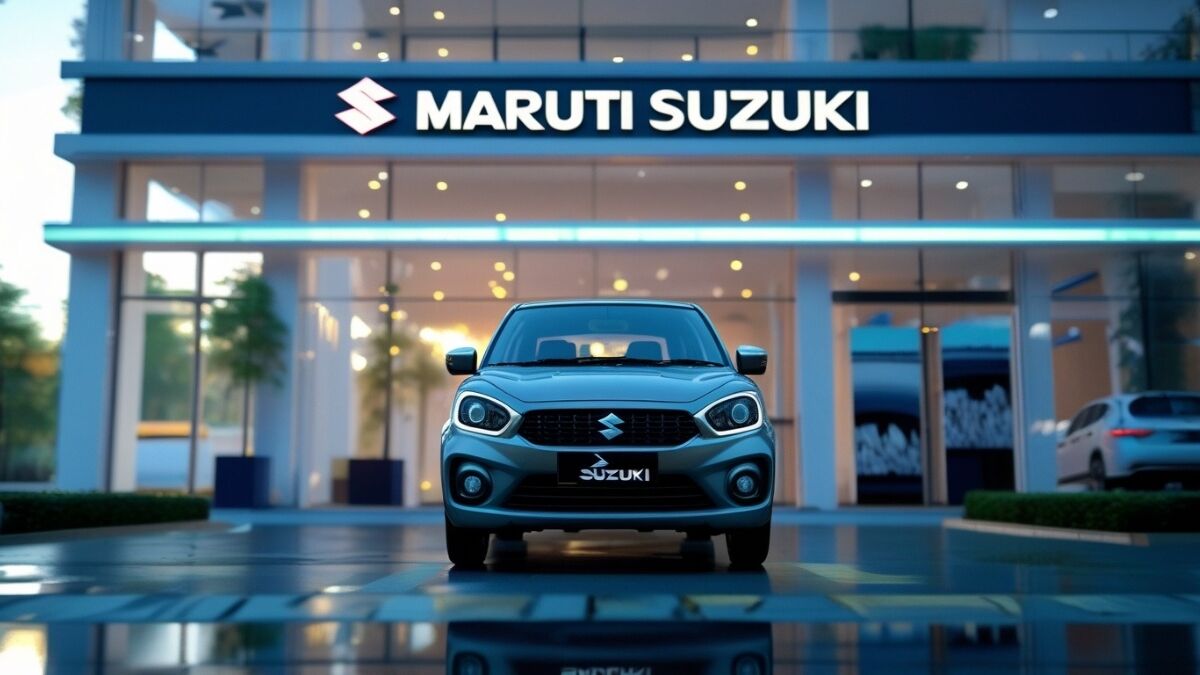
Maruti Suzuki India Ltd., the biggest automaker in India, is putting more emphasis on producing little vehicles like the Alto and Spresso, even if it means reducing production of larger models, since it thinks there is still room for development in the third-largest automotive market in the world.
Focus on Small Vehicle Production
The New Delhi-based automaker said on Thursday that sales of small vehicles, such as the Alto and Spresso, almost doubled in December. Thanks to recent reductions in the goods and services tax (GST), the firm is increasing manufacture of these cars to fulfill retail reservations.
Maruti’s overall domestic sales jumped by 36% to 192,115 units in December as a result of a 92% year-over-year rise in micro vehicle dispatches to dealers to 14,225. The portfolio of larger utility vehicles increased by 33% year over year to reach 73,818.
Gradual Increase in Minicar Manufacturing
According to a senior executive, sales figures for December suggest a gradual increase in the manufacturing of minicars after wholesale statistics for October and November revealed a lackluster performance.
“There were several inquiries about why this market is not expanding. To be clear, these are the wholesale figures. During a news conference on Thursday, Partho Banerjee, senior executive officer-marketing and sales, said, “We were doing very well with the retail figures in the prior two months.”
Production Adjustments Due to Capacity
Banerjee said, “Due to restricted capacity, the corporation must forgo production of certain other models from categories like compact vehicles as it races to supply such little cars to the dealers.”
“We have to give up certain other models in order to produce more tiny vehicles. Therefore, we are attempting to manufacture the models and send them to clients in order to service them on a turn-by-turn basis,” Banerjee said.
Maruti Suzuki’s Production Capacity
Indeed, Maruti Suzuki can produce 2.6 million passenger cars a year at four plants in Gujarat’s Hansalpur and Kharghoda and Haryana’s Gurugram and Manesar.
Given that demand for its vehicles has increased recently, Maruti, which has been offering high discounts since early September in addition to GST reductions as part of its strategic pricing, is now debating whether to continue with such rates. Banerjee assured reporters, “We will make a decision shortly.”
Declining Demand in Compact Cars
Since the GST rate rationalization, the compact car market has been under scrutiny since customers have been switching to sports utility vehicles (SUVs) in recent years, which has resulted in a decline in demand. Small cars have suffered as SUVs have increased from one in five to one in two vehicles on Indian roads since 2019.
The Society of Indian Automobile Manufacturers (Siam), the industry’s leading advocacy organization, released figures for October and November on //date//, raising doubts about whether the GST decrease might revitalize the tiny vehicle market.
Micro Vehicle Sales Trends
According to Siam statistics, the total number of micro automobiles increased by barely 3% year over year to 22,415 units in October and November, while the number of compact SUVs less than four meters increased by 17% to 207,180 units.
Mini vehicles, which have been most damaged over the previous several years, still have a long way to go before they recover, even if December showed significant increase. Maruti had a 15% drop in tiny car sales between April and December, down to 76,044 units, despite strong growth in the utility vehicle and compact hatchback sectors.
Optimism for Micro Segment Expansion
Nonetheless, Maruti’s management remains optimistic about the segment’s potential for expansion. “Despite witnessing an increase in revenue, we have almost 1.5 months’ worth of pending reservations. Sales increased this month, but there is still a 1.5-month backlog of micro segment automobiles, according to Banerjee.
Regulatory Considerations
The continuing debate among automakers over whether vehicles weighing less than 909 kg should get special relief under the impending pollution standards has also drawn attention to the prospects of the micro car market. Interestingly, every minicar is within this weight limit.
While automakers like Tata Motors, Mahindra & Mahindra, and Hyundai Motor India have resisted any such weight-based relief, Maruti has always maintained that compact vehicles should be given a specific exemption since it would be impossible for them to be competitive in the Indian market otherwise.
GST Impact on Market Growth
As development in the post-GST cuts era would develop gradually, analysts have already highlighted that there is still some optimism for the industry.
The sector will develop in stages, according to Puneet Gupta, director of market analytics company S&P Global Mobility, who previously said that purchasers already involved in the market were mostly responsible for the present pace.
These buyers have since upgraded, showing a clear preference for tiny and sub-compact SUVs.
However, entry-level and small automobiles may experience a comeback in April and May of 2026 if buyers find reasonable costs for the market. The degree of OEM (Original Equipment Manufacturer) commitment to rekindle demand will determine this segment’s return, according to Gupta, who also said that Maruti Suzuki would be crucial to this change.
