
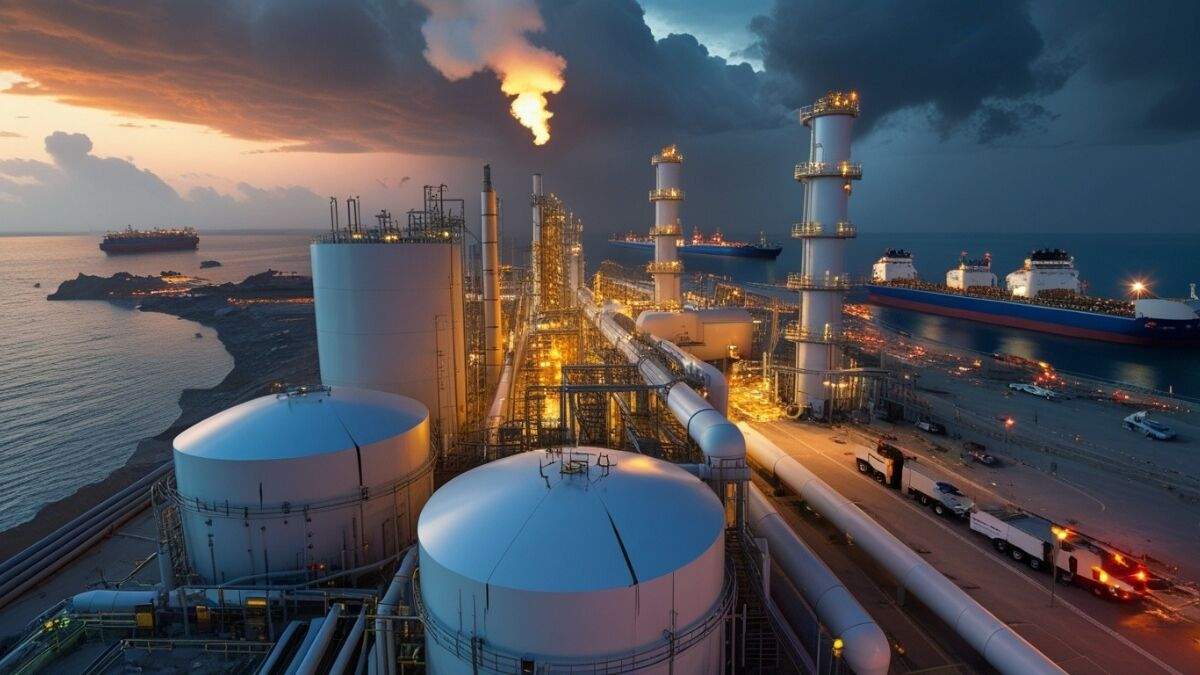
Global oil markets are witnessing sharp volatility as geopolitical tensions in West Asia continue to influence prices, supply routes, and investor sentiment.
Following reports that US President Donald Trump had informed aides he was willing to ending the Iran conflict without reopening the Strait of Hormuz, oil prices ended their upward trend on Tuesday, March 31.
Oil Prices Reverse Trend Amid Policy Signals
After rising by around 2% earlier in the session, Brent crude futures for May fell by $1.22, or 1.08%, to $111.56 per barrel. The more actively traded June contract was quoted at $105.76, while the May contract expires on Tuesday.
🛢️ Oil Market Key Highlights
- Brent Price: $111.56 per barrel
- WTI Price: $101.90 per barrel
- Market Move: Prices dropped after early gains
- Reason: Possible end to Iran conflict
- Volatility: High due to geopolitical tensions
- Trend: Strong gains seen in March
WTI and Brent Performance
After reaching their highest level since March 9 during early trade, US West Texas Intermediate (WTI) oil futures for May fell 98 cents, or 0.95%, to $101.90 per barrel.
According to a Wall Street Journal article citing administration insiders, Donald Trump has told aides that he could be willing to end the military campaign against Iran even if the Strait of Hormuz stays mostly closed, delaying its reopening until later.
Geopolitical Tensions Continue
But on Monday, Trump threatened to “obliterate” Iran’s oil and energy facilities if Tehran did not reopen the vital maritime channel.
Crude prices have sharply increased as a result of Iran’s successful closing of the Strait of Hormuz, a vital route that normally handles about one-fifth of the world’s oil supply along with substantial volumes of liquefied natural gas.
⚠️ Global Oil Supply Risks
- Key Route: Strait of Hormuz disruption
- Global Impact: 20% oil supply affected
- Shipping Risks: Tanker attacks reported
- Other Threat: Bab el-Mandeb Strait tension
- Conflict Zones: Iran, US, Israel
- Risk: Oil spill & trade disruption
Massive Monthly Gains in Oil Prices
WTI crude has increased 58% so far in March, its greatest increase since May 2020, while Brent crude futures have risen 59% so far, their largest monthly gain on record.
Kuwait Petroleum Corporation was cited by Reuters on Tuesday as stating that its fully loaded crude tanker Al Salmi, with a capacity of up to 2 million barrels, was struck in an alleged Iranian attack at a Dubai port, highlighting the risks to seaborne energy supplies amid the conflict involving Iran, the US, and Israel. Additionally, authorities issued a warning regarding the potential for oil spills in the region.
Expanding Maritime Threats
Concerns about possible disruptions at the Bab el-Mandeb Strait, a crucial maritime corridor connecting the Red Sea and the Gulf of Aden and a vital route for trade between Asia and Europe via the Suez Canal, were raised on Saturday when Iran-backed Houthi forces in Yemen launched missile strikes toward Israel.
Aamir Makda, a commodity and currency analyst at Choice Broking, claims that the price of crude oil has been rising over its key moving averages, which are the 20, 50, and 100-DEMA levels, which are located at 8416, 7325, and 6575, respectively.
Technical Levels and Price Outlook
It will be important to look for these levels of support. However, the psychological level of initial resistance would be 10,000. If this barrier is overcome, oil prices will rise, and we might anticipate a new all-time high level,” Makda stated.
The creator of SS WealthStreet, Sugandha Sachdeva, thinks that crude oil would probably fluctuate within a broad range.
“On the upside, a retest of $120 is still possible, and an extended advance towards $150 per barrel is not ruled out if geopolitical worries develop further. Key supports are set between $93 and $73 per barrel (Brent Crude).”
Essentially, supply disruptions, strategic reserve measures, and policy reactions all work together to shape the near-to medium-term trend of oil prices, according to Sachdeva.
Frequently Asked Questions
1) Despite prior improvements, why did oil prices decline?
Despite persisting tensions, prices fell as Donald Trump indicated that he was open to ending the Iran war, allaying fears of a protracted disruption.
2) How crucial is the Strait of Hormuz to the world’s oil supply?
About one-fifth of the world’s oil is transported via the Strait of Hormuz, thus any disruption has a significant effect on global oil prices.
3) What led to the dramatic increase in oil prices in March?
Brent and WTI crude recorded monthly gains due to supply delays caused by Iran tensions, shipping hazards, and geopolitical unpredictability.
4) What other dangers are influencing the ways used to provide oil?
Threats to the Bab el-Mandeb Strait and attacks close to ports raise questions about wider marine disruptions that could affect international trade and energy flows.
5) How do oil prices look in the near future?
With support around $93 and possible surges toward $120–$150 if international tensions worsen, analysts anticipate significant volatility.
Conclusion
With conflicts, shipping interruptions, and policy signals generating volatility, oil markets continue to be extremely susceptible to geopolitical developments. As a result, prices are unpredictable and depending on how tensions develop in important global locations.
Disclaimer: This article is for informational purposes only and does not constitute financial or investment advice. Market conditions may change rapidly.
