
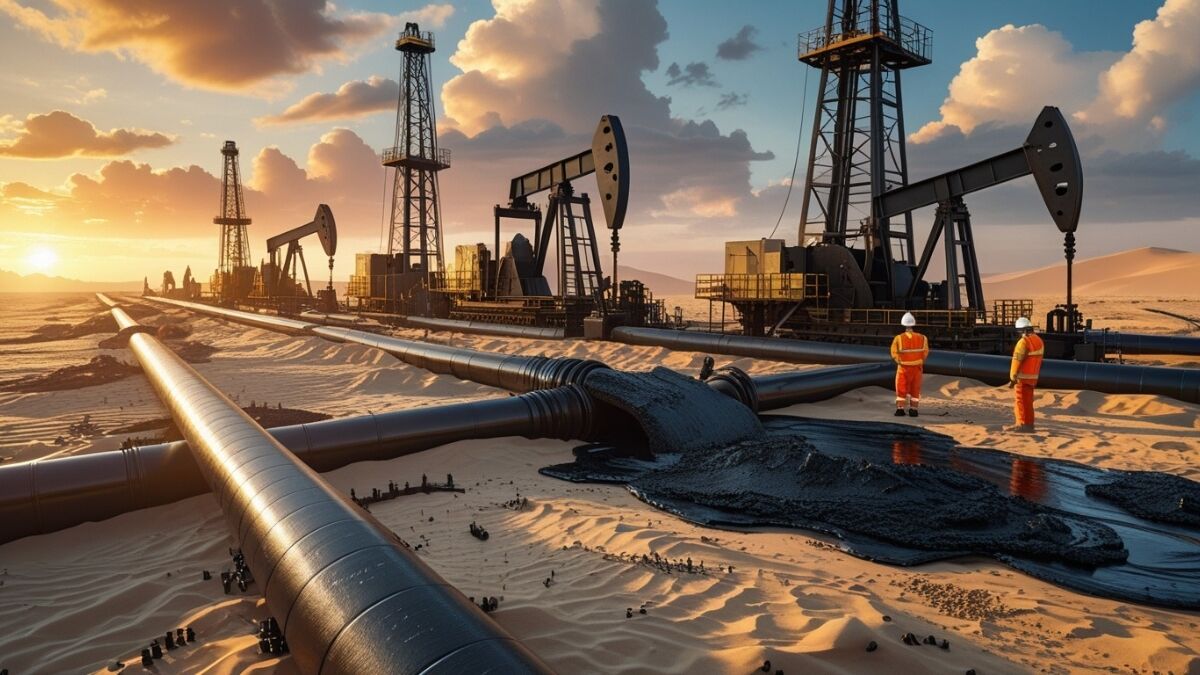
Global oil markets are under pressure as escalating tensions between Israel and Iran trigger direct attacks on critical energy infrastructure in the Gulf. With crude prices crossing $112 per barrel, fears of a prolonged supply disruption are rising, posing serious risks to global energy security and economies like India that rely heavily on oil imports.
As tensions in the Gulf escalated, with both Israel and Iran threatening energy infrastructure, crude oil prices surged as much as 5% on Thursday, extending Wednesday’s gains to trade above $112 per barrel. The escalation unnerves international markets as the conflict moves closer to its fourth week.
Oil Prices Cross $112 Amid Rising Gulf Tensions
At $99.39 a barrel, U.S. crude futures increased by more than 3%. While Brent oil reached $111.19 in early trading and continued to rise by 4% this morning to $112 per barrel, getting closer to the original war top of $120, natural gas prices increased by more than 5%. Natural gas prices in the US also increased by over 5% overnight.
Energy Market Reaction
This comes after Iran threatened to strike oil and gas assets in the Gulf after accusing Israel of attacking facilities at its South Pars gas facility. Declaring energy infrastructure in Saudi Arabia, the United Arab Emirates, and Qatar to be acceptable targets, it fired missiles in their direction. Iran also claimed to have attacked a Qatari LNG project.
Additionally, when missile interceptions resulted in falling debris, Abu Dhabi suspended operations at its Habshan gas facility. Iran’s semi-official Fars news agency claims that powerful missile attacks targeted LNG installations in Bahrain.
Major Infrastructure Damage in the Region
Ras Laffan Industrial City sustained significant damage after Iranian missile attacks, according to Qatar’s national energy corporation. Saudi Arabia claimed to have stopped a drone assault on a gas plant in the eastern area and intercepted several ballistic missiles headed for Riyadh.
🛢️ Oil Market Surge Highlights
- Price Level: $112 per barrel
- Increase: Up to 5% surge
- Trigger: Iran-Israel escalation
- Key Targets: LNG & gas facilities
- Regions Affected: Qatar, UAE, Saudi Arabia
- Gas Prices: Up 5% globally
Iran also warned oil facilities in Saudi Arabia, the United Arab Emirates, and Qatar to evacuate, hinting at further attacks in the hours to come. The warning came after the assault on South Pars, which Israeli media said was carried out by Israel with US approval, despite the fact that neither nation acknowledged its role.
Strait of Hormuz Supply Concerns
In the meanwhile, there have been issues with shipments over the Strait of Hormuz. About 20% of the world’s supply of LNG and oil comes from this route. An estimated 7 million to 10 million barrels per day, or 7% to 10% of the world’s demand, are lost during production in the Middle East.
Oil Price Forecast and Analyst View
Crude prices may rise from their present levels in the future. Oil prices might increase to $120 per barrel in the near future and could reach $150 if the battle lasts more than a month and global tensions are high, according to Kayanat Chainwala of Kotak Securities.
Market Predictions and Risk Levels
Nuvama Institutional Equities concurs. Over the next four to eight weeks, oil prices might drop to between $110 and $150 per barrel due to the ongoing blockage of the Strait of Hormuz, which processes around 20 million barrels per day. The release of strategic reserves could provide some short-term respite, but when supplies are replenished later, demand might rise again.
Economic Pressure and Policy Impact
Beyond $125 per barrel, broader stress is probably going to surface. Risks to LNG throughput might grow, LPG subsidy burdens could climb dramatically, and oil marketing businesses would face severe profits pressure.
The possibility of governmental involvement also increases in such a situation. According to Elara, tax modifications can usually handle the first $40 per barrel spike in petroleum prices, but after that, the pressure on the system becomes more apparent.
🇮🇳 India Impact & Economic Risks
- Import Dependency: High reliance on crude imports
- Fuel Prices: Likely to increase sharply
- Inflation Risk: Rising transport & goods cost
- Subsidy Pressure: LPG burden may rise
- Economic Impact: Trade deficit could widen
- Policy Action: Possible tax adjustments
Frequently Asked Questions
1. Why did the price of oil go to $112?
As the Israel-Iran war intensified and both sides attacked vital energy infrastructure, including Iran’s South Pars gas production and Qatar’s LNG facilities, oil prices skyrocketed, raising concerns of a protracted interruption to the world’s supply.
2. What makes the Strait of Hormuz significant?
Nearly 20% of the world’s oil and LNG supply travels via the Strait of Hormuz, making it a crucial worldwide shipping route. As such, any interruption there has a significant effect on the stability of the global energy supply and pricing.
3. To what extent is supply impacted?
According to current estimates, there might be a disruption in the supply of 7–10 million barrels of oil per day, or around 7–10% of the world’s consumption. This amount is substantial enough to result in considerable price hikes and market instability.
4. What is the maximum price of oil?
Crude oil prices are predicted by analysts to increase to around $120 per barrel in the near future and perhaps $150 if the war persists or becomes worse, particularly if there are protracted interruptions in important areas that produce energy.
5. How does this affect India?
India’s strong reliance on imported crude oil means that increasing oil prices would result in higher gasoline prices, more inflation, a bigger import bill, pressure on government subsidies, and possible economic distress.
Conclusion
Due to supply interruptions brought on by conflicts, there is a significant danger to the world’s energy supply, which is why oil prices are rising. A sustained increase in costs might lead to global inflation and economic strain, especially for nations that import oil like India.
Disclaimer: This content is for informational purposes only and should not be considered financial or investment advice.