
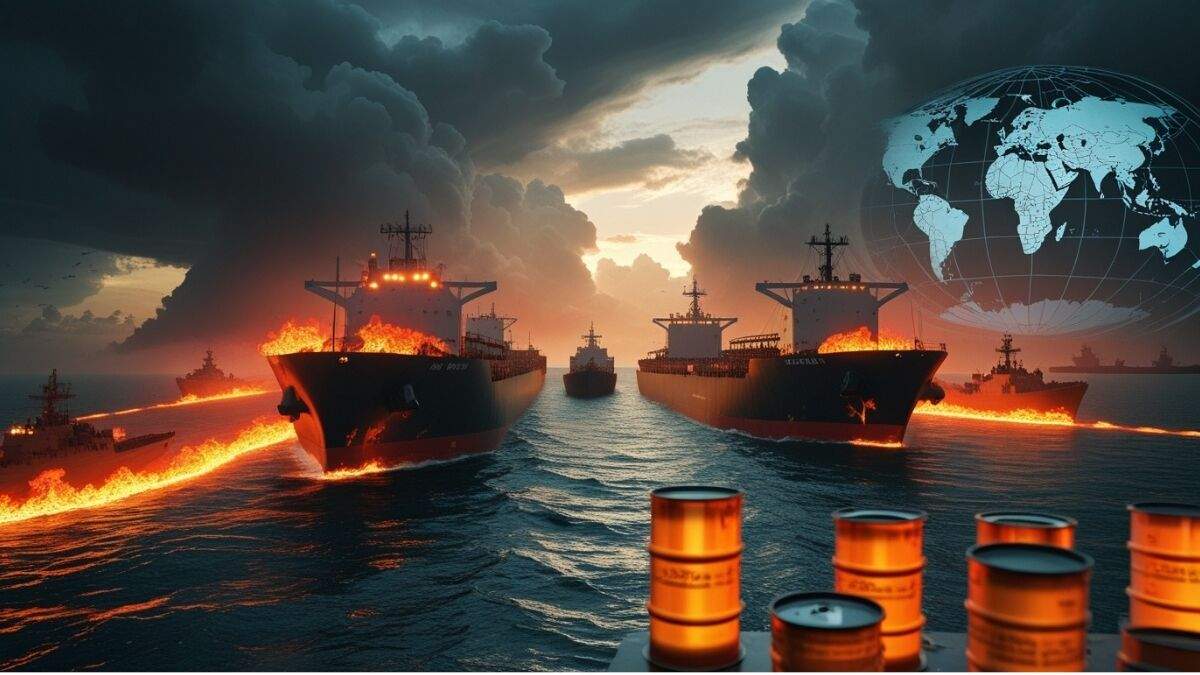
Rising geopolitical tensions in West Asia are once again shaking global oil markets, with supply disruptions and shipping bottlenecks pushing crude prices higher and increasing uncertainty worldwide.
Due to ongoing concerns about supply losses due to shipping bottlenecks in the crucial West Asian producing region as a result of the US-Israeli war with Iran, oil prices increased on Monday.
Oil Prices Surge Amid West Asia Conflict
By 0057 GMT, Brent crude futures had increased by $1.71, or 1.6%, to $110.74 per barrel. The price of US West Texas Intermediate crude futures increased by $0.71, or 0.6%, to $112.25 a barrel.
⛽ Oil Price Spike
- Brent Crude: $110.74/barrel
- WTI Crude: $112.25/barrel
- Increase: Up to 1.6%
- Cause: Strait of Hormuz disruption
- Impact: Global supply concerns
- Trend: Volatile market conditions
As US President Donald Trump pledged to keep attacking Iran on Thursday, the final trading day before the Good Friday holiday, WTI settled up more than 11% and Brent surged over 8% in erratic trading, registering their largest absolute price increase since 2020.
Since the battle started on February 28, Iranian strikes on shipping have kept the Strait of Hormuz, which transports oil and petroleum products from Iraq, Saudi Arabia, Qatar, Kuwait, and the United Arab Emirates, mostly blocked.
Supply Disruptions and Shipping Bottlenecks
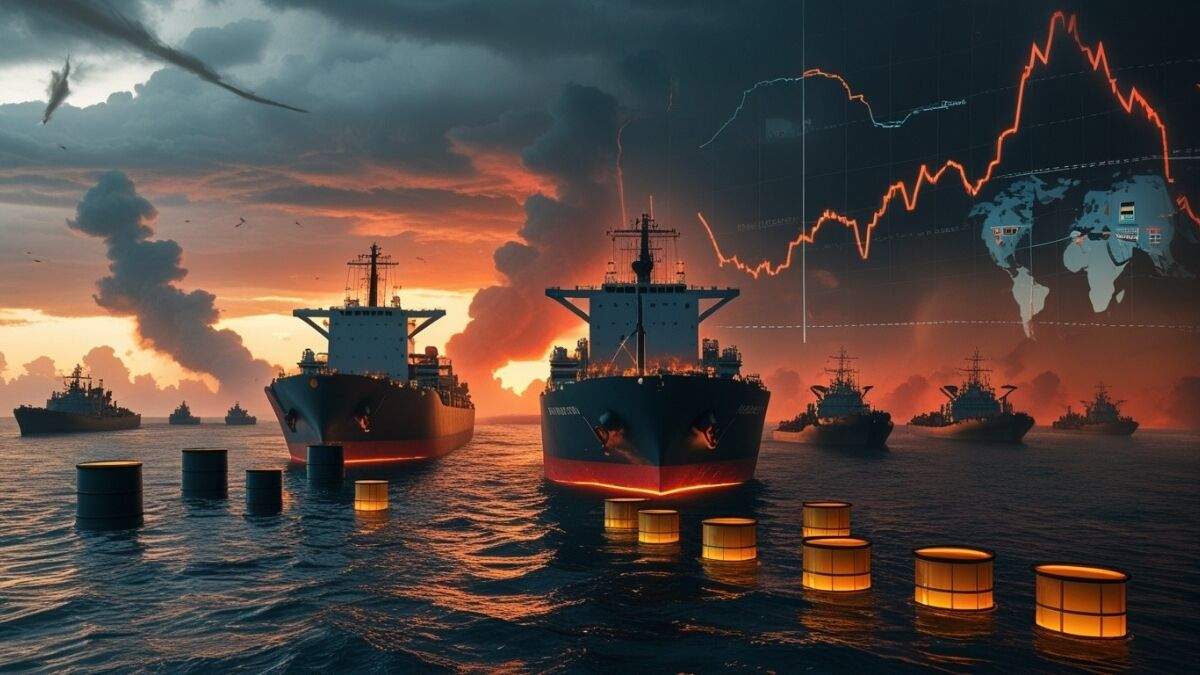
Refiners are looking for other sources of crude due to supply difficulties in West Asia, especially for physical cargoes in the US and the UK North Sea.
Trump increased pressure on Tehran on Sunday, threatening to attack Iran’s power plants and bridges on Tuesday if the vital Strait of Hormuz is not reopened in a profanity-filled Easter Sunday social media rant.
Partial Shipping Activity Continues
However, according to shipping statistics, several ships have crossed the Strait of Hormuz since Thursday, including a tanker operated by Oman, a cargo ship owned by France, and a gas carrier owned by Japan. This is in line with Iran’s policy of permitting transit for ships from nations it considers friendly.
⚠️ Supply & Geopolitical Risks
- Main Issue: Strait of Hormuz blockage
- Impact: Global oil supply disruption
- Response: Alternate sourcing by refiners
- Risk: Escalating conflict
- Shipping: Limited but ongoing
- Uncertainty: High market volatility
The Wall Street Journal reported on Friday that efforts to bring about a ceasefire have come to a standstill and that Iran has formally informed mediators that it is not ready to meet with US officials in the Pakistani capital of Islamabad in the near future.
Opec+, which includes allies like Russia and other members of the Organization of the Petroleum Exporting Countries, agreed on Sunday to a small increase of 206,000 barrels per day for May. However, since the war prevents some of the group’s major producers from increasing output, that choice will mostly remain on paper.
Global Supply Challenges and OPEC+ Response
Ukrainian drone strikes on Russia’s Baltic Sea export terminal have recently caused supply disruptions. Following days of difficulties, the Ust-Luga terminal started loadings on Saturday, according to media sources on Sunday.
Frequently Asked Questions
1. What is causing the increase in oil prices?
Fears of supply interruptions brought on by the fighting in West Asia are driving up oil prices, especially for shipping lanes like the Strait of Hormuz, a vital global oil transit point.
2. How significant is the Strait of Hormuz?
Since a considerable amount of the world’s oil exports flow via the Strait of Hormuz, any disruption there has a substantial effect on the world’s energy markets and pricing.
3. How has the conflict impacted the availability of oil?
Due to restricted shipping and decreased oil shipments from major producers, the conflict has made it necessary for refiners worldwide to look for alternate supplies of petroleum, which has tightened supply and raised prices.
4. What steps has the United States taken in this regard?
In an effort to reopen shipping lines, the US has upped pressure on Iran, including threats of more assaults; however, this has also exacerbated geopolitical tensions and uncertainty.
5. Can OPEC+ compensate for supply interruptions?
OPEC+’s ability to stabilize the world’s oil supply is limited because many of its member nations are unable to significantly increase output due to continuous conflict, despite the organization’s announcement of a minor production increase.
Conclusion
Amidst unclear diplomacy, supply disruptions, and geopolitical tensions, oil prices continue to be unpredictable. In the absence of a prompt resolution or reliable substitute sources, a protracted conflict could result in sustained high prices, stretched supply chains, and negative effects on the world economy.
Disclaimer: This content is for informational purposes only and reflects current geopolitical and market developments. Oil prices and global conditions may change rapidly.
