
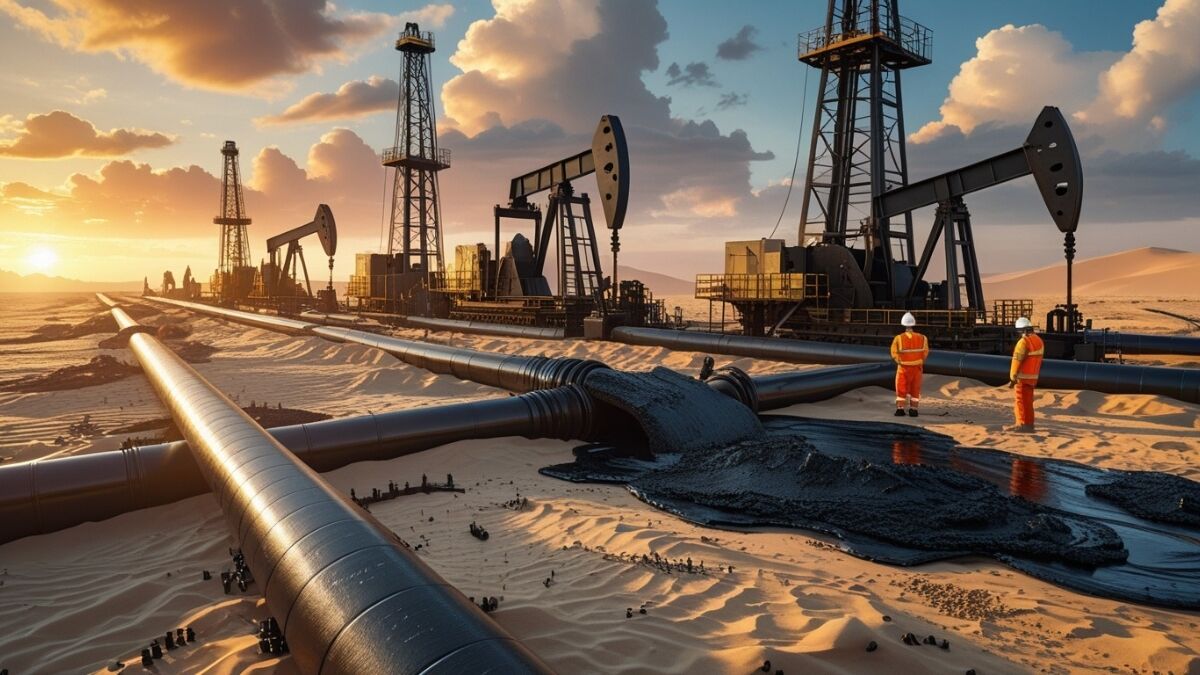
Asian financial markets experienced a decline after oil prices surged sharply due to escalating tensions in the Gulf region. Attacks on ships near key oil routes raised fears of supply disruption, inflation, and higher borrowing costs worldwide.
Asian stocks dipped on Thursday as oil prices surged due to news that more ships had been hit in Iraqi waters and the Strait of Hormuz, driving up borrowing rates globally and fueling inflation.
Oil Prices Surge After Gulf Attacks
After rising more than 4% overnight, U.S. crude increased 7.5% to $93.80 per barrel. Futures on Brent crude increased 7.7% to $99.03 a barrel. This occurred in spite of the International Energy Agency’s preparations to release 400 million barrels of oil from its reserves—the biggest amount in its history.
As part of the IEA plan, the United States announced it would release 172 million barrels of oil starting next week. Iraqi security sources reported early on Thursday that Iranian boats carrying explosives had attacked two petroleum tankers in Iraqi waters, while an official informed state TV that oil ports “had fully ceased operations.”
🛢️ Global Oil Market Shock
- WTI Crude Price: $93.80 per barrel
- Brent Crude Price: $99.03 per barrel
- Price Jump: 7%+ overnight surge
- Main Cause: Attacks on ships near Strait of Hormuz
- Supply Risk: Iraqi oil ports halted operations
- Global Impact: Inflation and borrowing costs rising
Iran Response and Tanker Attacks
IG analyst Tony Sycamore claims that “several ships filled with Iraqi petroleum are currently reported burning in the Persian Gulf off the coast of Basra, engulfed in flames and spewing burning oil into the water.” “This seems to be a direct and forceful Iranian response to the IEA’s midnight announcement of a major strategic reserve release aimed at taming runaway prices.”
Iran had warned the world to prepare for oil at $200 per barrel by increasing attacks on merchant ships in the Strait of Hormuz. Iran’s Revolutionary Guards said that its forces had opened fire on ships in the Gulf that had defied their instructions on Wednesday, leading to reports that three vessels had been struck in Gulf waters.
Political Tensions Increase Market Uncertainty
Uncertainty increased on Wednesday when U.S. President Donald Trump announced that the battle on Iran was won but that he would continue to fight to complete the task.
This was all detrimental to shares. Given that Japan is a significant importer of gas and oil, the Nikkei (.N225), opens new tab, sank 1.6%, while MSCI’s broadest index of Asia-Pacific shares outside of Japan (.MIAPJ0000PUS), opens new tab, lost 0.8%.
Global Stock Market Reaction
Nasdaq and S&P 500 futures both saw a 0.8% decline. In Europe, DAX futures dropped 0.8% while EUROSTOXX 50 futures dropped 0.6%. According to U.S. data, the consumer price index increased by 0.3% in February, which was higher than January’s 0.2% increase and in accordance with projections.
However, because the Iran conflict has increased inflation, this information is no longer relevant.
📉 Global Market Reaction
- Nikkei Index: Down 1.6%
- Asia-Pacific Index: Down 0.8%
- S&P 500 Futures: Down 0.8%
- DAX Futures: Down 0.8%
- EUROSTOXX 50 Futures: Down 0.6%
- Main Driver: Oil shock and inflation fears
Bond Market and Interest Rate Pressure
Bond markets saw a global increase in yields due to the fear of increasing inflation outweighing safe-haven concerns. After rising 6 basis points overnight, yields on 10-year Treasury notes increased 4 basis points to 4.2472% on Thursday.
As investors worried that increased inflation would make it more difficult for the Federal Reserve to loosen policy, Fed funds futures continued to decline.
Currency Market Movements
The markets are just betting that the Fed will drop interest rates once more this year.
Because of the risk of energy-driven inflation, markets are speculating that the European Central Bank may raise interest rates in June.
Dollar Strength and Currency Volatility
Fearful investors avoided currencies from nations that import a lot of energy, such as Japan and most of Europe, in favor of the liquidity of dollars.
After ending at its lowest level since November of last year, the euro fell 0.3% to $1.1536. The dollar gained 0.1% to 159.12 yen, its highest level since January, when yen bears were alarmed by reported rate checks from the U.S. Fed.
After hitting a more than three-year high of $0.7188 on Wednesday, the risk-sensitive Australian dollar fell 0.4% to $0.7127 as speculation about an impending rate increase from its central bank increased.
Frequently Asked Questions
1. What caused the decline in worldwide shares?
Following attacks on ships in the Strait of Hormuz and Iraqi waters, oil prices spiked, raising concerns about increased inflation and borrowing costs globally, which caused shares to decline.
2. To what extent did the price of oil rise?
West Texas Intermediate crude jumped 7.5% to $93.80 per barrel, while Brent crude increased almost 7.7% to $99.03 per barrel.
3. What was the International Energy Agency’s response?
In an effort to stabilize oil prices worldwide, the International Energy Agency announced intentions to release 400 million barrels of oil from strategic reserves.
4. What was the US response?
As part of the international effort to curb soaring energy costs, the United States said that it would begin releasing 172 million barrels of oil next week.
5. Why is inflation a concern for investors?
Rising oil prices raise the cost of manufacturing and transportation, which can raise global inflation and make it more difficult for central banks like the Federal Reserve to lower interest rates.
Conclusion
Energy prices have skyrocketed due to the disruption of oil supply channels caused by the escalation of hostilities involving Iran in the Gulf. Global stock market falls, a strengthening of the US currency, and heightened concerns about inflation have all resulted from this.
Global financial stability and energy markets could continue to be extremely unstable if the conflict persists.
Disclaimer: This article is for informational purposes only. Market data and geopolitical developments may change as new information emerges.
