
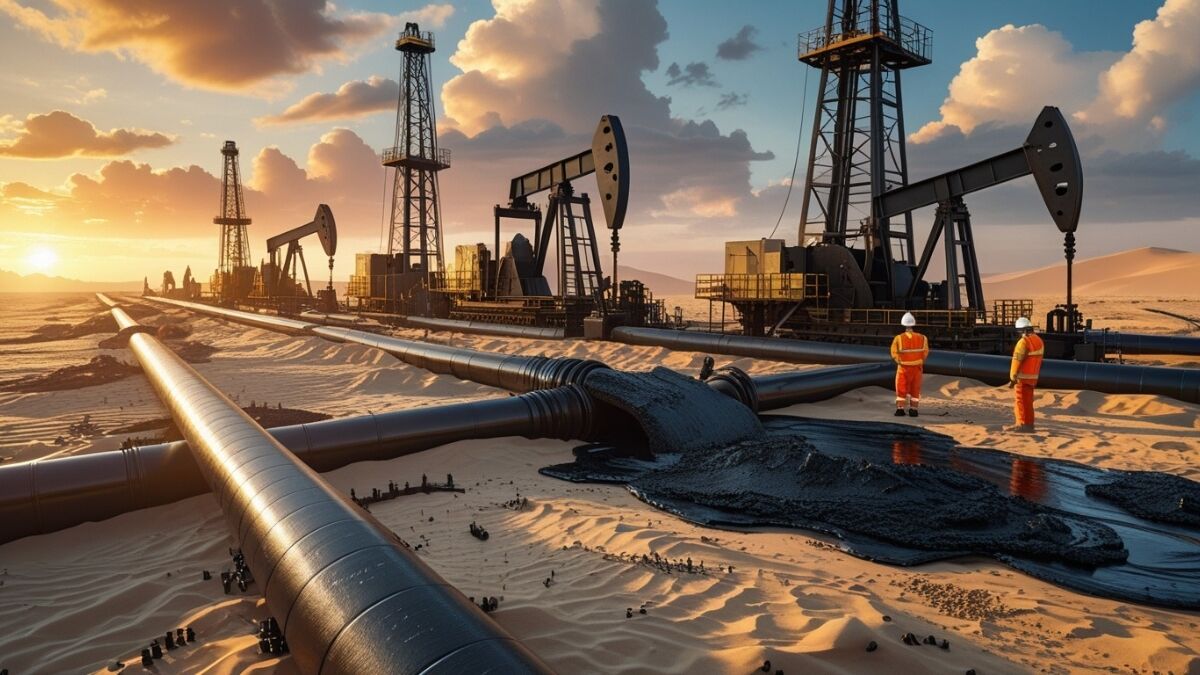
Global oil prices moved higher on Tuesday as fresh attacks targeted energy infrastructure in the Middle East. The increase followed fresh strikes by Iran that affected areas that produce crude, raising concerns about supply interruption.
Oil Prices Rise Amid Middle East Tensions
Brent Crude Oil, an international benchmark, increased by almost 2% to $102.16 per barrel. West Texas Intermediate, on the other hand, increased by roughly 1.7% to $95.08 per barrel.
The increases came after a steep decline in prices on Monday, when the president of the International Energy Agency hinted that further oil reserves would be released if necessary.
Energy Infrastructure Under Threat
The most recent increase in oil prices coincides with ongoing attacks on the region’s vital energy sites. The United Arab Emirates’ Fujairah oil complex was the target of a drone strike. Because it enables oil exports to avoid the Strait of Hormuz, this infrastructure is crucial.
A significant oil field in the south of Iraq was the target of two drones. There are worries about a larger trend because this was the second incident of its kind in only four days. Israel said at the same time that it had attacked Iranian-affiliated organizations in Beirut and carried out a massive wave of attacks in Tehran. These events suggest that tensions in the area are growing.
Rising Supply Risks and Market Reaction
🛢️ Oil Market Highlights
- Brent Crude: $102.16 (+2.0%)
- WTI Crude: $95.08 (+1.7%)
- Main Trigger: Middle East attacks
- Risk: Supply disruption
- Key Region: Strait of Hormuz
According to experts, there is now a direct threat to the oil supply instead of only a transportation concern. This implies that the threat now includes actual damage to industrial facilities rather than just obstructed pathways.
Global stock markets shown strength in spite of growing geopolitical worries. The Dow, S&P 500, and Nasdaq all saw increases as major indices in New York opened higher. Airline companies did well, with Delta Airlines and American Airlines jumping about five percent following the release of better-than-expected profits.
Global Markets Show Resilience
European markets, including Frankfurt’s DAX, Paris’s CAC 40, and London’s FTSE 100, were also rising during the day. The markets of Asia were diverse. Tokyo and Shanghai finished lower, but Hong Kong, Seoul, and Taipei closed in positive territory.
The markets are still cautious but stable, according to analysts. Investors are weighing the dangers associated with international tensions against encouraging economic signs and corporate earnings. This week, investors are keeping a tight eye on central bank meetings. Despite rising energy costs, many anticipate that interest rates will stay the same.
Central Banks and Inflation Concerns
⚠️ Economic Impact of Rising Oil
- Inflation: Likely to increase
- Interest Rates: Cuts may delay
- Growth Risk: Slower economic expansion
- Consumer Impact: Higher fuel & transport costs
- Business Cost: Increased production expenses
Increased inflation from rising oil prices may make it more difficult for central banks to lower interest rates. At the same time, there is concern due to indications that the US labor market is stalling. The US Federal Reserve is in a challenging situation, according to experts. Lower interest rates are often required for slower growth, but rising inflation may make that impossible.
Due to significantly higher fuel prices, Australia’s central bank has already increased its key interest rate. Market analysts caution that inflation risks would rise if oil prices remain above $100 per barrel for an extended period of time. Increased fuel costs have an impact on daily living expenses, production, and transportation. This may result in lower expenditure and slower economic growth.
Investor Caution and Global Response
As a result, even though financial markets are now doing well, investors are growing more cautious.
US President Donald Trump has urged partners around the world to assist in reopening the Strait of Hormuz and guaranteeing secure oil transportation. But there has not been much of a response. The call has not received complete backing from nations like Germany, the UK, Spain, Poland, Greece, and Sweden. Countries like Japan and Australia have also refrained from participating.
The war is not a NATO issue, according to German Chancellor Friedrich Merz, indicating that European officials are being cautious. While investors awaited further clarification, currency markets barely moved. In comparison to other major currencies, the US dollar stayed relatively stable.
The Japanese yen gained some ground versus the dollar, while the euro and pound increased marginally. As world events continue to unfold, this steady trend is indicative of a wait-and-watch strategy.
📊 Important Market Data
- Brent Crude: $102.16 (+2.0%)
- WTI Crude: $95.08 (+1.7%)
- Dow Jones: 0.9% higher
- S&P 500: 0.7% increase
- Nasdaq: 0.7% increase
- FTSE 100: 0.9% increase
- CAC 40: 1.0% increase
- DAX: 0.8% higher
Frequently Asked Questions
1. What is causing the increase in oil prices?
Geopolitical concerns in the Middle East are the primary cause of rising oil prices, particularly in light of recent actions connected to Iran that target vital energy infrastructure. Major oil-producing regions are concerned about supply interruptions as a result of these strikes.
2. How significant is the Fujairah oil facility?
Because it enables oil exports to avoid the Strait of Hormuz, one of the most vital crude oil shipping routes in the world, the Fujairah oil complex in the United Arab Emirates is strategically significant.
3. How are the stock markets around the world responding?
Major markets including the Dow Jones Industrial Average, S&P 500, and Nasdaq Composite have demonstrated resilience in the face of higher oil prices thanks to robust corporate results and investor optimism.
4. What worries central banks about rising oil prices?
Even if economic growth slows, higher oil costs can raise inflation, making it more difficult for central banks like the Federal Reserve System to lower interest rates.
5. What might occur if the price of oil remains above $100 per barrel?
Reduced consumer spending, slower economic growth, and increased global manufacturing and transportation expenses could result from high oil prices.
Conclusion
The recent increase in oil prices demonstrates how vulnerable the world’s energy markets are to geopolitical unrest, especially in the Middle East. The risks are undoubtedly increasing, even though the financial markets are now stable.
Oil infrastructure outages could raise prices even further, exacerbate inflation, and make it more difficult for central banks throughout the world to make decisions. Strong economic signals and increasing uncertainty are now being balanced by investors, but if tensions continue to rise, markets and global growth may encounter more severe challenges.
Disclaimer
This content is for informational purposes only and should not be considered financial or investment advice.
