
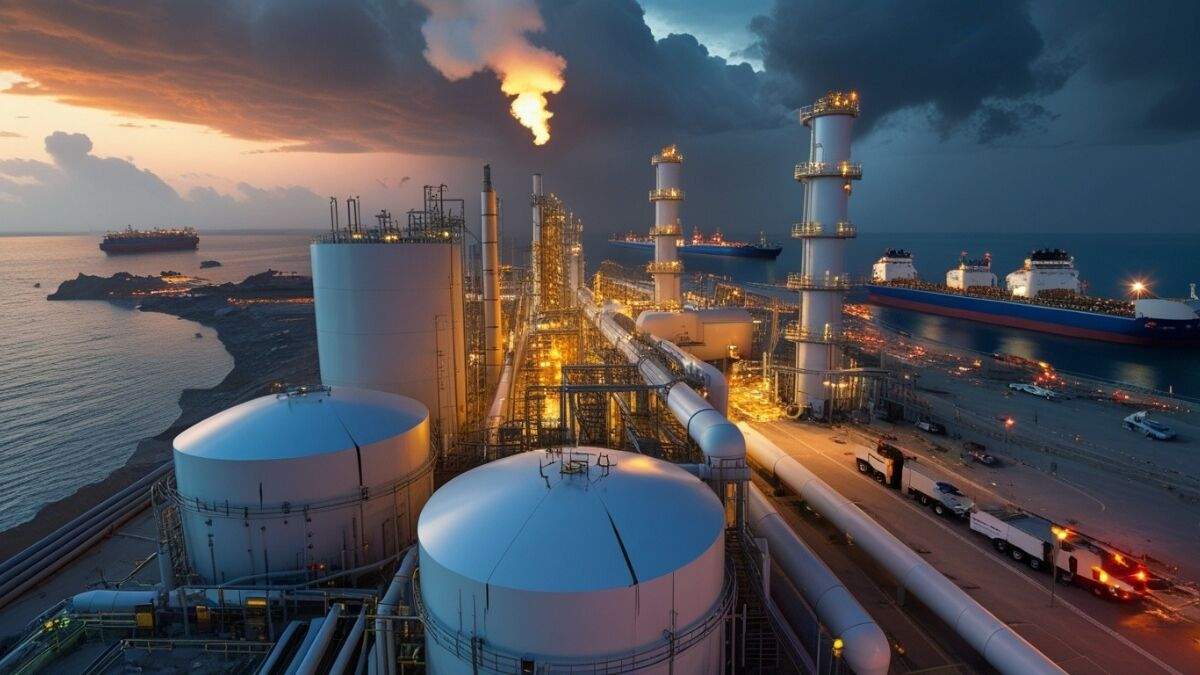
Recent geopolitical tensions in the Middle East have raised concerns over global energy supply chains. Iran’s attacks on Qatar’s energy infrastructure may impact LNG exports, creating uncertainty for major importers like India.
A government source said on Friday that Iranian assaults on energy installations in the Middle Eastern country may have an effect on LNG shipments from Qatar to India.
India’s Dependence on Qatar LNG
About 41% of India’s gas imports come from Qatar, making it the fourth-largest LNG importer in the world. According to official statistics, India bought more than 27 million metric tons of LNG in 2024–2025, with Qatar providing 11.2 million tons.
🇶🇦 Qatar LNG Supply Impact on India
- India LNG Imports: 27+ million metric tons (2024–2025)
- From Qatar: 11.2 million tons
- Dependency: ~41% of total LNG imports
- Global Rank: India is 4th largest LNG importer
- Risk: High exposure to Middle East geopolitical tensions
Government Concerns and Official Statement
“Qatar’s LNG capacity has been damaged, this will hurt us too,” said Sujata Sharma, a joint secretary in the federal oil ministry, during a press briefing. The second-largest LNG consumer of Qatar is India.
Saad al-Kaabi, CEO of QatarEnergy, told Reuters on Thursday that Iranian assaults had destroyed 17% of Qatar’s LNG export capacity, resulting in an estimated $20 billion in lost yearly income and endangering supplies to Europe and Asia.
Extent of Damage to Qatar Energy Infrastructure
He added that one of Qatar’s two gas-to-liquids (GTL) plants and two of its fourteen LNG trains were destroyed, and that repairs would take three to five years.
After the U.S.-Israeli war on Iran began on February 28, Qatar declared force majeure on gas exports earlier this month, stopping supplies through the Strait of Hormuz.
⚠️ LNG Supply Disruption & Global Impact
- Damage: 17% LNG export capacity destroyed
- Financial Loss: ~$20 billion annually
- Facilities Hit: 1 GTL plant + 2 LNG trains
- Repair Time: 3–5 years
- Major Impact: Europe & Asia supply chains at risk
India’s Supply Outlook and Industry Response
However, because the facilities serving Indian demand have not been impacted by the assault, Indian industry leaders are optimistic that Qatar would continue to supply India once the force majeure is lifted.
Frequently Asked Questions
1. Why are Qatari LNG supply impacted?
Iranian attacks have damaged Qatar’s vital energy infrastructure, lowering production capacity and interfering with exports, particularly via vital shipping lanes like the Strait of Hormuz. This has an effect on LNG supply.
2. To what extent does India rely on LNG from Qatar?
India is very susceptible to supply interruptions, price volatility, and geopolitical concerns influencing energy flows from the Middle East area since it imports almost 41% of its LNG from Qatar.
3. How much damage has Qatar’s LNG capacity sustained?
The assaults have destroyed almost 17% of Qatar’s LNG export capacity and damaged various facilities, which might prevent millions of tons of output each year for a number of years.
4. How long may the interruption in supplies last?
Global markets, including India, may experience protracted uncertainty and more stringent energy supply conditions as repairs to Qatar’s damaged LNG infrastructure are anticipated to take three to five years.
5. Will this result in an urgent energy catastrophe for India?
India would probably see tighter availability, higher costs, and a greater reliance on other global LNG sources, although it could not face an immediate catastrophe since some unaffected plants might continue to provide.
Conclusion
The interruption of Qatar after the Iranian attacks poses a moderate danger to India’s LNG supply, although strategic stockpiles, diverse sourcing, and ongoing partial shipments might avert a dire immediate energy crisis.
Disclaimer: This content is for informational purposes only and based on available reports. Energy markets are subject to rapid changes due to geopolitical developments.
