
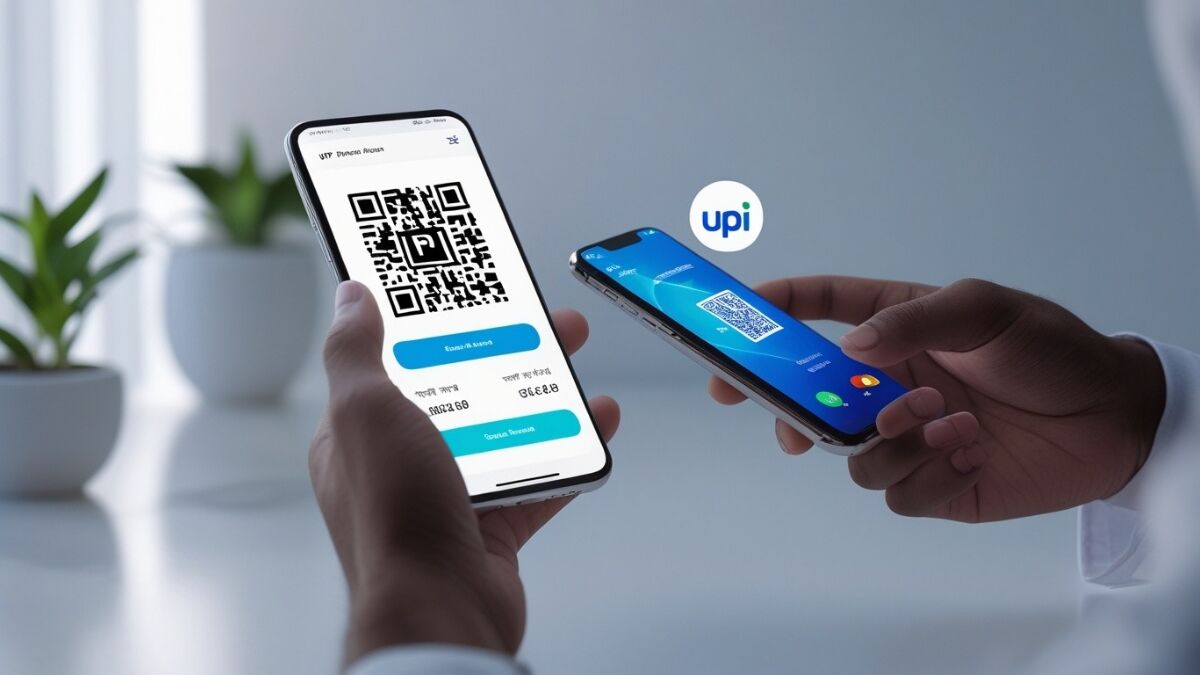
Why retailers like UPI Autopay even though it has a lower success rate than credit cards
Despite its rapidly declining success rate, merchants from a variety of industries continue to use UPI Autopay due to its cheaper prices, large size, and widespread accessibility.
UPI Autopay Adoption Continues Despite Falling Success Rates
According to statistics from National Payments Corporation of India (NPCI), which runs UPI, approval or success rates have decreased by approximately 20 percentage points, from around 50 percent in January 2024 to 30 percent in November 2025, despite the fact that UPI Autopay transactions have increased tenfold during that time.
According to a number of industry participants who spoke with Moneycontrol, retailers continue to favor autopay and advise their subscribers to renew their payments each time they are due. Microdramas-focused streaming service Chana Jor uses UPI Autopay for 85% of its subscriptions, with cards making up the other 25%. Young Indian language consumers who prioritize mobile devices and often utilize UPI for digital payments make up the company’s target market.
Why Merchants Still Prefer UPI Autopay
“UPI cannot be disregarded since it is where user behavior and scale lay, even if cards may have greater success rates,” Pratap Jain, founder and CEO of Chana Jor, told Moneycontrol. The UPI capability makes recurring payments for applications like Chana Jor considerably more easy at scale and at cheaper prices than cards. UPI Autopay has also found a strong uptake in the gold savings app Jar.
In the past, mandates never bounced since Autopay was only available to those who had cash on hand. Eighty percent of Indians work for themselves and make money every day. Jar cofounder and CEO Nishchay AG said, “UPI Autopay has touched every part of the nation, even customers whose bank balance often falls to zero and returns throughout the day.”
UPI Autopay and Financial Inclusion
📊 UPI Autopay Growth Snapshot
- Success Rate: Fell from ~50% (Jan 2024) to ~30% (Nov 2025)
- Transaction Growth: 10× increase in less than two years
- UPI Users: ~40 crore across India
- Credit Card Users: ~5 crore
- MDR: 0% for UPI Autopay
- Key Advantage: Massive reach & low cost
He said that UPI Autopay democratizes access. “Low success rates are neither good nor bad in this context. At this level of access democratization, actual behavior also begins to emerge. Even Visa and Mastercard have success rates of around 70%, which is neither excellent nor poor, according to Nishchay.
Autopay is a UPI feature that makes it easier to make recurring payments or subscriptions, such bill payment or over-the-top (OTT) entertainment applications.
What Is UPI Autopay and How It Works
According to statistics from the National Payments Corporation of India (NPCI), which operates UPI, Autopay transactions increased from around 119 million in January 2024 to 1,272 million in November 2025. Moneycontrol wrote NPCI about Autopay’s low acceptance rates, but NPCI did not reply.
Autopay guarantees that money is taken out of a customer’s bank account on a regular basis for OTT subscriptions, insurance premiums, loans, or energy payments.
Rapid Rise in Autopay Transactions
Similar to all UPI payments, you may enable UPI Autopay by entering the PIN. Autopay may be stopped at any moment by the client. The majority of consumers find a recurring obligation via Autopay easy, and UPI is the most widely used real-time payment platform in the nation.
Consumers are using UPI over credit and debit cards more and more. According to payment gateway companies, the percentage of cards used for recurring payments decreased from 42% in January 2024 to around 25% by late 2025.
Shift From Cards to UPI for Recurring Payments
According to statistics from a payments business, autopay, which made up 33% of all recurring payments in January 2024, surpassed 60% towards the end of the year.
The poor success rates of UPI Autopay are a result of many reasons.”Incorrect or outdated mandate or problems with the beneficiary, such as changes to UPI apps, handles, or VPA details or daily transaction limits or declines specific to the bank (business declines can involve user PIN problems, limits, or low balances)” can cause problems, according to Mohan K, founder and CEO of IppoPay, a payment gateway company, who told Moneycontrol.
Reasons Behind Low UPI Autopay Success Rates
He said, “Many recurrent demands entail tiny payments or optional services (like OTT subscriptions) that customers regularly reject or let expire, which may also affect approval figures.”
UPI has become a vital gateway for platforms to access people without credit cards as digital subscriptions and payments have increased over the last two years.
UPI as a Gateway for Non-Card Users
⚖️ UPI Autopay vs Credit Card Autopay
- UPI Autopay Success Rate: ~30%
- Credit Card Success Rate: ~70–95%
- User Base: 40 crore UPI vs 5 crore card users
- MDR: 0% (UPI) vs 1.5–2% (Cards)
- Ease of Cancellation: High for UPI
- Best Use Case: Mass-market & low-value subscriptions
Users must input their card number, expiration date, CVV, and an OTP in order to make a card payment, which adds further friction.
“Merchants nowadays are not picking exclusively based on success percentage.” Rather, they strike a compromise between reach, cost, and consumer acceptance, often providing UPI AutoPay as the main choice while keeping cards as a dependable backup for high-value or high-LTV subscriptions, according to Mohan.
While card MDR typically ranges from 1.5 to 2 percent even for big retailers, UPI does not provide a merchant discount rate.
Cost Advantage of UPI Autopay
“UPI is less expensive, and card autopay rules are difficult to reverse.”
According to Akash Sinha, CEO and cofounder of Cashfree Payments, a sizable payment gateway, “UPI Autopay, while growing rapidly, is still a relatively young product compared to cards and its performance is influenced by ecosystem-level factors such as user awareness, balance readiness, and evolving consumer trust in automated debits.”
Ecosystem Challenges and Trust Building
To put the UPI Autopay success rate in perspective, the acceptance rate for credit cards is around 70%, and the approval rate for premium credit cards is over 95%.
Customers who do not have enough money in their accounts or who cancel the requirement after registering are the main causes of the poor acceptance rate.
The technical decrease rate is around 0.5 percent, which is a measure of the system’s resilience, including server availability and UPI execution capabilities.
Technical vs Behavioral Failures
A shift in behavior and increased awareness are necessary for the UPI success ratio to increase.
By implementing recurrent mandate interoperability, NPCI has been attempting to close these gaps and lessen reliance on a single consumer app like PhonePe or Google Pay.
According to NPCI and industry statistics, there are an estimated 5 crore unique credit card users and 40 crore UPI users in the nation.
Other than that, Autopay has a number of applications. Regulations prohibit credit card requirements for Systematic Investment Plans (SIPs) and loan EMI payments. Even if just 30% of their clients’ loan payments are successful, this is a huge relief for the majority of lending companies, including banks, NBFCs, and fintechs.
Why UPI Autopay Matters for Lending, SIPs, and EMIs
Even if just 30% of their clients’ loan payments are successful, this is a huge relief for the majority of lending companies, including banks, NBFCs, and fintechs.
“We simply need to push for 70%, not 100%. The collection cost for the majority of lending companies is two percent. Therefore, margins increase by 2% even if 30–40% of clients use autopay. A founder of a loan and investing fintech who wished to remain anonymous said, “All of this would have otherwise gone into telecalling, and corporations would want to eliminate that.”
Lower Collection Costs and Higher Margins
Customers are becoming used to using regular payment mandates to pay for bills, FASTag, and OTT subscriptions; this familiarity has contributed to Autopay’s significant growth. Mandates may not have expanded to this extent with only the card platform.
Rising Consumer Comfort with Recurring Mandates
🔁 Where UPI Autopay Is Being Used
- Loan EMIs: Credit cards not allowed under regulations
- SIPs & Investments: Mandatory recurring payments via UPI
- OTT Subscriptions: Monthly auto-debit familiarity
- FASTag & Utilities: High adoption of mandates
- Merchant Benefit: Reduced telecalling & collection costs
- Cost Advantage: 0% MDR compared to cards
The goal of UPI’s mission has always been to enable confidence in routine digital interactions by establishing trust at scale. Recurring payments will become essential to how India subscribes, invests, and insures itself as a result of the country’s increasing use of SaaS products and subscriptions, where dependability is just as important as reach, according to Sinha of Cashfree.
UPI’s Long-Term Vision for Recurring Digital Payments
Pre-debit alerts, which notify clients in advance of a payment, and automated retries in the case of a failure are only two of the steps that NPCI has implemented. Higher success rates, improved business continuity, and a more predictable experience for companies and customers are all possible outcomes of this transition, according to Sinha.
NPCI Measures to Improve Autopay Reliability
According to Mohan, “allowing numerous retries within a 24-48 hour window, providing customers flexibility over when debits happen, and spreading transactions throughout a grace period instead of a single day may greatly increase bank availability and minimize failure rates caused by server surges.”
Reducing Failures Through Smarter Retry Windows
⚠️ Why UPI Autopay Success Rates Lag
- User Anxiety: Fear of continuous money deduction
- Lack of Awareness: Users unsure how to cancel mandates
- App Issues: Timeouts, unclear bank messaging
- Behavioral Drop-offs: Users exit at autopay prompt
- Bank Constraints: Daily limits and balance shortages
- Learning Curve: Trust improves with repeated use
Users’ hesitation or anxiety about granting merchants recurring or auto-debit authorization is one of the main causes of the poor success or approval rates. According to Jain of Chana Jor, “many consumers forgo making the payment when they encounter an Autopay prompt because they worry money would keep being withdrawn continuously and are unaware how to deactivate or stop the obligation later.”
User Trust and Awareness Challenges
According to him, variable experiences across different UPI applications, unclear bank messaging, and app timeouts all lead to drop-offs.
Because Autopay is the only method to test a service for free, customers often choose it. The fundamental worry is still the same: if they neglect to revoke the mandate, money will be taken out in the subsequent billing period. According to Jain, success rates should inevitably rise as consumers become used to AutoPay.
Free Trials and Mandate Anxiety
“India is gaining knowledge. People are becoming more self-assured and taking charge of their spending because to Autopay. Nishchay of Jar said, “I would have been concerned if people were not even attempting, but they are trying, canceling, returning, and extending their mandates.”
Frequently Asked Questions
1. Despite lower success rates, why do merchants use UPI Autopay?
Reach, cost effectiveness, and user behavior are more important to merchants than success rates alone. UPI Autopay is perfect for scale-driven enterprises since it provides access to over 40 crore UPI users, $0 MDR, and simpler onboarding than cards.
2. What is causing the UPI Autopay success rate to drop?
Insufficient bank balance, user-cancelled mandates, out-of-date or expired UPI data, daily transaction restrictions, and user reluctance to utilize auto-debits are the primary causes. The percentage of technical failures is quite low.
3. What is the difference between card-based autopay and UPI autopay?
Although card autopay has greater acceptance rates (70–95%), it has lesser user penetration, more friction, and a higher MDR (1.5–2%). UPI Autopay is more affordable, simpler to cancel, and more appropriate for mass-market and low-cost subscriptions.
4. Which industries gain the most from UPI Autopay?
The biggest beneficiaries are OTT platforms, gold savings applications, utility payments, insurance premiums, loan repayments, SIPs, and FASTag services, particularly those that cater to mobile-first and non-credit-card consumers.
5. Will future UPI Autopay success rates be higher?
Indeed, as user trust and knowledge increase, NPCI measures like pre-debit notifications, mandatory interoperability, automated retries, and improved user education should increase success rates.
Conclusion
Conclusion: Because of its extensive reach, 0% MDR, and user-friendliness, UPI Autopay continues to be the preferred option for merchants despite reduced success rates. Its dependability and uptake are anticipated to increase as user awareness and system enhancements rise.
Disclaimer
Disclaimer: This material is provided only for informative reasons and does not represent professional, legal, or financial advice. Over time, information may change. Readers should independently confirm information.
