
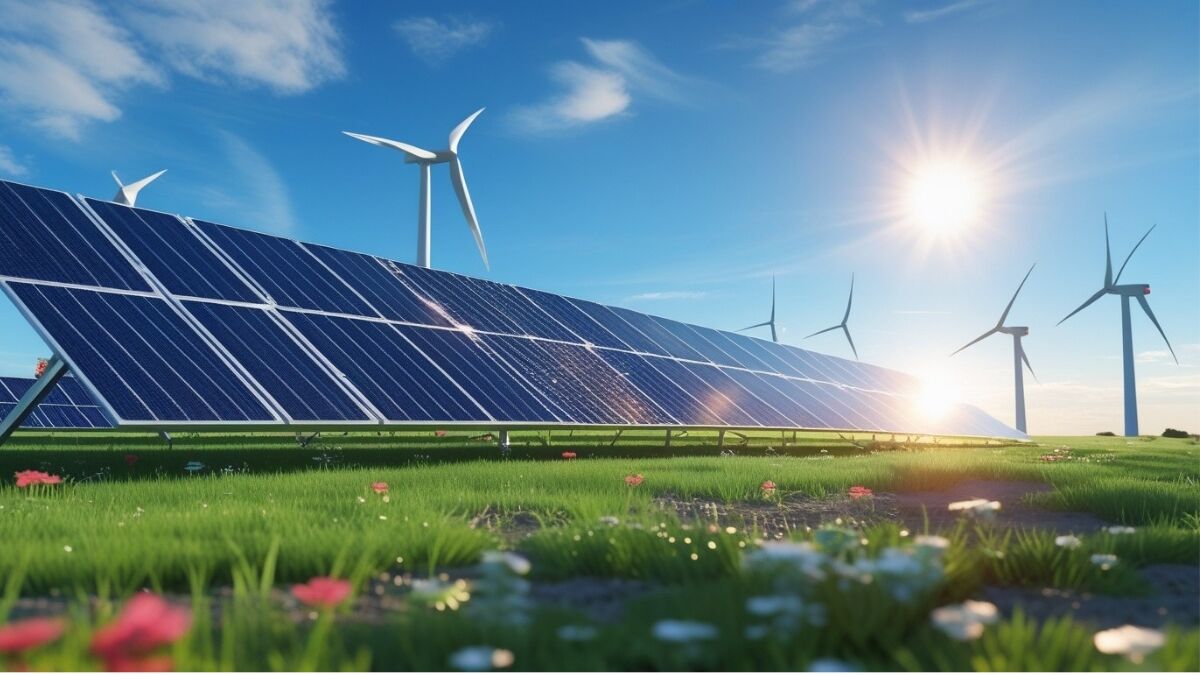
One of the top renewable energy companies in India, Tata Power Renewable Energy Limited (TPREL), a subsidiary of Tata Power Company, has successfully completed one of the biggest wind projects of its kind, a 198 megawatt (MW) wind energy project for Tata Steel under the group captive model in Karur, Tamil Nadu.
198 MW Wind Project Strengthens India’s Clean Energy Capacity
The project would improve TPREL’s contribution to India’s renewable energy capacity and accelerate Tata Steel’s decarbonization path by producing 31 million units of clean power annually from 55 3.6 MW wind turbine generators. The initiative ensures a green supply by offsetting 26,350 tons of CO2 per year.
Self-EPC Model Highlights Strong In-House Capabilities
The deliberate unbundling of the scope into several packages, all of which were carried out directly by TPREL, is one of the project’s main highlights. The project was delivered using a self-EPC model rather than depending on OEMs for balance of plant (BOP), civil BOP, engineering and construction, transmission lines, 33 kV systems, and SY. This highlights TPREL’s strong internal capabilities, engineering excellence, and successful execution of a mega-scale wind project.
🌱 Tata Power Renewable Energy Wind Project Snapshot
- Project Capacity: 198 MW wind energy project
- Location: Karur, Tamil Nadu
- Model: Group captive for Tata Steel
- Annual Generation: 31 million units of clean power
- Carbon Reduction: 26,350 tons of CO₂ annually
- Execution: Self-EPC model by TPREL
Overcoming Engineering and Execution Challenges
The Karur project used creative engineering and careful planning to overcome a number of execution obstacles. TPREL’s responsible approach to development is demonstrated by the massive turbine components that were carried to the site with little disturbance to nearby residents. Hard rock formations during excavation were efficiently managed with modern direct-to-hole technology, while the seamless transportation of over 516 cubic metres of concrete in a 12-hour operation highlighted the team’s great coordination and project management expertise.
Record-Speed Construction and Installation Milestones
Despite these obstacles, the project was carried out at a record pace, with the wind turbine generators installed in 167 days and the foundation construction finished in just 126 days. These accomplishments demonstrate TPREL’s unparalleled project execution skills and capacity to produce large-scale renewable projects with resilience and scalability.
⚡ India’s Renewable Energy Roadmap
- National Target: 500 GW renewable energy by 2030
- Tata Power Goal: 100% clean energy by 2045
- Wind Portfolio: Over 3.7 GW capacity
- Operational Wind: More than 1.2 GW
- Clean Energy Mix: Solar and wind projects nationwide
Supporting India’s 2030 Renewable Energy Target
By helping India achieve its goal of having 500 GW of renewable energy capacity by 2030, this collaboration strengthens TPREL’s standing as a pioneer in the country’s renewable energy transformation. It also demonstrates TPREL’s emphasis on expanding dependable, dispatchable, and financially feasible wind-powered renewable energy projects.
Expanding Wind and Solar Energy Portfolio
The company has a wind energy portfolio surpassing 3.7 gigawatts (GW), with over 1.2 GW operating and the remainder under various phases of development across Rajasthan, Gujarat, Maharashtra, Andhra Pradesh, Karnataka, and Tamil Nadu.
Long-Term Clean Energy Vision
This effort supports Tata Power’s ultimate objective of achieving 100 per cent clean energy by 2045 and complements its expanding renewable energy portfolio, which now totals 15.7 GW, with 6.9 GW sourced from clean energy.
Current and Upcoming Renewable Utility Capacity
TPREL now has 11.6 GW of renewable utility capacity thanks to this project. Currently, 6.2 GW of this capacity is operational, combining 5 GW of solar and 1.2 GW of wind energy. Furthermore, 5.8 GW, equally divided between 2.8 GW of wind and 3 GW of solar projects, are at different phases of implementation. These ongoing initiatives are planned to be completed in phases over the next six to 24 months in a staggered fashion.
Frequently asked questions
1. What is the capacity of Tata Power Renewable Energy’s new wind farm in Tamil Nadu?
The freshly commissioned wind facility has a total capacity of 198 MW and is located in Karur district, Tamil Nadu. It is among the biggest group captive wind farms in the area.
2. Who will make use of the electricity this wind project produces?
The project was created under the group captive concept to meet Tata Steel’s decarbonization and sustainability objectives by providing clean electricity.
3. How does this effort help cut carbon emissions?
The wind project is anticipated to offset about 26,350 tons of CO2 emissions per year, greatly increasing the use of renewable energy and lowering dependency on fossil fuels.
4. In terms of execution, what distinguishes this wind project?
By managing all significant components internally rather than relying on OEMs, TPREL demonstrated great technical and execution capabilities while carrying out the project using a self-EPC (Engineering, Procurement, and Construction) model.
5. How does this initiative align with India’s renewable energy targets?
The project is in line with Tata Power’s long-term objective of having 100% clean energy by 2045 and supports India’s goal of having 500 GW of renewable energy capacity by 2030.
Conclusion
Tata Power Renewable Energy Limited has achieved a major milestone with the commissioning of the 198 MW wind project in Tamil Nadu, which further solidifies its leadership in India’s clean energy revolution. TPREL has shown remarkable engineering strength, operational efficiency, and project management ability by completing the project at record speed using a self-EPC approach.
Beyond supporting Tata Steel’s environmental efforts, the initiative significantly advances India’s aspirations for carbon reduction and renewable energy. With a rapidly expanding wind and solar portfolio, TPREL continues to play a crucial role in establishing a dependable, scalable, and economically viable clean energy environment for the future.
Disclaimer:
This content is for informational purposes only. It does not constitute investment, financial, or legal advice. Readers are advised to verify details from official sources before making any decisions.
