
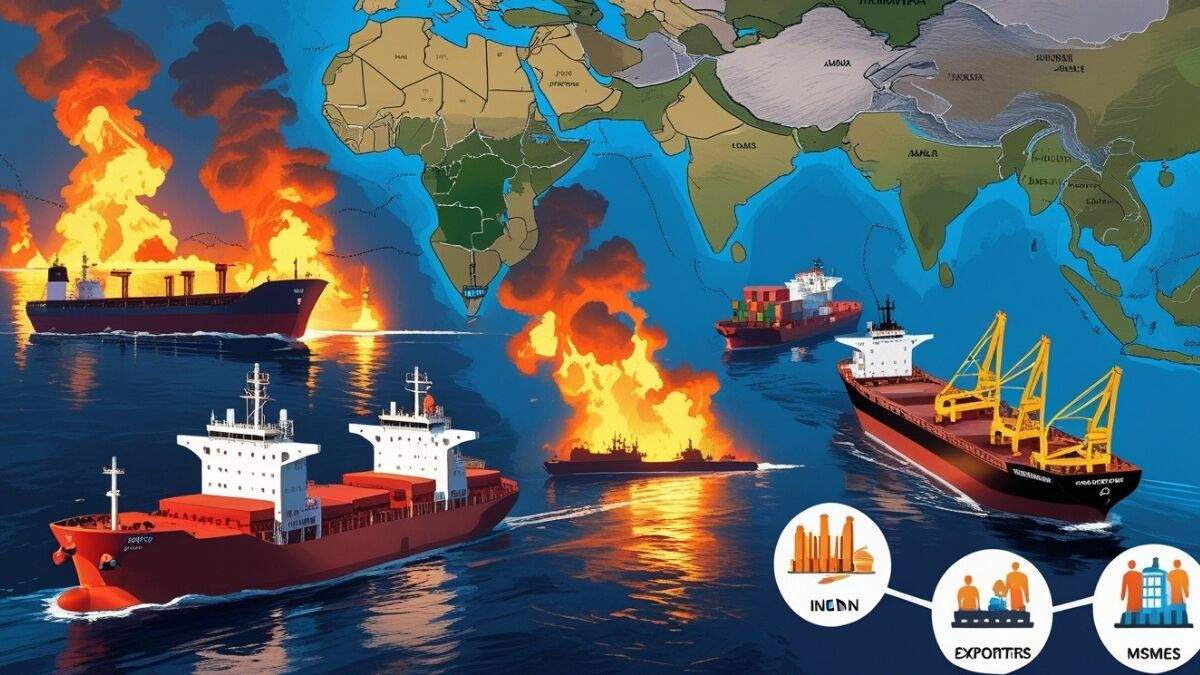
This live update covers the latest developments in the escalating US-Iran-Israel conflict, including military threats, geopolitical tensions, and risks to global oil supply routes.
US-Iran war live updates: On Sunday, March 22, US President Donald Trump made fresh threats to Iran about the Strait of Hormuz, ushering in another crucial stage in the US-Israel-Iran conflict.
Trump Issues Fresh Threat Over Strait of Hormuz
While the crucial shipping channel remained disrupted, Iranian television claimed a hit on the nuclear complex in Natanz. If Iran does not completely reopen the Strait of Hormuz within 48 hours, US President Donald Trump threatened to “obliterate” Iranian power facilities on Saturday.
Trump spent the weekend in Florida before issuing the ultimatum in a social media post. According to him, Iran has just 48 hours to open the crucial canal or risk a fresh series of assaults. As oil prices rise, Trump is under growing pressure to defend the Strait. He said that the US will demolish “various POWER PLANTS, STARTING WITH THE BIGGEST ONE FIRST.”
Iran Strikes and Rising Conflict
Late on Saturday, Iran conducted attacks on two towns close to Israel’s major nuclear research facility, severely damaging structures and injuring at least seven people.
At the beginning of the fourth week of the battle, the strike occurred only hours after Iran’s main nuclear enrichment plant at Natanz was targeted.
⚠️ US-Iran Conflict Key Highlights
- Ultimatum: 48 hours to reopen Strait of Hormuz
- Threat: US warns to destroy Iranian power plants
- Trigger: Strike on Natanz nuclear facility
- Impact: Rising oil prices globally
- Status: Conflict entering 4th week
Israel’s Response and Situation Update
Prime Minister Benjamin Netanyahu said, “This is a very tough evening,” and added that more emergency personnel were being sent to the location. According to AP, Israel’s army leader, Gen. Eyal Zamir, said earlier in the day that “the conflict is not near to finishing.”
Live updates on the US-Iran war: Trump threatens Iran once again! Iranian power facilities would be “obliterated,” according to the US president, if
Repeated Warning From Trump
On Saturday, President Donald Trump threatened to “obliterate” Iranian power facilities if they failed to completely open the Strait of Hormuz within 48 hours.
Trump spent the weekend in Florida before issuing the ultimatum in a social media post. According to him, Iran has just 48 hours to open the crucial canal or risk a fresh series of assaults.
🌍 Global Impact of Strait of Hormuz Crisis
- Oil Supply: Major global oil route disrupted
- Markets: Rising crude oil prices
- Trade: Shipping delays worldwide
- Security: Increased military tension
- Risk: Possible wider war escalation
The United States will demolish “various POWER PLANTS, STARTING WITH THE BIGGEST ONE FIRST,” he said. As oil prices rise, Trump is under growing pressure to safeguard the strait.
Frequently Asked Questions
1. What caused the present escalation?
Following reports of strikes on nuclear facilities and Donald Trump’s warning that Iran either reopen the Strait of Hormuz or face attacks, tensions increased.
2. What makes the Strait of Hormuz significant?
For the international transportation of oil, the Strait of Hormuz is essential. Global geopolitical tensions rise as a result of disruptions that have a substantial influence on energy prices, international commerce, and economic stability.
3. What took occurred at Natanz?
According to Iranian accounts, attacks targeted a crucial nuclear installation in Natanz, raising concerns of a wider confrontation and perhaps long-term instability in the area.
4. What is Israel’s response?
Near critical regions, Israel detected Iranian attacks. According to Prime Minister Benjamin Netanyahu, emergency responses have increased as the violence continues.
5. What are the worldwide ramifications?
Growing violence has the potential to impact international markets, security alliances, and diplomatic ties between key world powers by raising oil prices, disrupting trade routes, and perhaps expanding military participation.
Conclusion
With military threats, economic dangers, and geopolitical tensions indicating a possibly protracted and hazardous confrontation ahead, the scenario among the United States, Iran, and Israel is still unstable.
Disclaimer: This content is for informational purposes only and reflects ongoing geopolitical developments which may change rapidly.