
The United States and Venezuela are working well together, according to US President Donald Trump, who also said that Caracas has started releasing many political prisoners as part of what he called “seeking peace.”
US–Venezuela Cooperation and Shift in Strategy
“Venezuela is releasing significant numbers of political prisoners as a gesture of “Seeking Peace,” he said, citing the South American nation’s cooperation as the reason he had canceled a second round of planned strikes on the country. This is a really significant and clever gesture.
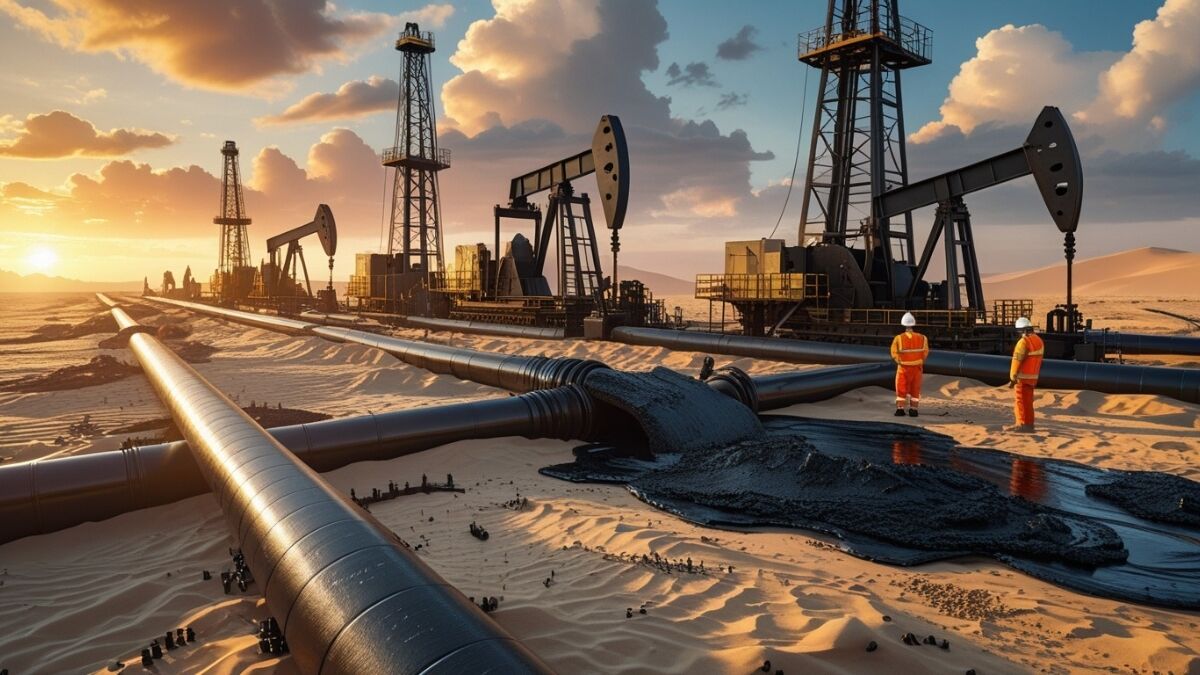
Venezuela and the United States are collaborating well. On his Truth platform, he said, “I have canceled the previously anticipated second Wave of Attacks because of this collaboration.” “BIG OIL, all of whom I will be meeting with today at The White House, will invest at least 100 billion dollars,” he continued.
🛢️ US–Venezuela Oil Cooperation Highlights
- Key Development: Second wave of attacks canceled
- Reason: Release of political prisoners by Venezuela
- Investment Scale: At least $100 billion
- Investors: Major U.S. oil companies (BIG OIL)
- Venue: White House meetings with President Trump
- Outcome: Economic cooperation over military escalation
Arrests and Legal Proceedings
The incident comes shortly after Nicolás Maduro and his wife, Cilia Flores, were taken prisoner during a US “large-scale strike” that took place in Caracas, the capital of Venezuela, on Saturday.
Following that, both were removed from the nation as part of a concerted effort by US law enforcement and intelligence services. Since then, the Southern District of New York has charged them with “drug trafficking and narco-terrorism plots,” and they are now on trial.
⚖️ Political Fallout and Legal Action
- Operation: US large-scale strike in Caracas
- Detainees: Nicolás Maduro and Cilia Flores
- Agencies: US intelligence and law enforcement
- Charges: Drug trafficking and narco-terrorism plots
- Court: Southern District of New York
- Status: Trial currently underway
Venezuela’s Response and Global Outlook
Earlier, Delcy Rodríguez, the temporary president of Venezuela and Maduro’s former vice president, said that relations with Washington had sustained an unparalleled “stain.” According to El Cooperante, she insisted that Venezuela will keep pursuing a diverse economic strategy, interacting with important markets on every continent.
In a live speech that aired on the official broadcaster VTV, Rodriguez said that the United States was pursuing a strategy of “exclusion” against Venezuela. She emphasized, however, that the two nations’ trade and economic ties are neither exceptional nor excessive.
Economic Engagement Despite Tensions
Venezuela’s public and commercial sectors will continue to have access to foreign markets despite tense ties, according to Rodríguez, highlighting the nation’s willingness to engage in international collaboration.
Trump, meanwhile, said that Venezuela will purchase products manufactured only in the United States using money from a new oil contract. He described the agreement as a “smart and extremely advantageous” decision for both countries and said that Caracas is “dedicated” to conducting business with Washington as its main partner.
Frequently asked questions
Why did Trump call off the second round of assaults?
In order to prevent such strikes, he pointed to Venezuela’s release of political prisoners and increased collaboration with the United States.
Is the United States pulling out its armed troops entirely?
No, despite the suspension of offensive operations, Trump said that security and naval personnel would stay in the area.
Today, who is gathering at the White House?
In order to explore at least $100 billion in investments related to Venezuela’s energy industry, Trump intends to meet with executives of major U.S. oil corporations, or “BIG OIL.”
What became of Nicolás Maduro?
Maduro and his spouse are now being prosecuted in the United States after being apprehended in an American operation earlier this week.
Are officials in Venezuela really working with the United States?
claim that words about cooperating on energy infrastructure and jail releases indicate collaboration, despite the fact that opinions throughout the world are still divided.
Conclusion
President Trump’s decision to postpone a second military assault on Venezuela is indicative of a move toward diplomacy supported by financial incentives, with a focus on prisoner releases and oil cooperation. High-level oil investment negotiations are in progress, while the United States’ military presence is still there, indicating a nuanced combination of economic participation and strategic caution.
Disclaimer
This article is based on official statements and publicly available information. Developments may change as events evolve, and readers are advised to follow credible news sources for ongoing updates.