
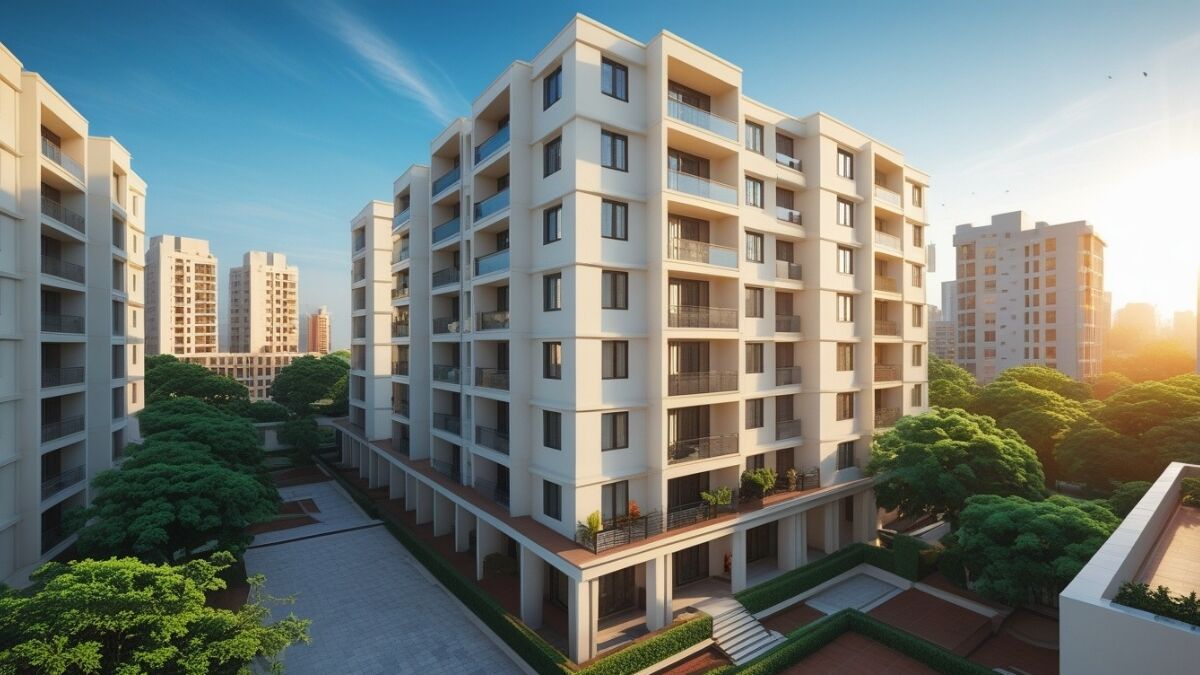
Capital investment in the real estate industry has increased significantly over the last year as a consequence of the Uttar Pradesh government’s updated township strategy and more extensive real estate reforms.
Uttar Pradesh Real Estate Investment Sees Sharp Growth
The Uttar Pradesh Real Estate Regulatory Authority reported that investments in the state’s real estate market increased from Rs 44,526 crore in 2024 to Rs 68,328 crore in 2025. This is a about 53.5 percent rise. According to the authorities, 309 projects were registered during the year, indicating an increase in investor trust in the state’s regulatory framework.
Pro-government measures, particularly the updated township policy and quicker regulatory approvals, have greatly enhanced the convenience of doing real estate business. The significant increase in investment and project registrations is a direct result of this, Indu Prakash Sharma of Trio Vision Infra said this writer.
Policy Reforms Driving Investor Confidence
The increase comes after significant changes to the township ordinance, which lowered the minimum acreage requirement for township development from 25 acres to 12.5 acres. In order to safeguard homeowners’ interests, the updated regulation also established more stringent deadlines for project completion. The new regulations stipulate that townships bigger than 25 acres must be finished within three years, while larger projects may take up to five years.
Previously, a number of significant projects have stagnated for eight to twelve years, locking up the finances of customers. According to officials, the new conditions have improved project feasibility and ensured speedier delivery, which has relieved investors and allottees.
🏗️ Uttar Pradesh Real Estate Investment Boom
- Investment 2025: ₹68,328 crore
- Investment 2024: ₹44,526 crore
- Growth: ~53.5%
- Projects Registered: 309
- Key Driver: Revised township policy
- Impact: Higher investor confidence & faster approvals
Shift From NCR to Non-NCR Regions
Although Uttar Pradesh’s real estate market has historically been dominated by the National Capital Region, data from 2025 shows a definite trend towards smaller towns and non-NCR areas. There were 186 authorized projects in non-NCR regions and 122 registered projects in the NCR throughout the year.
The pattern highlights the effects of enhanced connectivity, increased infrastructure, and targeted tier two city growth. With 67 projects registered, Lucknow became a significant center. Agra recorded 14 projects, while Bareilly recorded 15. Bulandshahar, Rampur, Chandauli, Unnao, Gonda, Mau, and Mirzapur all saw new investments, suggesting that real estate activity is more widely distributed across the state.
Religious Tourism Boosts Property Demand
Additionally, religious tourism has been a major factor in the expansion of real estate. In 2025, Mathura registered 23 projects. Prayagraj registered seven projects, Varanasi nine, and Ayodhya five.
According to Vishal Singh, a government spokesperson, “the extensive renovation of Ayodhya, Varanasi, and Mathura, together with a significant growth in religious tourism, has produced high demand for housing, hotel, and commercial developments.” These cities are now more than simply places to go on pilgrimages. They are quickly becoming new hubs for real estate development.
🛕 Religious Tourism Fuels Real Estate Growth
- Mathura: 23 projects registered
- Varanasi: 9 projects
- Prayagraj: 7 projects
- Ayodhya: 5 projects
- Demand Areas: Housing, hospitality & commercial
- Growth Driver: Redevelopment & rising pilgrim footfall
Changing Perceptions Among Investors
According to real estate developers, attitudes of Uttar Pradesh have changed significantly as a result of the state’s overall improvement in the investment environment.
“Uttar Pradesh has had a pretty good mood for the last several years. Many large investors used to be reluctant to come here. According to Amit Srivastava, CEO of BBD Viraj Group and a CREDAI member, “you can see huge names entering the state now, whether it is massive housing projects, logistics parks, industries, or townships.”
He cited improvements in energy supply, peace and order, and ease of doing business, along with new expressways that link Lucknow and Delhi, as examples of infrastructural developments that have greatly aided Uttar Pradesh’s rise to wealth.
Faster Land-Use Approvals Unlock Growth
“Permitting land-use change via development agencies has been one of the most revolutionary moves. In the past, the Revenue Board handled this procedure, which was exceedingly time-consuming and unsuitable for businesses. Many delayed and new projects have now been made possible by the quicker clearance process, according to Srivastava.
Improved connectivity, urban redevelopment initiatives, and a consistent increase in visitor and devotee traffic are all contributing to these cities’ emergence as new hubs for Uttar Pradesh’s real estate development, according to officials, who expressed optimism that the state will continue to see significant growth in the years to come.
Frequently asked questions
1. What caused Uttar Pradesh’s real estate investment to increase by 53%?
The updated township policy, quicker regulatory approvals, less land requirements, and general improvements in ease of doing business—all of which increased investor confidence—were the primary drivers of the rise.
2. What was the amount of investment in Uttar Pradesh’s real estate market in 2025?
Real estate investments increased from ₹44,526 crore in 2024 to ₹68,328 crore in 2025, according to UP RERA.
3. What are the main modifications to the updated township policy?
Strict completion deadlines were instituted, with three years for 25-acre townships and up to five years for bigger projects. The minimum acreage requirement was lowered from 25 acres to 12.5 acres.
4. In 2025, which city had the most real estate activity?
Mathura, Bareilly, Agra, and a number of tier-two cities behind Lucknow, which had 67 projects. Religious centers like Mathura, Varanasi, Prayagraj, and Ayodhya all saw rapid expansion.
5. Why are non-NCR districts becoming more significant?
Investor interest in non-NCR areas and smaller cities has moved due to improved infrastructure, expressway connections, urban redevelopment, and tourist expansion.
Conclusion
With the support of increased investor confidence, infrastructural development, and legislative changes, Uttar Pradesh’s real estate industry has entered a robust boom phase. Both developers and homeowners have benefited from the updated township policy, which has increased project viability and guaranteed quicker delivery.
The state is gradually developing into a diverse and appealing real estate market because to rising investments in non-NCR areas and religious tourist hotspots. In the next years, Uttar Pradesh is probably going to continue to be a major real estate development engine if the present trend keeps up.
Disclaimer
This article is for informational purposes only. Data and statements are based on official reports and industry sources and may change. Readers should seek professional advice before making investment decisions.
