
The escalating US-Iran conflict is intensifying military actions, disrupting global energy markets, and raising fears of a broader regional war.
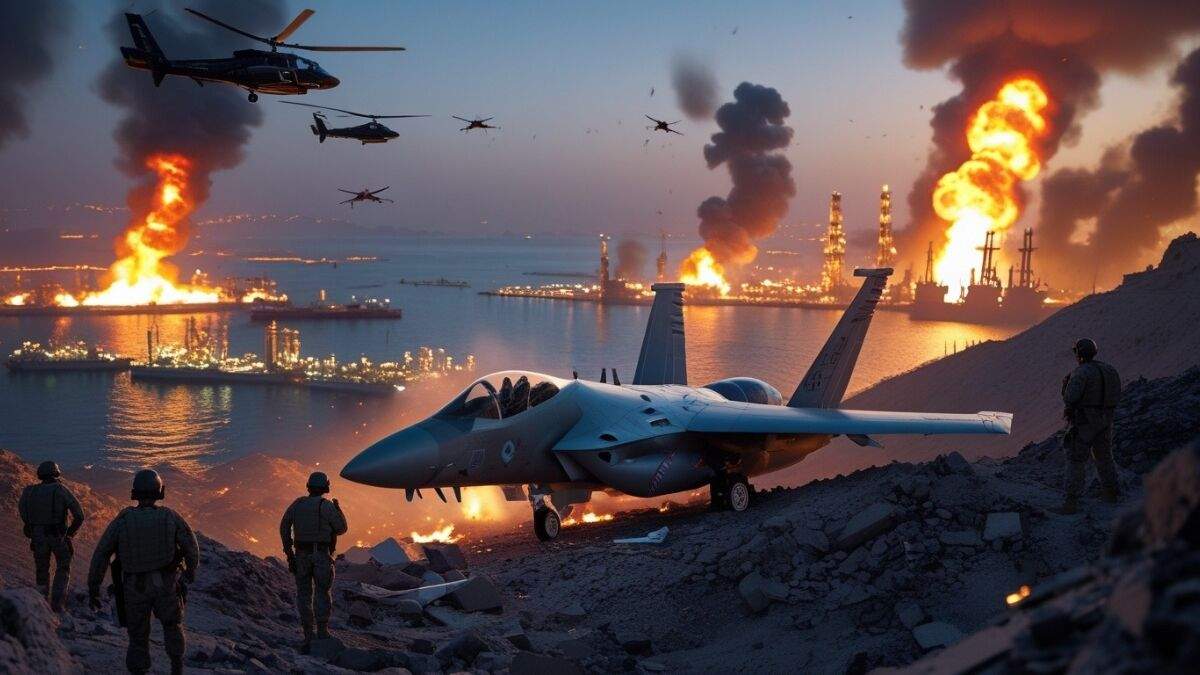
An airman from Iran was saved by US forces after his fighter plane was shot down, while the Islamic Republic’s ongoing attacks caused fires that destroyed an Emirati petrochemical complex and damaged Kuwait is oil headquarters.
US Rescue Mission Amid Intensifying Conflict
President Donald Trump stated in a Truth Social post on Sunday that the US sent out dozens of planes to rescue the injured crew member from a mountainous terrain, one day after a second individual from the same F-15E jet was saved.
Trump had earlier declared that the 10-day window for Iran to reach a peace agreement with the United States was closing and threatened to unleash “all hell” on the country as early as Monday.
Rising Tensions and Military Escalation
⚔️ Conflict & Energy Disruption
- Key Event: US airman rescue mission
- Conflict Duration: Entering second month
- Strait Impact: Hormuz traffic nearly halted
- Global Effect: Rising oil & LNG prices
- Market Reaction: Volatility in energy markets
- Risk: Global inflation concerns
As the battle with Iran moves into its second month, the downing of US planes shattered Trump’s attempt to present an air of invincibility. Due to Iran’s attacks, the Strait of Hormuz, which typically carries over 25% of the world’s oil and liquefied natural gas, is nearly at a stop, raising energy costs and upsetting international markets.
The battle has caused oil prices to fluctuate, and rising prices for goods like diesel and jet fuel are raising the possibility of another round of inflation. According to two delegates, OPEC countries intend to increase their production quotas for May in a symbolic step as the war limits shipments and production from some of the alliance’s biggest members.
Impact on Global Energy Markets
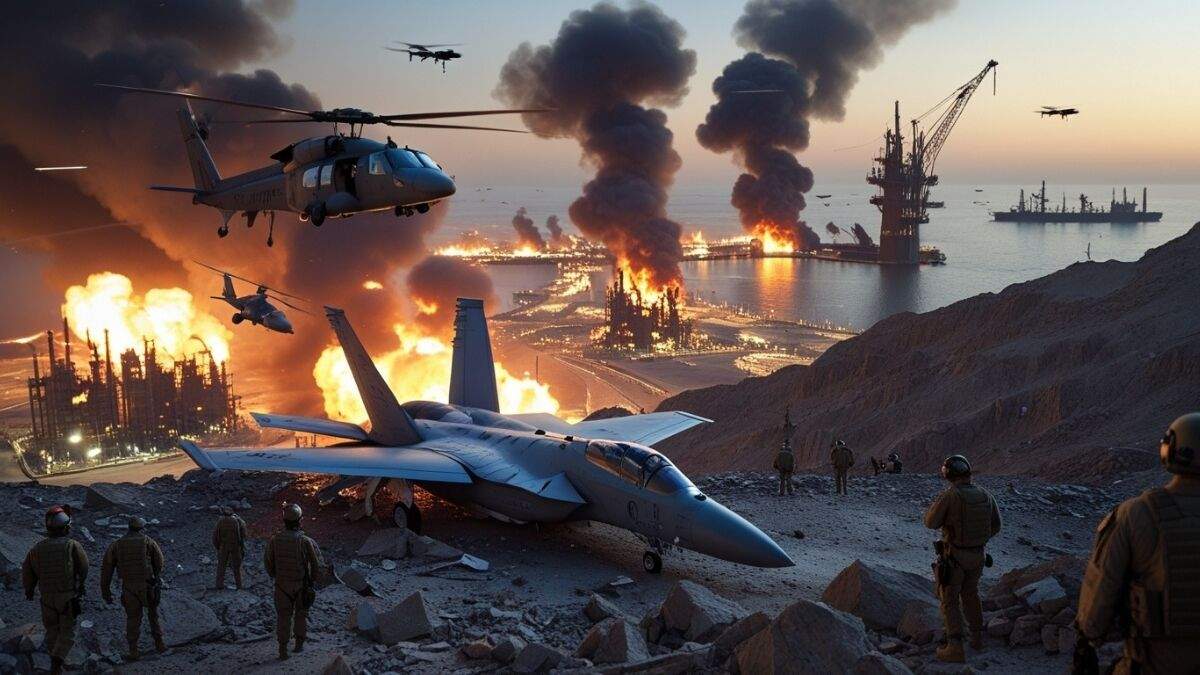
According to the New York Times, US aircraft dropped bombs and opened fire on Iranian convoys to prevent them from approaching the aviator’s hiding place during the two-day rescue effort, which comprised hundreds of special operation forces. The Wall Street Journal stated that the US destroyed two of its own special operations planes during the mission when they became trapped, but it did not specify the reason.
Iran reported that an airstrike on a petrochemical complex in the southwest resulted in five fatalities and 170 injuries. The Israel Defense Forces claimed responsibility for the incident.
Regional Damage and Infrastructure Attacks
🔥 Middle East Infrastructure Damage
- Iran: Petrochemical plant hit, casualties reported
- Bahrain: Fire at Bapco storage facilities
- Kuwait: Oil HQ damaged, power units down
- UAE: Borouge plant shutdown after fires
- Saudi Arabia: Missile attacks intercepted
- Israel: 120+ systems targeted in Iran
Bahrain reported that a drone strike caused a fire at storage facilities owned by the state energy business Bapco Energies, however the fire was eventually put out without any casualties.
A similar attempt resulted in the burning of Kuwait Petroleum Corp.’s headquarters, which also houses the nation’s oil ministry. Two generation units were rendered inoperable due to severe damage caused by a different strike on water desalination and power plants.
Following the interception of Iranian assaults, Borouge PLC ceased operations at a petrochemicals factory in Abu Dhabi after several fires started from falling debris, according to the government media office.
Additionally, Saudi Arabia announced that cruise missile assaults had been shot down. Israel claimed on Sunday that within the previous 24 hours, it had attacked over 120 missile and air defense systems in central and western Iran.
Escalation Despite Diplomatic Pressure
Iran has outlined its own demands for peace, the most of which are unpalatable to the United States and Israel, and has showed little indication of embracing Trump’s requests. The president has threatened to destroy Iran’s civilian energy infrastructure, which might be considered a war crime under international law, if Iran does not comply with his demands and open Hormuz to all shipping traffic.
Iran said on Saturday that Iraq would not be subject to its shipping limitations in the strait, permitting up to 3 million barrels of Iraqi oil shipments per day. Volumes would rely on if maritime companies are ready to take the danger of accessing the strait, according to a cautious Iraqi official.
Casualties and Human Impact
Iran’s semi-official Tasnim news agency said yesterday that attacks on the perimeter of the country’s Bushehr nuclear power project killed one security employee. According to Tasnim, the facility’s major areas, which house employees of Russia’s state nuclear enterprise Rosatom, were unaffected.
According to government agencies and the US-based Human Rights Activists News Agency, the battle has claimed the lives of over 5,000 people, nearly three-quarters of whom were in Iran. In Lebanon, where Israel is waging a parallel war against Hezbollah, an Iranian ally, more than 1,300 people have died.
Frequently Asked Questions
1) What caused the latest escalation of the US-Iranian conflict?
Iran shot down an F-15E, resulting in the rescue of a fallen airman by US forces. Meanwhile, regional raids escalated, causing damage to energy infrastructure and raising tensions.
2) What makes the Strait of Hormuz significant?
Since it manages around one-fifth of the world’s oil and LNG flows, conflicts have a significant negative influence on energy markets, pricing, and the stability of the world economy.
3) What was the course of the US rescue effort?
In order to protect the injured airman and guarantee his successful extraction, hundreds of special operations soldiers and planes carried out a two-day campaign, attacking Iranian convoys.
4) How has the fighting affected things?
Oil prices skyrocketed, the price of fuels like diesel and jet fuel went up, OPEC made changes, and supply disruptions raised the possibility of rising inflation and market instability.
5) What harm did the Middle East sustain?
Attacks by drones and missiles targeted sites in Saudi Arabia, Bahrain, Kuwait, and the United Arab Emirates, resulting in infrastructure damage, fires, and shutdowns, but there were few recorded injuries overall.
Conclusion
As Donald Trump presses diplomacy as military escalation continues to impact economies, people, and global geopolitical balance, this confrontation demonstrates growing regional instability, challenges to global energy security, and risks of wider war.
Disclaimer: This content is for informational purposes only and does not constitute geopolitical, financial, or strategic advice.
