
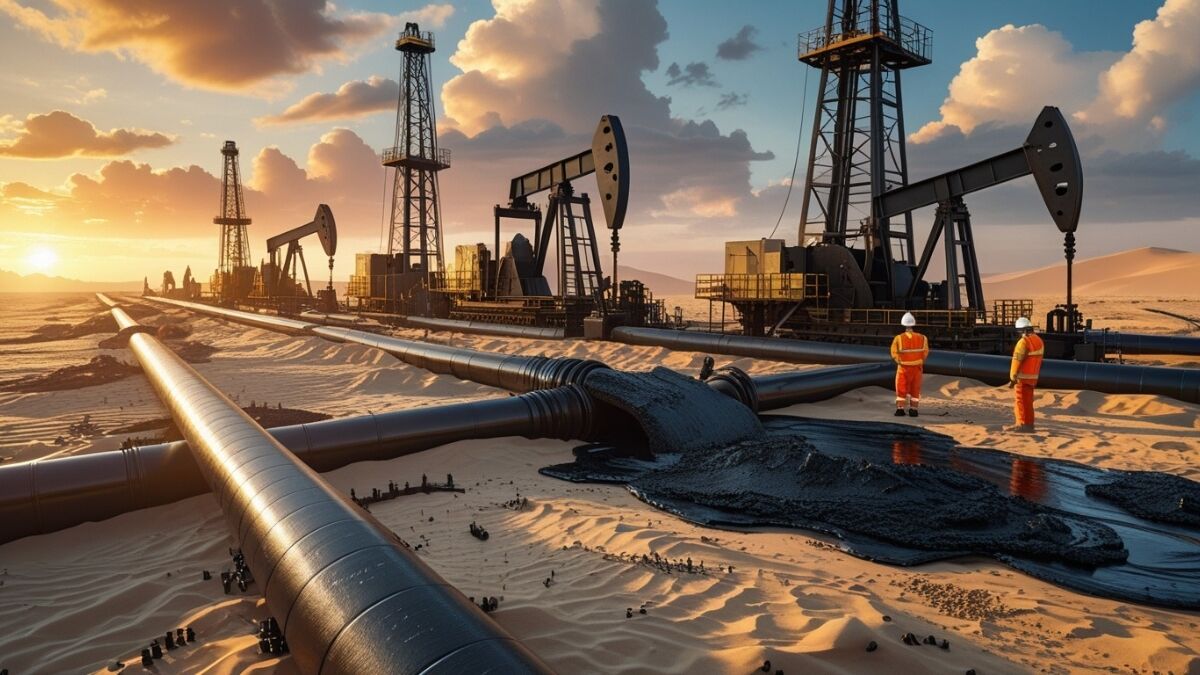
Rising crude oil prices driven by geopolitical tensions have prompted the United States to take strategic action by tapping into its petroleum reserves to stabilize global markets.
In an effort to rein in prices that have risen to four-year highs as a result of the assault on Iran, the Trump administration said on Friday that it has loaned 45.2 million barrels of crude oil from the Strategic Petroleum Reserve to oil firms.
US Strategic Petroleum Reserve Loan to Stabilize Oil Prices
The first delivery accounts for 52% of the up to 86 million barrels that the government said it would lend last week. In the end, the United States wants to lend 172 million barrels for delivery this year and the next.
🛢️ SPR Oil Loan Overview
- Initial Loan: 45.2 million barrels
- Total Planned: 172 million barrels
- First Phase: 52% of 86 million barrels
- Goal: Stabilize oil prices
- Trigger: Iran conflict & rising crude prices
Companies Receiving SPR Oil Loans
According to a statement from the Energy Department, BP Products North America, Gunvor USA, Marathon Petroleum, and Shell Trading were among the businesses given the first SPR loans.
The loans are a part of an agreement to release 400 million barrels of oil from reserves with 32 members of the International Energy Agency. Crude prices have reached their highest level since the beginning of Russia’s invasion of Ukraine due to the conflict that the United States and Israel started on February 28.
Unique Loan Structure and Repayment Terms
The Energy Department claims that this approach was designed to stabilize markets “at no expense to American taxpayers.” Companies will return the oil with additional barrels as a premium. Companies had to pay a premium of 18% to 22% in oil, which makes the swap’s structure unique. In an attempt to get contracts, bidders can promise to repay even more oil.
💰 Oil Loan Repayment Structure
- Repayment: Oil returned with premium
- Premium Range: 18% – 22%
- Extra Incentive: Higher repayment bids allowed
- Benefit: No taxpayer cost
- Outcome: Increase in SPR reserves
Impact on Strategic Petroleum Reserve
According to the agency, the procedure would ultimately increase the SPR for the initial batch by about 10 million barrels. As of Friday, Energy Transfer Crude Marketing, Mercuria Energy America, Trafigura Trading, and Vitol were among the other businesses that have received contracts.
The SPR has over 415 million barrels of petroleum, more than the world needs in four days, and is housed in subterranean caverns on the coastlines of Texas and Louisiana.
In the end, the United States hopes to exchange 172 million barrels from the SPR, and it anticipates that oil firms will return around 200 million barrels, including the premium.
Frequently Asked Question
1) For what reason does the United States lend oil from the Strategic Petroleum Reserve (SPR)?
In an effort to stabilize crude oil prices, which have skyrocketed as a result of the assault on Iran, the United States is lending oil to oil corporations.
2) How many barrels of oil is the SPR lending?
As part of a bigger plan to lend up to 172 million barrels, the Trump administration first borrowed 45.2 million barrels from the SPR.
3) Which businesses participate in the oil loans?
The SPR has given oil loans to businesses including Gunvor USA, Marathon Petroleum, BP Products North America, and Shell Trading.
4) How are the oil loans repaid?
In order to protect American taxpayers and maintain the stability of the world’s oil markets, oil corporations are required to return the borrowed oil with an 18–22% premium.
5) What impact will this have on the Strategic Petroleum Reserve?
With the premium included, the SPR will ultimately get around 200 million barrels in return, possibly increasing its reserves by over 10 million barrels.
Conclusion
With many international oil corporations participating in a special repayment plan, the U.S. is leveraging its oil reserves to stabilize the market despite increasing petroleum prices due to the Iranian crisis.
Disclaimer: This content is for informational purposes only and reflects current reports. Oil markets are highly volatile and influenced by geopolitical developments.
