
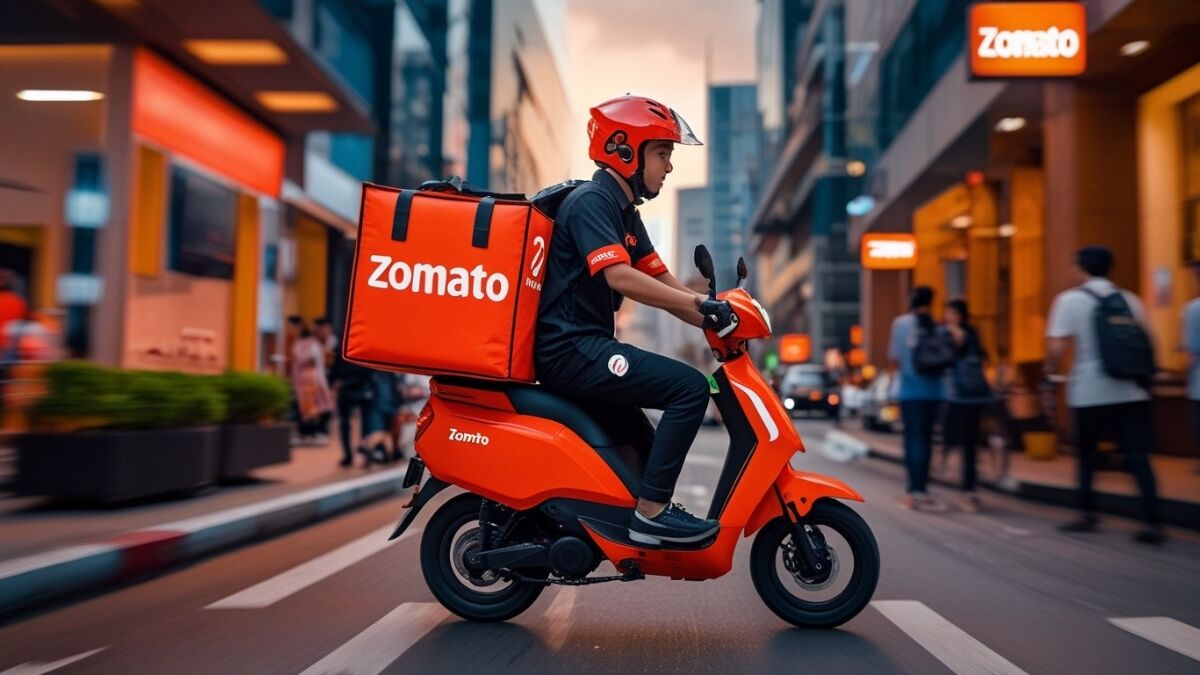
Deepinder Goyal, the creator of Zomato, recently highlighted record order delivery by Blinkit and Zomato in a post on X, previously known as Twitter.
Record Delivery Amid Gig Worker Strike
Goyal said in the article that despite a statewide gig worker strike over poor pay, job instability, and 10-minute delivery demands, both platforms reported 7.5 million orders were fulfilled on New Year’s Eve 2025 by 450,000+ partners. Former Jet Airways CEO Sanjiv Kapoor questioned the need of a 10-minute delivery service in the nation’s congested cities, citing Deepinder Goyal’s tweet.
Questioning the Need for Ultra-Fast Delivery
“Deepinder, I would really want to know whether, apart from medical situations, we truly require 10-minute deliveries in our hectic metropolitan environment. In the article, Kapoor added, “Would 30 minutes or 1 hour delivery (without so much pressure and desire for speed) be the end of the world?” His remarks follow previous criticisms of 10-minute delivery.
Goyal Responds to Gig Worker Walkout
It all began on January 1, 2026, when Goyal posted a response to a statewide gig worker walkout on December 31, 2025, calling for a ban on Blinkit’s 10-minute deliveries, which unions allege force riders to speed dangerously and lead to poor pay and high attrition.
🚚 Zomato–Blinkit Record Deliveries
- Date: New Year’s Eve 2025
- Total Orders: 7.5 million (all-time high)
- Delivery Partners: 4.5 lakh+
- Platforms: Zomato & Blinkit
- Context: Deliveries continued despite statewide gig worker strike
- Support: Local authorities helped maintain operations
⚠️ 10-Minute Delivery Controversy
- Criticism: Sanjiv Kapoor questioned need for 10-minute delivery
- Goyal’s Defense: Enabled by dense store networks, not speeding
- Delivery Logic: 2.5 min packing + ~2 km ride at ~15 kmph
- No Timer: Riders don’t see delivery countdowns
- Political Concern: MP Raghav Chadha warned against gig worker exploitation
- Core Debate: Speed vs safety, fairness & dignity of gig workers
Deepinder Goyal’s Post Highlights
Despite the demands for strikes that many of us have heard over the previous several days, Zomato and Blinkit delivered at a record rate yesterday.
Over 4.5 lakh delivery partners across both platforms were able to deliver over 75 lakh orders (an all-time high) to over 63 lakh consumers throughout the day thanks to the aid of local law enforcement in controlling the few miscreants. Delivery partners did not get any extra incentives for this; in fact, yesterday was no different from other NYE days.
I am appreciative of our workers on the ground and local authorities throughout the nation for their prompt coordination and straightforward enforcement.
Above all, we are grateful to our delivery partners who chose honest labor and advancement, held their ground, and showed up in spite of intimidation.
Everyone should keep in mind that a system would not constantly draw and keep so many individuals who want to work within it if it were inherently unfair. Please avoid falling for stories propagated by certain interests.
One of the biggest organized job-creation engines in India is the gig economy, and its true effect will grow over time as the children of delivery partners—supported by steady salaries and education—enter the workforce and contribute to the large-scale transformation of our nation.
Defending the 10-Minute Delivery Guarantee
Deepinder Goyal defends Zomato’s delivery guarantee of ten minutes. Goyal defended the company’s 10-minute delivery guarantee in another post, saying that “the density of businesses surrounding your residences” makes the service possible. Asking delivery partners to drive quickly will not make it possible. This is what he wrote:
And one more thing. The number of retailers around your residences makes it possible for us to fulfill our 10-minute delivery guarantee. Asking delivery partners to drive quickly will not make it possible. Delivery partners do not even have a timer on their app to show the client what the original time was.
Your order is chosen and packaged in 2.5 minutes after you place it on Blinkit. After that, the cyclist travels less than two kilometers on average in eight minutes. That is 15 kmph on average.
It is difficult to comprehend the enormous intricacy of the system architecture that allows for speedy delivery, therefore I can see why everyone believes that 10 minutes must be endangering lives.
Ask any rider partner when you get your next grocery or restaurant order if you have ever wondered why millions of Indians choose to work on platforms freely and sometimes even prefer it to normal employment. How logical and truthful they will be with you will humble you.
That being said, no system is flawless, and we are all working to improve it. But that is not at all what those who do not know how and why our system works are portraying on social media. I would likewise think that gig workers are being taken advantage of if I were outside the system, but that is untrue.
Concerns Over Gig Economy Exploitation
The gig economy cannot become a guilt-free exploitation industry, according to MP Raghav Chadha. Raghav Chadha, a member of parliament, expressed worries about gig economy exploitation in a post on X. He penned:
“I had a conversation with Zomato, Swiggy, Blinkit, and other delivery riders. It is not a tirade. This is a dialogue with people whose lives provide us with daily comfort. Millions of delivery drivers who contributed to the development of instant-commerce businesses are now compelled to protest in order to be heard, which is unfortunate.
Algorithms were not the only factor in these platforms’ success. Their success was a result of human labor and sweat. Companies need to stop seeing passengers as disposable data points and instead treat them as real beings. It is impossible for the gig economy to develop into a guilt-free exploitation economy.
