
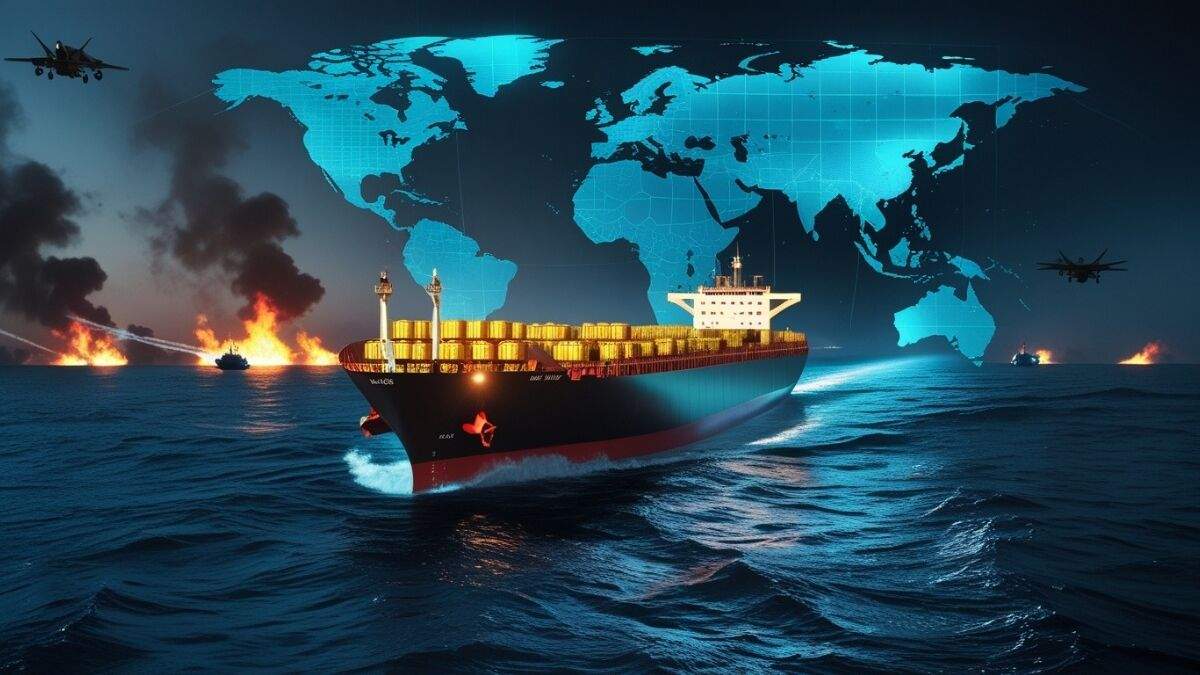
The article makes the case that the recent disruption in the Strait of Hormuz has revealed Asia’s extreme susceptibility to shocks to the energy supply and emphasizes the pressing need for a coordinated regional response.
The situation is characterized as one of the most serious dangers to energy security in history, equivalent to shocks like the Yom Kippur War and the Iranian Revolution, citing warnings from Fatih Birol, the head of the International Energy Agency.
Millions of barrels of oil, of which roughly 85% were intended for Asian markets, have been trapped by the closure, causing shortages in nations including the Philippines, Japan, and India.
Beyond the short-term shortages, the interruption has highlighted Asia’s dependence on vital marine routes like the South China Sea, Taiwan Strait, and Strait of Malacca. Any obstruction in these pathways might pose major geopolitical and economic dangers by seriously disrupting trade and energy supplies.
The essay suggests establishing a “Asian Energy Collaborative Compact” (AECC) to solve this, drawing inspiration from Henry Kissinger’s establishment of the IEA in 1974. The three major objectives of this proposed alliance are to boost Asia’s collective negotiating leverage against oil exporters, ensure free navigation across important shipping routes, and expedite the switch to renewable energy through shared resources and expertise.
The article also discusses the “Asian Premium,” a higher price that Asian nations paid for crude oil, which skyrocketed during the crisis. This implies that Asia’s position is weakened by fragmented negotiations, underscoring the necessity of group action.
Furthermore, it is becoming more crucial for Asian countries to lessen their reliance on fossil fuels due to the changing global oil picture, which includes changes within OPEC and escalating geopolitical tensions. Despite the fact that many nations have plans for renewable energy, growth is still unequal and inadequate.
The study concludes that Asian nations have a shared interest in energy security and decarbonization despite differences in politics and ideology. The region’s shift to sustainable energy could be accelerated, supply concerns could be managed, and markets could be stabilized with the aid of a single platform like AECC.
