
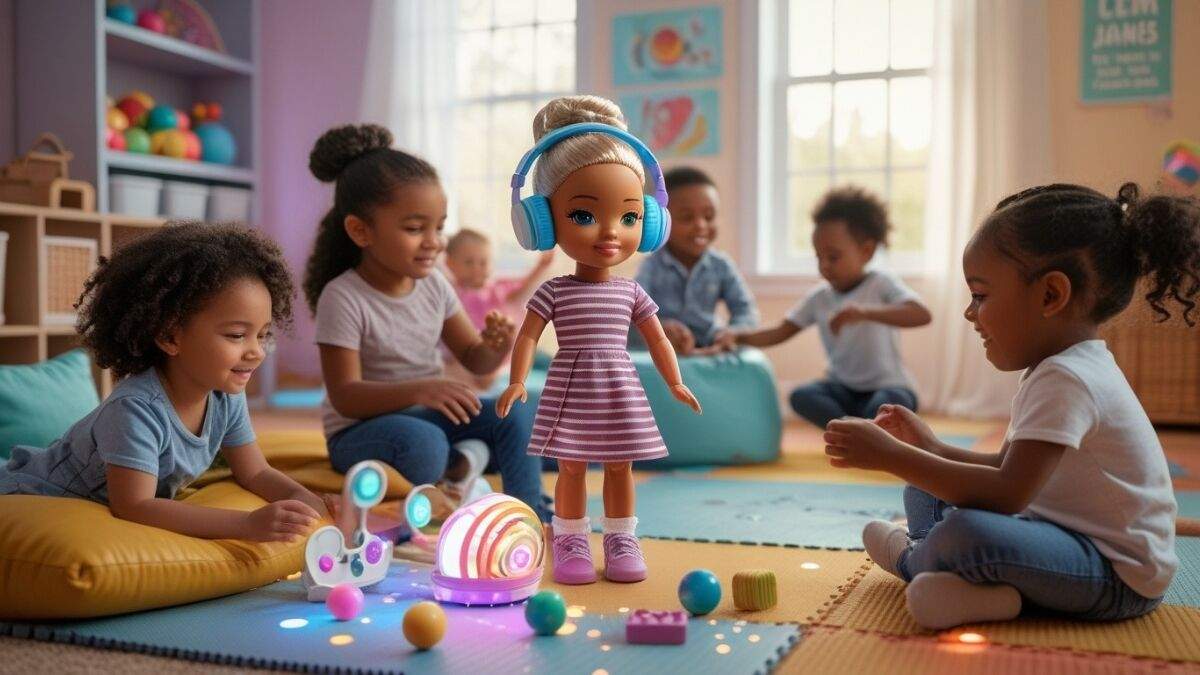
Inclusive toy design is gaining attention in India, with Mattel’s autistic Barbie highlighting the importance of representation and sensory-friendly play.
When it comes to inclusivity in particular, toy design has a significant influence on how kids perceive the world. Mattel debuted an autistic Barbie in India in January 2026. The doll, which was created in partnership with the Autistic Self Advocacy Network, has smart features like a fidget toy, noise-canceling headphones, and a softer design that reflects the sensory sensitivity of autistic people.
Inclusive Toy Design Gains Momentum in India
Although this campaign raises awareness and representation, parents and professionals stress that children with autism interact with toys in very different ways. Instead of being imaginative or role-based, their play is frequently extremely personal, repetitive, and sensory-driven. Instead of typical dolls or figurines, many kids prefer things that involve movement, light, or tactile stimulation. This draws attention to a significant drawback: a single product cannot adequately capture the diverse range of autism.
🧸 Autistic Barbie Highlights
- Launch: January 2026 (India)
- Collaboration: Autistic Self Advocacy Network
- Features: Fidget toy & headphones
- Design: Sensory-friendly materials
- Goal: Promote inclusivity
Understanding How Autistic Children Play
Such toys can still be helpful in structured settings like therapy sessions, according to professionals who work with neurodivergent kids, particularly when paired with sensory components catered to the child’s preferences. True inclusion, however, goes beyond representation and necessitates the barrier-free integration of kids with special needs into regular play and social interactions.
By normalizing differences at an early age, inclusive toys also help neurotypical kids. Playtime exposure to diversity promotes empathy and lessens stigma. According to studies, toys made with children with autism’s sensory and linguistic needs in mind can boost engagement and promote interaction.
Benefits for All Children
📊 Inclusive Toy Trends
- Focus: Accessibility & diversity
- Market: Growing “purple economy”
- Impact: Encourages inclusive play
- Innovation: Sensory-based design
- Future: More adaptive toys expected
By capitalizing on the expanding “purple economy,” a sector that represents individuals with disabilities and their families, the launch also represents a larger change in the toy industry toward accessibility and diversity. According to experts, this action may encourage local and international producers to reconsider toy design in order to make it more inclusive and flexible for kids of all skill levels.
Disclaimer: This content is for informational purposes only and reflects industry trends and inclusivity initiatives. It does not constitute medical or professional advice.
