
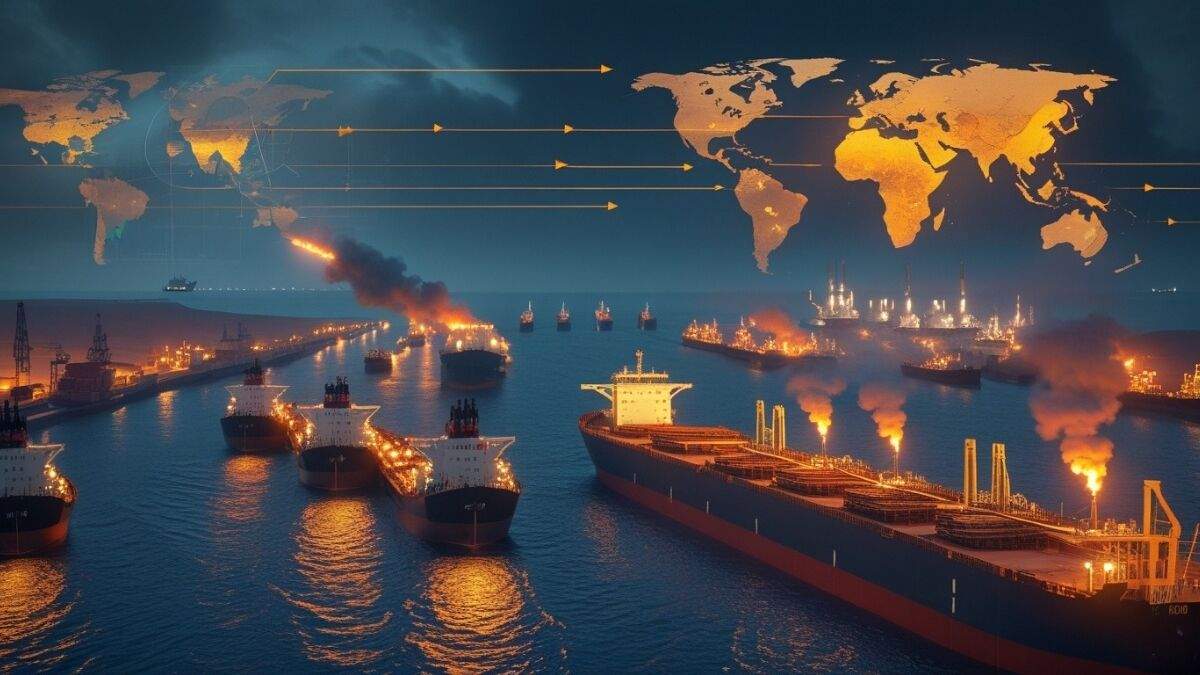
The prolonged conflict with Iran has caused a dramatic increase in the price of crude oil globally, raising serious concerns for the Indian economy and financial markets. For the second time in a month, HSBC has responded by downgrading Indian stocks from “neutral” to “underweight,” indicating a cautious stance.
Since late February, the price of crude oil has increased by more than 40%, and it has been above $90 a barrel for weeks. This poses significant macroeconomic difficulties for India, which imports about 90% of its oil requirements. Increased import costs, a declining rupee, and a larger current account deficit are all consequences of rising oil prices, which exert strain on the stability of the economy as a whole.
The Nifty 50 and BSE Sensex have already seen huge declines in 2026, making India one of the world’s worst-performing stock markets. According to HSBC, every 20% increase in crude prices might result in a 1.5 percentage point decline in earnings growth, indicating that rising energy costs will negatively impact corporate profits.
For the Reserve Bank of India, the circumstances have also complicated monetary policy. Although the central bank has kept the repo rate at 5.25%, it has issued a warning about potential rate increases in the event that inflation increases as a result of costly oil imports. For FY27, growth estimates have already been lowered to 6.9%, while inflation is predicted to be about 4.6%.
The fast withdrawal of funds from Indian markets by foreign portfolio investors (FPIs) has increased the strain. Outflows had reached $18.5 billion in 2026 alone, extending a pattern from 2025. Despite a comparatively weaker US currency, this has caused the rupee to drop by almost 10%.
HSBC added that even while values have adjusted, the possibility of earnings downgrades may make Indian stocks seem pricey. India today appears less appealing to international investors than other Asian markets, particularly in Northeast Asia.
Overall, Indian markets are facing a difficult environment due to high oil prices, capital outflows, and profitability uncertainties.
