
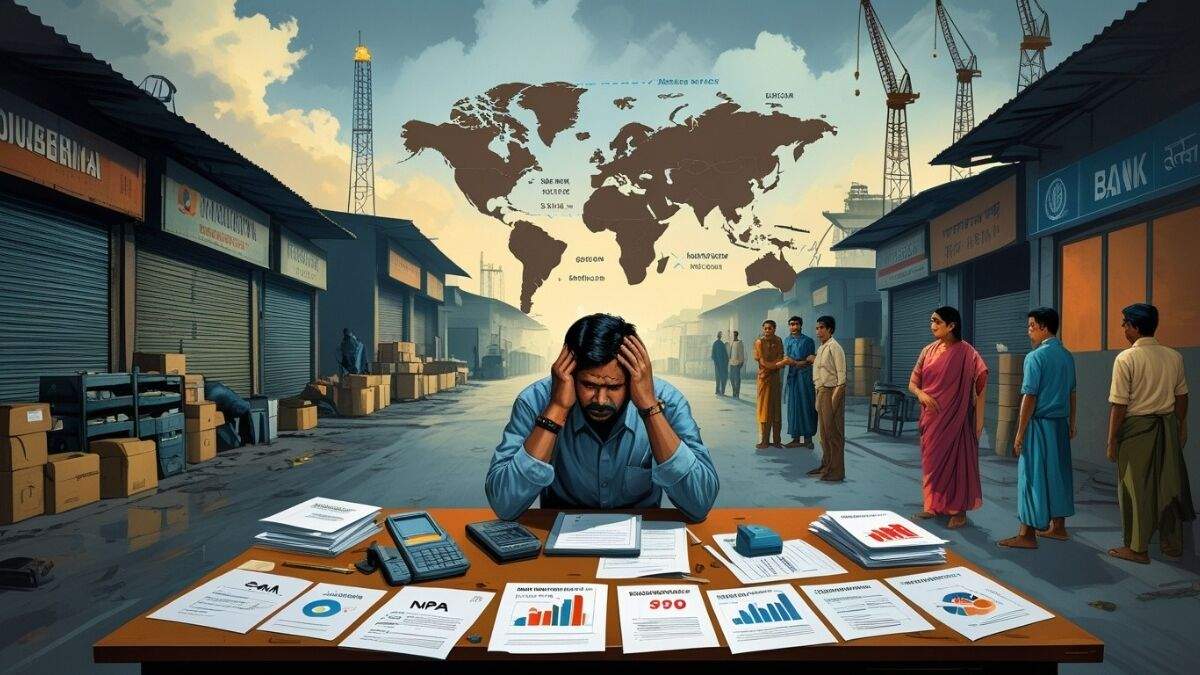
Rising geopolitical tensions in West Asia are beginning to impact India’s MSME sector, prompting urgent discussions around financial relief and policy support.
Citing business difficulties from the war in West Asia, small-enterprise debtors have been contacting lenders more frequently to request relief measures. On Wednesday, representatives from the RBI, MSME, and finance ministries as well as business associations convened to deliberate on the matter.
MSME Relief Plans Amid West Asia Crisis
To lessen the financial strain on small enterprises affected by the crisis in West Asia, the administration intends to ask the central bank for assistance in implementing targeted relief measures.
According to two people with knowledge of the situation, the plan entails regulatory relaxations, such as on special mention account (SMA) and non-performing asset (NPA) classification timelines, which essentially give micro, small, and medium-sized enterprises (MSMEs) more time before their loans are classified as stressed or bad.
Understanding Proposed Loan Relaxations
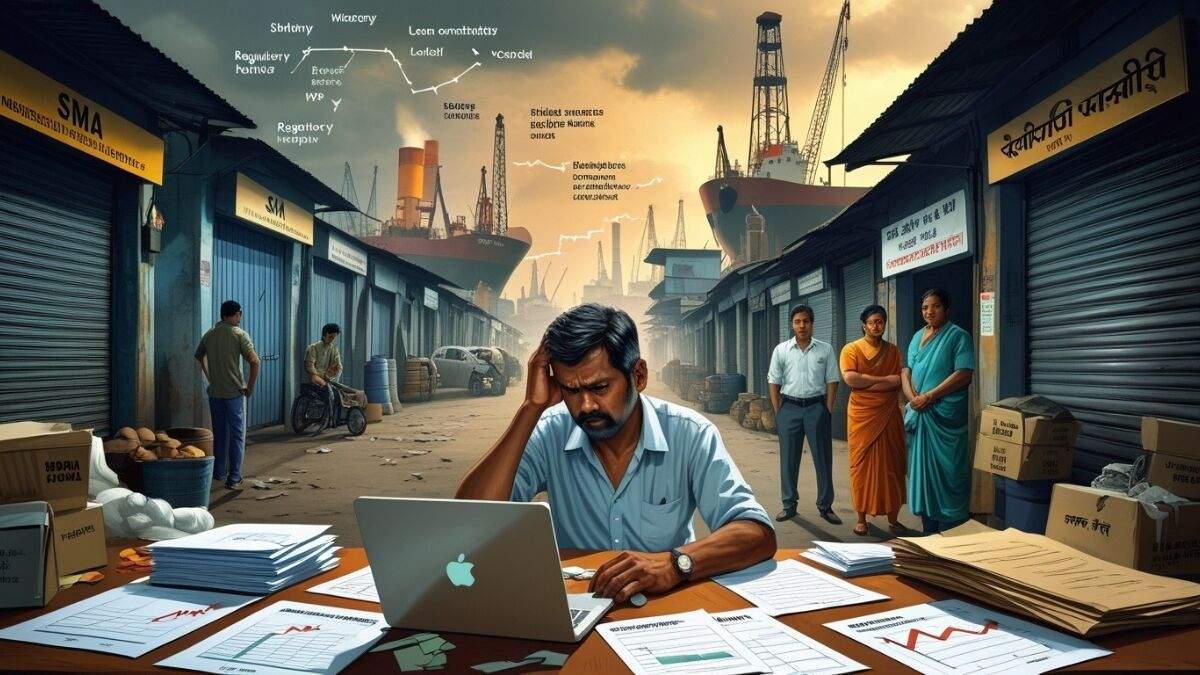
Currently, the amount of days that a loan is past due determines whether it qualifies as a special mention account. These early warning signs of stress include SMA 0 (1 to 30 days), SMA 1 (31 to 60 days), and SMA 2 (61 to 90 days).
The loan is considered a non-performing asset if the overdue time is longer than ninety days. The Reserve Bank of India (RBI) temporarily extended the NPA classification period from 90 days to 180 days during the COVID-19 pandemic.
🏭 MSME Relief Package Highlights
- Total Package: ₹2.5 trillion proposed
- Key Support: Credit guarantees for MSMEs
- Regulatory Relief: Relaxation in SMA & NPA norms
- Goal: Reduce financial stress on small businesses
- Trigger: West Asia crisis impact
- Focus: Prevent loans turning bad
Government Strategy and Banking Feedback
According to the individuals mentioned above, who asked to remain anonymous, the action is a part of the government’s complete strategy to implement a ₹2.5 trillion relief package, which includes credit guarantees for MSMEs in response to comments from banks suggesting possible stress in their MSME portfolios commencing in Q1 FY27.
A closer examination of relief measures is necessary since the current environment, molded by the West Asia crisis, is producing conditions similar to the COVID-19 period. This is significant because the MSME sector accounts for over 45% of India’s merchandise exports, 35.4% of manufacturing production, and approximately 30.1% of the country’s GDP.
Ongoing Discussions and Policy Considerations
Citing business difficulties from the war in West Asia, MSME borrowers have been contacting lenders more frequently to request relief measures. On Wednesday, representatives from the RBI, the MSME ministry, the Department of Financial Services (DFS), the Department of Expenditure (DoE), and trade associations convened to deliberate on the matter.
“As part of relief measures for the sector, the government may consider extending the NPA recognition period and lowering Special Mention Account (SMA) requirements because the current scenario is similar to the COVID-19 time,” the first individual stated.
Banking Sector Concerns
According to the second individual mentioned earlier, banks have been providing the government with ongoing feedback, suggesting that the first quarter of FY27 may be stressful. “These relaxations in NPA rules are being examined to lessen that burden because banks have received significant input from MSME clients,” the individual stated.
Up to the time of publication, emails sent to the RBI, MSME, and finance ministries went unanswered. According to experts, government action is required to reduce MSMEs’ financial strain.
Expert Views on Early Intervention
⚠️ MSME Risk Factors
- Key Risk: Rising energy costs
- Labor Issue: Migrant workforce instability
- Trade Impact: Global disruptions
- Finance Pressure: Credit stress rising
- Warning: Short-term shocks becoming long-term damage
- Need: Immediate policy support
“In such cases, early policy support is crucial since delays can allow transient disturbances to become structural harm. It becomes far more expensive and time-consuming to rebuild MSME clusters if they lose employees, supplier connections, and production capacity.
According to professor Rakesh Arrawatia of the Institute of Rural Management Anand (IRMA), Gujarat, “a prompt and focused response can help contain the impact and protect the productive basis of the economy.”
Current MSME Financial Data
As of September 30, 2025, gross non-performing assets (NPAs) were ₹1.17 trillion, or 3.27% of total advances, whereas scheduled commercial banks’ (SCBs’) total advances to the MSME sector totaled ₹35.83 trillion, according to RBI data. Small firms are facing a global challenge, according to industry representatives.
India’s MSMEs are dealing with a confluence of global challenges that impact trade, energy, labor, and financing rather than a single issue. Rising input costs are not the only issue at hand. Energy stress is now starting to have an impact on worker subsistence and labor continuity in a number of clusters.
Labor and Economic Challenges
Migrant workers start to reconsider whether it makes sense to remain in metropolitan industrial centers when productivity is erratic and living expenses are increasing. For MSME clusters that rely on concentrated pools of trained and semi-skilled migrant labor, this poses a slow but significant risk, according to Vinod Kumar, president of the India SME Forum.
“Rebuilding disrupted production ecosystems tomorrow would be significantly more expensive than a measured response now,” Kumar stated.
Frequently Asked Questions
1) For MSMEs impacted by the violence in West Asia, what assistance measures are being considered?
The government intends to extend deadlines, provide credit guarantees, and loosen regulations pertaining to SMA and NPA standards.
2) How do the current SMA and NPA categories operate?
After 1–30 days, loans become SMA0; after 31–60 days, they become SMA1; after 61–90 days, they become SMA2; after 90 days, they become NPAs.
3) Why is government action crucial right now?
Early assistance minimizes short-term disruptions from turning into structural damage, protecting MSME clusters’ supply chains, jobs, and production capacity while lowering long-term financial costs.
4) Which industries or elements are making MSME stress worse?
Production continuity and profitability across small business ecosystems are being impacted by a number of factors, including rising energy costs, labor volatility, disrupted trade flows, and financial constraints.
5) How much exposure and contribution do MSMEs make?
With bank credit of ₹35.83 trillion and non-performing assets (NPAs) close to ₹1.17 trillion, MSMEs account for 30% of GDP, 35% of manufacturing, and 45% of exports.
FAQ Schema
Conclusion
In the face of global shocks, the proposed assistance package seeks to stabilize MSMEs by guaranteeing liquidity, preventing asset quality degradation, and protecting employment and production capacity that are vital to India’s future economic growth trajectory.
Disclaimer: This content is for informational purposes only and does not constitute financial or investment advice.
