
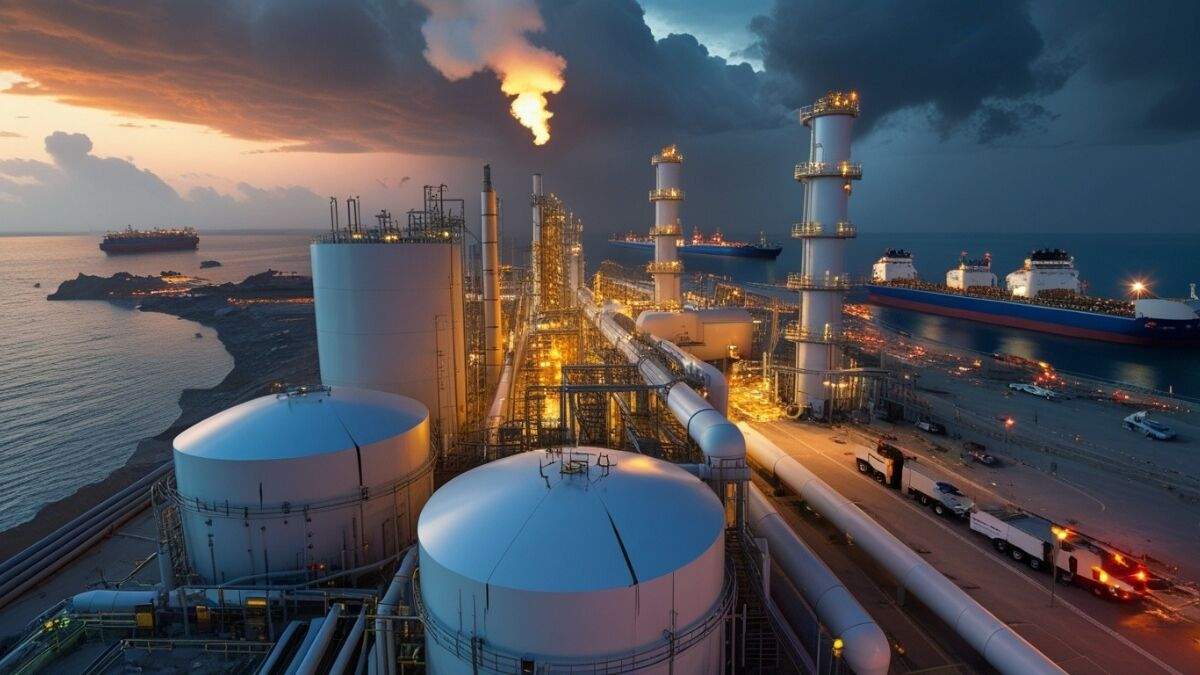
Tensions between the United States and Iran continue to hamper supply through the Strait of Hormuz, a vital route that transports about 20% of the world’s oil and LNG, placing tremendous pressure on the global oil market.
Uncertainty has increased as peace negotiations have stalled, driving up oil prices and creating worries about inflation and the stability of the world economy.
With Brent surpassing $100 and forecasts indicating it may soon hit $90–$110 per barrel, benchmark crude prices have skyrocketed. Global oil stockpiles are falling at record levels as a result of supply disruptions, which have caused enormous inventory drawdowns, according to major financial organizations like Goldman Sachs and JPMorgan. According to estimates, decreased exports from the Persian Gulf might result in daily supply losses of up to 14 million barrels.
Geopolitical tensions and shipping route restrictions are the root causes of the crisis, which compels markets to quickly rebalance. The burden has moved to current stocks and decreased demand because spare manufacturing capacity is essentially unavailable. Analysts caution that future price increases may be necessary to balance the market if interruptions continue.
Beyond fuel, it has an impact on common products and global supply systems. Growing oil prices raise production and transportation costs, which could raise the cost of everything from groceries to medications. Particularly in Asia, economies that rely significantly on Gulf oil supply are more vulnerable to inflation and slower growth.
Global markets are responding cautiously in the meantime. While certain regions’ stock indices exhibit resilience, countries that import energy are nevertheless susceptible to protracted volatility. Experts stress that because of oil’s inelastic demand, even small supply shocks can result in excessive price movements.
All things considered, the ongoing geopolitical confrontation draws attention to the vulnerability of international energy systems and the far-reaching effects of disruptions in important transit routes like the Strait of Hormuz.
