
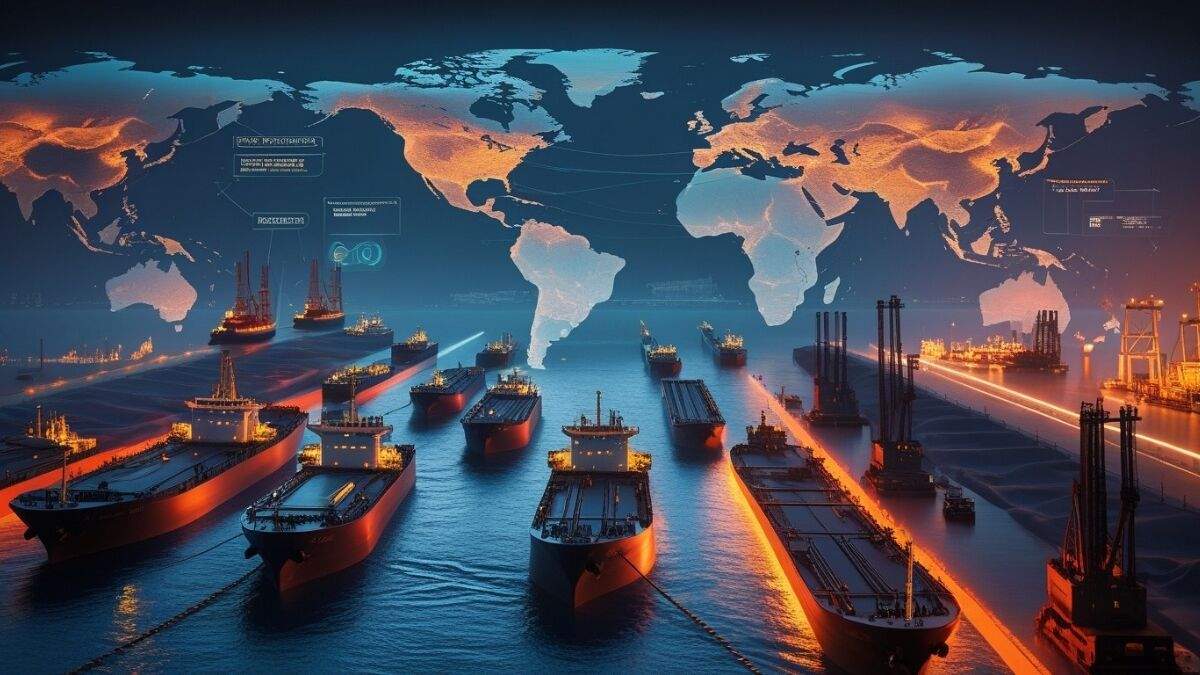
Global markets are witnessing heightened volatility as crude oil prices surge past the $100 mark, driven by escalating geopolitical tensions in the Middle East, particularly the ongoing standoff between the United States and Iran. Disruptions in the Strait of Hormuz—a critical route for nearly 20% of global oil trade—have significantly constrained supply, pushing Brent crude as high as $107 per barrel and WTI close to $98.
This sharp rise in oil prices has had a cascading impact on global and Indian markets. Indian benchmark indices, the Sensex and Nifty 50, have fallen sharply, with the Sensex dropping over 850 points and the Nifty declining by more than 200 points in a single session. The downturn is largely attributed to investor concerns over rising inflation, increased import costs, and weakening corporate margins, especially in an oil-import-dependent economy like India.
Foreign Institutional Investors (FIIs) have intensified sell-offs, withdrawing billions from Indian equities amid growing uncertainty. Additionally, the rupee has shown signs of कमजोरी, further compounding macroeconomic pressure. Analysts highlight that sustained high crude prices could worsen India’s current account deficit and delay economic recovery.
Global financial institutions like HSBC have turned cautious, downgrading Indian equities due to rising crude prices, earnings risks, and persistent foreign outflows. The Reserve Bank of India (RBI) has also flagged concerns, warning that prolonged conflict could lead to supply chain disruptions, higher input costs, and inflationary pressures, potentially impacting growth projections.
On the domestic front, the government has denied speculation of a sharp ₹25–₹28 per litre hike in fuel prices, aiming to maintain stability despite global volatility. However, analysts caution that if crude remains elevated, pricing pressures may eventually build up.
Meanwhile, energy supply dynamics remain tense. The U.S. has seized Iranian-linked oil tankers, and maritime conflicts continue to disrupt shipping routes. Although some oil flows, such as through the Druzhba pipeline to Europe, have resumed, the overall supply outlook remains uncertain.
In summary, rising crude oil prices—fueled by geopolitical instability—are exerting pressure across financial markets, currencies, and economic outlooks. The near-term direction of oil prices and markets will largely depend on how the geopolitical situation evolves and whether supply disruptions ease.
