
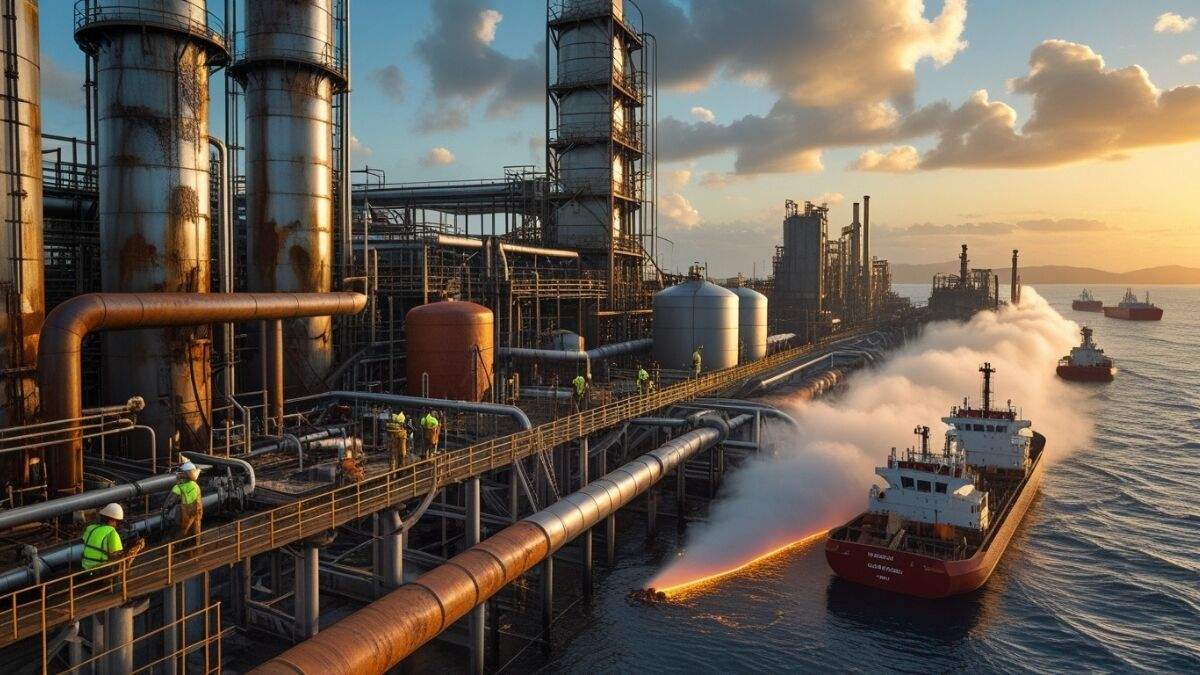
According to a Goldman Sachs analysis, once the Strait of Hormuz reopens, Gulf crude oil production could considerably increase in a few of months. A complete recovery to pre-war production levels, however, would take longer and be largely dependent on how long geopolitical tensions in West Asia last.
According to the research, Gulf oil production fell precipitously from pre-conflict levels by 14.5 million barrels per day (mbd), or almost 57%. If there are no more attacks on oil infrastructure and the Strait reopens securely, a speedy recovery is possible, but the last stage of returning to full production could be unpredictable and difficult.
Recovery may be delayed by a number of operational issues. These include restricted pipeline capacity, a nearly 50% decrease in empty oil ship availability (or 130 million barrels), and the requirement to mobilize personnel and supplies in order to restart oil wells. Furthermore, reservoir problems brought on by forced production reduction could necessitate technical interventions before wells can return to regular flow.
Oil flows over the Strait sometimes surpass normal levels during recovery phases, according to historical data, but the current situation is thought to be unprecedented. Factors including as supply chain efficiency, infrastructure preparedness, and well flow rates will also affect recovery speed.
According to the report, the ability of nations like Saudi Arabia and the United Arab Emirates to use spare capacity to stabilize supply, signals from Saudi producers regarding rapid ramp-up capability, and less damage to oil fields relative to LNG plants are three positive elements supporting the near-term recovery.
But there are still dangers. Lower reservoir pressure in their oil fields may cause countries like Iran and Iraq to recover more slowly. Variations in infrastructure upkeep, quality, and geopolitical threats may have an additional effect on production restoration.
Forecasts from the International Energy Agency and the U.S. Energy Information Administration indicate that approximately 70% of lost production might resume within three months of reopening, and 88% within six months. However, protracted hostilities may result in long-term harm to industrial capacity, postponing a complete recovery.
