
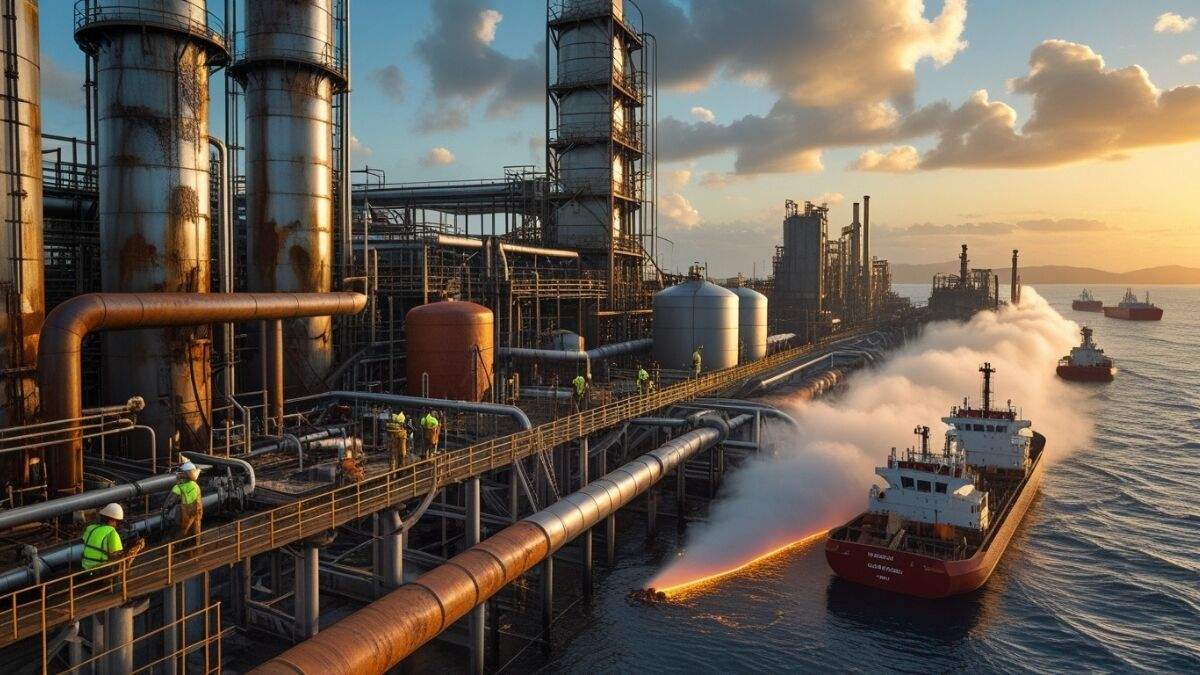
Iran strengthened its control over the strategically important Strait of Hormuz, forcing two oil tankers to recede during an attempted crossing, escalating tensions in the Middle East once more.
Following what Iran claimed as a “unauthorized transit” along the vital global oil channel, the ships, flying the flags of Botswana and Angola, were allegedly stopped and rerouted.
The action reportedly intensifies the already precarious geopolitical scenario in reaction to an ongoing U.S. blockade of Iranian ports. Global oil supply lines are facing new challenges as a result of Iran’s warning that it is regaining control over the canal and hinting that the corridor may be deemed closed once more.
A large amount of the world’s shipments of crude oil pass via the Strait of Hormuz, which is vital to international trade. Global oil prices, shipping expenses, and insurance premiums are all immediately impacted by any disturbance here. As a result of Iran’s most recent action, concerns about supply interruptions have increased, and oil market volatility has returned.
Growing hostilities between the United States and Israel against Iran, followed by Tehran’s counterattacks, are the root cause of the wider crisis. Even though Pakistan mediated a temporary truce on April 8, current events indicate that the situation is still fragile.
Thus far, diplomatic efforts have not resulted in a long-lasting compromise. Washington and Tehran’s talks in Pakistan concluded without a resolution, but mediators are trying to set up another round of talks. The dispute is still being shaped by military posturing and economic pressure methods.
Any protracted disruption in the Strait of Hormuz might result in higher oil prices, more inflation, and economic uncertainty for global markets, particularly for nations that import energy like India. Policymakers and traders are keeping a careful eye on whether the situation continues to worsen or shifts toward a new diplomatic solution.
